
- Bible
- Read the Bible
- Bible Versions
- Verse of the Day
- Reading Plans
- Verses by Topic
- Books of the Bible
- Bible Images
- Study
- Commentaries
- Concordances
- Dictionaries
- Encyclopedias
- Sermons
- Bible Atlas & Maps
- BP Wiki
- Devotionals
- Today's Devotionals
- Light of the World
- All Devotionals
- Inspirational Quotes
- More
- Picture Quotes
- Videos
- Inspirational
- Bible Study
- What The Bible Says
- Bible Q&As
- Daily Bread
- Bible by Genre
- Bible Stories
- Random Bible Verse
- Community
- Store
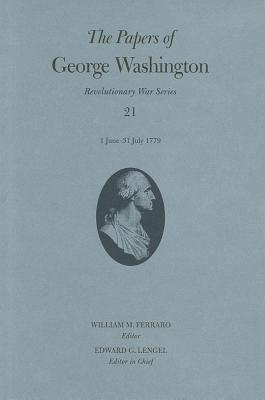
The Papers of George Washington, 21: 1 June-31 July 1779
by George Washington
During the busy and challenging months of June and July 1779 (the period covered in this volume), George Washington remained the fulcrum for Continental army activities. Through his exertions and leadership, the troops under his direct supervision quickly broke their winter encampment at Middlebrook, New Jersey, for positions in the New York Highlands to check a British thrust up the Hudson River that threatened West Point. He then promptly began planning an operation to reduce the British garrison at Stony Point, New York. Those efforts came to fruition with the successful surprise night attack of Brigadier General Anthony Wayne's light infantry in the early morning hours of 16 July. The victory boosted Patriot morale, calmed Connecticut residents recently subjected to British raids, and eased the subsequent disappointment of having to abandon Stony Point as too difficult to hold when a movement to capture the British post across the Hudson at Verplanck Point resulted in a hasty retreat.
After departing Stony Point, Washington established his headquarters at West Point and concentrated his considerable administrative talents on completing a system of fortifications at that strategic location. He envisioned defenses impervious to assault from land or water but manned with fewer troops. Washington's reach extended very far, but he could not control or know everything. Particularly vexing were the supply and coordination problems that delayed Major General John Sullivan's expedition against the Indians of the Six Nations and Loyalists along the Pennsylvania-New York frontier. His attempts to march Brigadier General John Glover's brigade from Rhode Island to the Highlands and then maneuver in Connecticut to counter the British raids suffered complications from that general's absence. Washington's ability to retain his composure and think clearly while under pressure or amid confusion remained exemplary. He exhibited on a daily basis his importance to the revolutionary cause.
After departing Stony Point, Washington established his headquarters at West Point and concentrated his considerable administrative talents on completing a system of fortifications at that strategic location. He envisioned defenses impervious to assault from land or water but manned with fewer troops. Washington's reach extended very far, but he could not control or know everything. Particularly vexing were the supply and coordination problems that delayed Major General John Sullivan's expedition against the Indians of the Six Nations and Loyalists along the Pennsylvania-New York frontier. His attempts to march Brigadier General John Glover's brigade from Rhode Island to the Highlands and then maneuver in Connecticut to counter the British raids suffered complications from that general's absence. Washington's ability to retain his composure and think clearly while under pressure or amid confusion remained exemplary. He exhibited on a daily basis his importance to the revolutionary cause.
BUY NOW
Hardcover, 896 pages
Published October 8th 2012 by University of Virginia Press
Subscribe
Get Bible verse every day in your inbox
Read on Mobile


Group of Brands


© 2026 Bibleportal.com All rights reserved.
George Washington was the commander of the Continental Army in the American Revolutionary War (1775-1783) and served as the first President of the United States of America (1789-1797). For his central role in the formation of the United States, he is often referred to as the father of his country.
Washington was baptized into the Church of England. In 1765, when the Church of England was still the state religion, he served on the vestry (lay council) for his local church. Throughout his life, he spoke of the value of righteousness, and of seeking and offering thanks for the "blessings of Heaven."
The Electoral College elected Washington unanimously in 1789, and again in the 1792 election; he remains the only president to receive 100% of the electoral votes.
Washington proved an able administrator. An excellent delegator and judge of talent and character, he held regular cabinet meetings to debate issues before making a final decision. In handling routine tasks, he was "systematic, orderly, energetic, solicitous of the opinion of others but decisive, intent upon general goals and the consistency of particular actions with them.
Washington died in 1799. He has been consistently ranked by scholars as one of the greatest U.S. Presidents.
... Show more