
- Bible
- Read the Bible
- Bible Versions
- Verse of the Day
- Reading Plans
- Verses by Topic
- Books of the Bible
- Bible Images
- Study
- Commentaries
- Concordances
- Dictionaries
- Encyclopedias
- Sermons
- Bible Atlas & Maps
- BP Wiki
- Devotionals
- Today's Devotionals
- Light of the World
- All Devotionals
- Inspirational Quotes
- More
- Picture Quotes
- Videos
- Inspirational
- Bible Study
- What The Bible Says
- Bible Q&As
- Daily Bread
- Bible by Genre
- Bible Stories
- Random Bible Verse
- Community
- Store
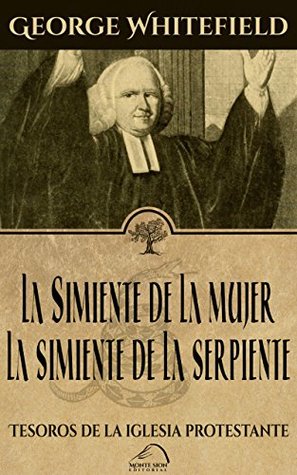
La Simiente de la mujer y la simiente de la serpiente (Tesoros de la Iglesia protestante nº 2)
by George Whitefield
Cuando apenas amanecía después de la creación del hombre, cuando apenas despuntaba el alba de la historia humana, y aunque podemos no estar de acuerdo sobre cuánto tiempo pasó después de que el hombre fuera creado, como diría Whitefield, sí estamos de acuerdo en que “el hombre no duró mucho”; cuando, pues, apenas estaba amaneciendo en la historia humana, el Creador reveló al ser humano, que era la joya de la corona de Su creación, un Redentor; Alguien que sufriría el castigo de la traición del hombre, y que, al mismo tiempo, vengaría la traición del hombre, y que además aplastaría la cabeza de la serpiente.
¿Venganza? ¿Redentor sufriente? ¿Traición? ¿Aplastar una serpiente? ¿No dice la Palabra que “vio Dios todo lo que había hecho, y he aquí que era bueno en gran manera” (Gn. 1;31), y eso incluía al hombre y a la serpiente? Casi tan antiguo como la creación misma es la promesa de la redención, y esa promesa, a través de la historia, permaneció, hasta cierto punto, velada, incluso para los mismos ángeles del cielo (cf. Ef. 3:4-12). Pero luego vino el Hijo Unigénito de Dios y tabernaculó (sí, así con acento en la “o”) entre nosotros (cf. Juan 1:14).
En este antiquísimo texto, George Whitefield (1714-1770) contesta las preguntas hechas en el párrafo anterior, y nos enseña que la Biblia claramente muestra que al final, como dice la Palabra de Dios, las puertas del Hades no prevalecerán contra nosotros, Su iglesia, el cuerpo de Cristo; y también nos explica cuáles son las implicaciones prácticas, para la vida diaria, de que la Simiente de la mujer aplaste continuamente y aplastará, definitivamente al final, la cabeza de la serpiente.
¿Venganza? ¿Redentor sufriente? ¿Traición? ¿Aplastar una serpiente? ¿No dice la Palabra que “vio Dios todo lo que había hecho, y he aquí que era bueno en gran manera” (Gn. 1;31), y eso incluía al hombre y a la serpiente? Casi tan antiguo como la creación misma es la promesa de la redención, y esa promesa, a través de la historia, permaneció, hasta cierto punto, velada, incluso para los mismos ángeles del cielo (cf. Ef. 3:4-12). Pero luego vino el Hijo Unigénito de Dios y tabernaculó (sí, así con acento en la “o”) entre nosotros (cf. Juan 1:14).
En este antiquísimo texto, George Whitefield (1714-1770) contesta las preguntas hechas en el párrafo anterior, y nos enseña que la Biblia claramente muestra que al final, como dice la Palabra de Dios, las puertas del Hades no prevalecerán contra nosotros, Su iglesia, el cuerpo de Cristo; y también nos explica cuáles son las implicaciones prácticas, para la vida diaria, de que la Simiente de la mujer aplaste continuamente y aplastará, definitivamente al final, la cabeza de la serpiente.
BUY NOW
Kindle Edition, 28 pages
Published April 17th 2018
Subscribe
Get Bible verse every day in your inbox
Read on Mobile


Group of Brands


© 2026 Bibleportal.com All rights reserved.
George Whitefield (1714 - 1770)
Also known as George Whitfield, was an English Anglican preacher who helped spread the Great Awakening in Britain, and especially in the British North American colonies. He was one of the founders of Methodism and of the evangelical movement generally. He became perhaps the best-known preacher in Britain and America in the 18th century, and because he traveled through all of the American colonies and drew great crowds and media coverage, he was one of the most widely recognized public figures in colonial America.Whitefield was an astounding preacher from the beginning. Though he was slender in build, he stormed in the pulpit as if he were a giant. Within a year it was said that "his voice startled England like a trumpet blast." At a time when London had a population of less than 700,000, he could hold spellbound 20,000 people at a time at Moorfields and Kennington Common. For thirty-four years his preaching resounded throughout England and America. In his preaching ministry he crossed the Atlantic thirteen times and became known as the 'apostle of the British empire.' He was a firm Calvinist in his theology yet unrivaled as an aggressive evangelist. Though a clergyman of the Church of England, he cooperated with and had a profound impact on people and churches of many traditions, including Presbyterians, Congregationalists, and Baptists. Whitefield, along with the Wesleys, inspired the movement that became known as the Methodists. Whitefield preached more than 18,000 sermons in his lifetime, an average of 500 a year or ten a week. Many of them were given over and over again. Fewer than 90 have survived in any form.
George Whitefield also known as George Whitfield, was an Anglican itinerant minister who helped spread the Great Awakening in Great Britain and, especially, in the British North American colonies.
He was a very influential figure in the establishment of Methodism. He was famous for his preaching in America which was a significant part of an 18th century movement of Christian revivals, sometimes called "The Great Awakening."
While explicitly affirming God's sole agency in salvation, Whitefield would freely offer the Gospel, saying near the end of most of his published sermons something like: "Come poor, lost, undone sinner, come just as you are to Christ"
He died in the parsonage of Old South Presbyterian Church, Newburyport, Massachusetts on September 30, 1770. He was buried, according to his wishes, in a crypt under the pulpit of this church.
George Whitefield was born in Gloucester in 1714. At eighteen he entered Pembroke College, Oxford, and soon became a member of a religious group that included John Wesley and Charles Wesley. The group became became known as the Holy Club or the Oxford Methodists.
In 1735 John Wesley and Charles Wesley became missionaries in Georgia, America. Whitefield followed three years later and was appointed minister at Savannah. Whitefield and Wesley returned to England and settled in Bristol and gave sermons in the open-air. However, whereas Wesley built a Methodist Chapel in Bristol Whitefield decided to go back to Georgia where he made extensive preaching tours.
When he returned to England, the Countess of Huntington appointed him her chaplain and built and endowed many chapels for him. He made seven evangelistic visits to America and spent the rest of his life in preaching tours of Britain.
Whitefield made the last of his seven evangelistic visits to America in 1769. George Whitefield died near Boston in 1770.
... Show more