
- Bible
- Read the Bible
- Bible Versions
- Verse of the Day
- Reading Plans
- Verses by Topic
- Books of the Bible
- Bible Images
- Study
- Commentaries
- Concordances
- Dictionaries
- Encyclopedias
- Sermons
- Bible Atlas & Maps
- BP Wiki
- Devotionals
- Today's Devotionals
- Light of the World
- All Devotionals
- Inspirational Quotes
- More
- Picture Quotes
- Videos
- Inspirational
- Bible Study
- What The Bible Says
- Bible Q&As
- Daily Bread
- Bible by Genre
- Bible Stories
- Random Bible Verse
- Community
- Store
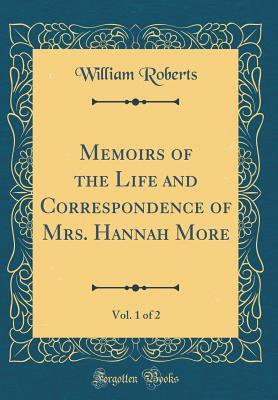
Memoirs of the Life and Correspondence of Mrs. Hannah More, Vol. 1 of 2 (Classic Reprint)
by Hannah More
Excerpt from Memoirs of the Life and Correspondence of Mrs. Hannah More, Vol. 1 of 2
It seemed but, justice to this excellent person to say some thing respecting her peculiar title to the veneration of her country, before we entered upon the narrative Of her instruct ive and interesting life reserving the more particular deline ation of her character for the Opportunity which will more seasonably present itself at the close of our record. The same justice also demands that the reader should be forewarned not to expect a hypothetical model Of perfect excellence. NO picture, or exemplar is affected to be drawn; nothing but the sincere life Of a daughter of Eve, beginning her course amid the vanities of the world, and advancing in excellence, under the impulse of extraordinary faculties, but more especially under the guidance of that grace without which all labour is strife, and all prudence folly.
Her i1fe and social intercourse will be developed in the cor respondence about to be presented; in which it will be seen how violent was the assault made upon her principles by flat terles and distinctions and how the convictions which religion brings to the conscience struggled with the world, and brought her safe out Of the conflict, into that humble path of moder ation, circumspection, and trust, which made her example so profitable, and her teaching so efficacious.
It seemed but, justice to this excellent person to say some thing respecting her peculiar title to the veneration of her country, before we entered upon the narrative Of her instruct ive and interesting life reserving the more particular deline ation of her character for the Opportunity which will more seasonably present itself at the close of our record. The same justice also demands that the reader should be forewarned not to expect a hypothetical model Of perfect excellence. NO picture, or exemplar is affected to be drawn; nothing but the sincere life Of a daughter of Eve, beginning her course amid the vanities of the world, and advancing in excellence, under the impulse of extraordinary faculties, but more especially under the guidance of that grace without which all labour is strife, and all prudence folly.
Her i1fe and social intercourse will be developed in the cor respondence about to be presented; in which it will be seen how violent was the assault made upon her principles by flat terles and distinctions and how the convictions which religion brings to the conscience struggled with the world, and brought her safe out Of the conflict, into that humble path of moder ation, circumspection, and trust, which made her example so profitable, and her teaching so efficacious.
Hardcover, 486 pages
Published April 24th 2018 by Forgotten Books
Subscribe
Get Bible verse every day in your inbox
Read on Mobile


Group of Brands


© 2026 Bibleportal.com All rights reserved.
Hannah More was an English religious writer and philanthropist. She can be said to have made three reputations in the course of her long life: as a clever verse-writer and witty talker in the circle of Johnson, Reynolds and Garrick, as a writer on moral and religious subjects on the Puritanic side, and as a practical philanthropist.
She was instrumental in setting up twelve schools by 1800 where reading, the Bible and the catechism - but not writing - were taught to local children. The More sisters met with a good deal of opposition in their works: the farmers thought that education, even to the limited extent of learning to read, would be fatal to agriculture, and the clergy, whose neglect she was making good, accused her of Methodist tendencies.
In her old age, philanthropists from all parts made pilgrimages to see the bright and amiable old lady, and she retained all her faculties until within two years of her death. She spent the last five years of her life in Clifton, and died on 7 September, 1833. She is buried at All Saints' church, Wrington.
Hannah More was an English religious writer, Romantic and philanthropist. She can be said to have made three reputations in the course of her long life: as a poet and playwright in the circle of Johnson, Reynolds and Garrick, as a writer on moral and religious subjects, and as a practical philanthropist.
... Show more