Several years ago, while one morning employed in the duties of the nursery, a colored woman was announced. She was ushered into the nursery, and the author thought, on first survey, that a more surly, unpromising face she had never seen. The woman was thoroughly black, thick-set, firmly built, and with strongly-marked African features. Those who have been accustomed to read the expressions of the African face know what a peculiar effect is produced by a lowering, desponding expression upon its dark features. It is like the shadow of a thunder-cloud. Unlike her race generally, the woman did not smile when smiled upon, nor utter any pleasant remark in reply to such as were addressed to her. The youngest pet of the nursery, a boy about three years old, walked up, and laid his little hand on her knee, and seemed astonished not to meet the quick smile which the negro almost always has in reserve for the little child. The writer thought her very cross and disagreeable, and, after a few moments' silence, asked, with perhaps a little impatience, "Do you want anything of me to-day?"

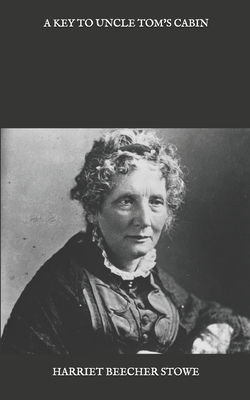


1811-1896
Harriet Beecher Stowe was an American abolitionist and author. Harriet was born in Litchfield, Connecticut, as the daughter of an outspoken religious leader Lyman Beecher. She was the sister of the educator and author, Catherine Beecher, clergymen Henry Ward Beecher and Charles Beecher.
Her father was a preacher who was greatly effected by the pro-slavery riots that took place in Cincinnati in 1834.
Stowe's novel Uncle Tom's Cabin (1852) depicted life for African-Americans under slavery; it reached millions as a novel and play, and became influential in the U.S. and Britain and made the political issues of the 1850s regarding slavery tangible to millions, energizing anti-slavery forces in the American North, while provoking widespread anger in the South. Upon meeting Stowe, Abraham Lincoln allegedly remarked, "So this is the little old lady who started this new great war!"
... Show more