
- Bible
- Read the Bible
- Bible Versions
- Verse of the Day
- Reading Plans
- Verses by Topic
- Books of the Bible
- Bible Images
- Study
- Commentaries
- Concordances
- Dictionaries
- Encyclopedias
- Sermons
- Bible Atlas & Maps
- BP Wiki
- Devotionals
- Today's Devotionals
- Light of the World
- All Devotionals
- Inspirational Quotes
- More
- Picture Quotes
- Videos
- Inspirational
- Bible Study
- What The Bible Says
- Bible Q&As
- Daily Bread
- Bible by Genre
- Bible Stories
- Random Bible Verse
- Community
- Store
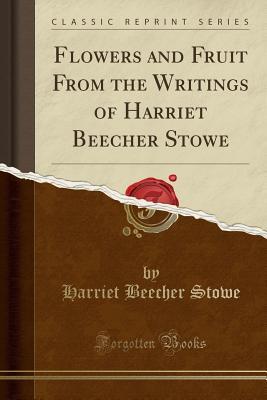
Flowers and Fruit from the Writings of Harriet Beecher Stowe
by Harriet Beecher Stowe
Excerpt: When we feel a thing ourselves, we can see very quick the same in others.
When a finely constituted nature wishes to go into baseness, it has first to bribe itself. Evil is never embraced, undisguised, as evil, but under some fiction which the mind accepts, and with which it has the singular power of blinding itself in the face of daylight. The power of imposing on one's self is an essential preliminary to imposing on others. The man first argues himself down, and then he is ready to put the whole weight of his nature to deceiving others.
Perhaps it is so, that souls once intimately related have ever after this a strange power of affecting each other, - a power that neither absence nor death can annul. When we feel a thing ourselves, we can see very quick the same in others.
When a finely constituted nature wishes to go into baseness, it has first to bribe itself. Evil is never embraced, undisguised, as evil, but under some fiction which the mind accepts, and with which it has the singular power of blinding itself in the face of daylight. The power of imposing on one's self is an essential preliminary to imposing on others. The man first argues himself down, and then he is ready to put the whole weight of his nature to deceiving others.
Perhaps it is so, that souls once intimately related have ever after this a strange power of affecting each other, - a power that neither absence nor death can annul.
When a finely constituted nature wishes to go into baseness, it has first to bribe itself. Evil is never embraced, undisguised, as evil, but under some fiction which the mind accepts, and with which it has the singular power of blinding itself in the face of daylight. The power of imposing on one's self is an essential preliminary to imposing on others. The man first argues himself down, and then he is ready to put the whole weight of his nature to deceiving others.
Perhaps it is so, that souls once intimately related have ever after this a strange power of affecting each other, - a power that neither absence nor death can annul. When we feel a thing ourselves, we can see very quick the same in others.
When a finely constituted nature wishes to go into baseness, it has first to bribe itself. Evil is never embraced, undisguised, as evil, but under some fiction which the mind accepts, and with which it has the singular power of blinding itself in the face of daylight. The power of imposing on one's self is an essential preliminary to imposing on others. The man first argues himself down, and then he is ready to put the whole weight of his nature to deceiving others.
Perhaps it is so, that souls once intimately related have ever after this a strange power of affecting each other, - a power that neither absence nor death can annul.
BUY NOW
Paperback, 212 pages
Published January 12th 2019 by Forgotten Books
Subscribe
Get Bible verse every day in your inbox
Read on Mobile


Group of Brands


© 2026 Bibleportal.com All rights reserved.
1811-1896
Harriet Beecher Stowe was an American abolitionist and author. Harriet was born in Litchfield, Connecticut, as the daughter of an outspoken religious leader Lyman Beecher. She was the sister of the educator and author, Catherine Beecher, clergymen Henry Ward Beecher and Charles Beecher.
Her father was a preacher who was greatly effected by the pro-slavery riots that took place in Cincinnati in 1834.
Stowe's novel Uncle Tom's Cabin (1852) depicted life for African-Americans under slavery; it reached millions as a novel and play, and became influential in the U.S. and Britain and made the political issues of the 1850s regarding slavery tangible to millions, energizing anti-slavery forces in the American North, while provoking widespread anger in the South. Upon meeting Stowe, Abraham Lincoln allegedly remarked, "So this is the little old lady who started this new great war!"
... Show more