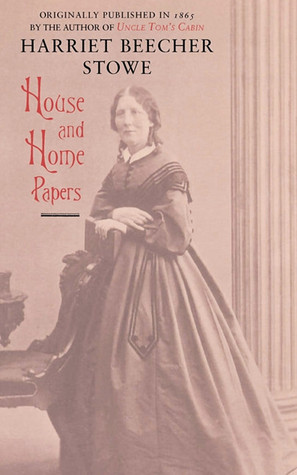
This volume of essays and short stories by Harriet Beecher Stowe was written under the pseudonym Christopher Crowfield. As with many women of her time, Stowe took on a male pseudonym in order to make her work more acceptable to male dominated literary outlets, such as the Atlantic Monthly, where these works were originally published. Focusing on the domestic American household of the 1860s, the short pieces comment on the changes wrought by the Civil War. The wartime economic boom brought inexpensive consumer goods to more households. What was once a homey, comfortable parlor, the center of family activity, became a showplace, locked up like a museum. Simple home life became more complex. And Stowe, alias Crowfield, with her precise eye for social phenomena, found this domestic change worth chronicling.



1811-1896
Harriet Beecher Stowe was an American abolitionist and author. Harriet was born in Litchfield, Connecticut, as the daughter of an outspoken religious leader Lyman Beecher. She was the sister of the educator and author, Catherine Beecher, clergymen Henry Ward Beecher and Charles Beecher.
Her father was a preacher who was greatly effected by the pro-slavery riots that took place in Cincinnati in 1834.
Stowe's novel Uncle Tom's Cabin (1852) depicted life for African-Americans under slavery; it reached millions as a novel and play, and became influential in the U.S. and Britain and made the political issues of the 1850s regarding slavery tangible to millions, energizing anti-slavery forces in the American North, while provoking widespread anger in the South. Upon meeting Stowe, Abraham Lincoln allegedly remarked, "So this is the little old lady who started this new great war!"
... Show more