
- Bible
- Read the Bible
- Bible Versions
- Verse of the Day
- Reading Plans
- Verses by Topic
- Books of the Bible
- Bible Images
- Study
- Commentaries
- Concordances
- Dictionaries
- Encyclopedias
- Sermons
- Bible Atlas & Maps
- BP Wiki
- Devotionals
- Today's Devotionals
- Light of the World
- All Devotionals
- Inspirational Quotes
- More
- Picture Quotes
- Videos
- Inspirational
- Bible Study
- What The Bible Says
- Bible Q&As
- Daily Bread
- Bible by Genre
- Bible Stories
- Random Bible Verse
- Community
- Store
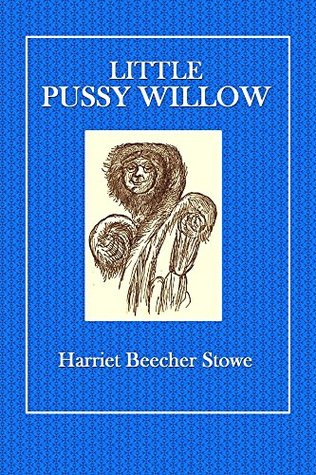
Little Pussy Willow
by Harriet Beecher Stowe
• This e-book is illustrated as per original publication.
• The images have been re-sized, digitally enhanced and optimized for a Kindle.
• A new table of contents with links to individual chapters has been added by a publisher.
“A charmingly illustrated, sweet and wholesome story for girls, full of the best flavor of the New-England country-life, which no one describes so well as Mrs. Stowe. The little maid who is born in the back-country among the hills, to whom Mother Fern and little Mistress Liverwort and Pussy Willow give their gifts like the fairies of old, — the last the gift of always seeing the bright side of everything, — grows up with helpful hands and sunny heart, a cheery example of the best thing that grows in this happy corner of the earth. Meantime, little Emily Proudie in New York is fighting the losing battle for health and happiness, under the disadvantage of too many so-called advantages. It is a good day for the wilted city damsel when she is sent for recovery to the country farm-house, where she learns from little Pussy Willow how to make butter and to look at nature, and to live for other people and not for herself alone. And when the great shadow of our war rests over their young womanhood, they are able to write their names in the long roll of noble women who served in one way as truly as the men in another. We commend "Pussy Willow" to the welcome of readers little and large.
—The Religious Magazine and Monthly Review, Volume 45
• The images have been re-sized, digitally enhanced and optimized for a Kindle.
• A new table of contents with links to individual chapters has been added by a publisher.
“A charmingly illustrated, sweet and wholesome story for girls, full of the best flavor of the New-England country-life, which no one describes so well as Mrs. Stowe. The little maid who is born in the back-country among the hills, to whom Mother Fern and little Mistress Liverwort and Pussy Willow give their gifts like the fairies of old, — the last the gift of always seeing the bright side of everything, — grows up with helpful hands and sunny heart, a cheery example of the best thing that grows in this happy corner of the earth. Meantime, little Emily Proudie in New York is fighting the losing battle for health and happiness, under the disadvantage of too many so-called advantages. It is a good day for the wilted city damsel when she is sent for recovery to the country farm-house, where she learns from little Pussy Willow how to make butter and to look at nature, and to live for other people and not for herself alone. And when the great shadow of our war rests over their young womanhood, they are able to write their names in the long roll of noble women who served in one way as truly as the men in another. We commend "Pussy Willow" to the welcome of readers little and large.
—The Religious Magazine and Monthly Review, Volume 45
BUY NOW
Kindle Edition, Illustrated edition, 208 pages
Published December 23rd 2014 by Evergreen Books (first published 1871)
Subscribe
Get Bible verse every day in your inbox
Read on Mobile


Group of Brands


© 2026 Bibleportal.com All rights reserved.
1811-1896
Harriet Beecher Stowe was an American abolitionist and author. Harriet was born in Litchfield, Connecticut, as the daughter of an outspoken religious leader Lyman Beecher. She was the sister of the educator and author, Catherine Beecher, clergymen Henry Ward Beecher and Charles Beecher.
Her father was a preacher who was greatly effected by the pro-slavery riots that took place in Cincinnati in 1834.
Stowe's novel Uncle Tom's Cabin (1852) depicted life for African-Americans under slavery; it reached millions as a novel and play, and became influential in the U.S. and Britain and made the political issues of the 1850s regarding slavery tangible to millions, energizing anti-slavery forces in the American North, while provoking widespread anger in the South. Upon meeting Stowe, Abraham Lincoln allegedly remarked, "So this is the little old lady who started this new great war!"
... Show more