
- Bible
- Read the Bible
- Bible Versions
- Verse of the Day
- Reading Plans
- Verses by Topic
- Books of the Bible
- Bible Images
- Study
- Commentaries
- Concordances
- Dictionaries
- Encyclopedias
- Sermons
- Bible Atlas & Maps
- BP Wiki
- Devotionals
- Today's Devotionals
- Light of the World
- All Devotionals
- Inspirational Quotes
- More
- Picture Quotes
- Videos
- Inspirational
- Bible Study
- What The Bible Says
- Bible Q&As
- Daily Bread
- Bible by Genre
- Bible Stories
- Random Bible Verse
- Community
- Store
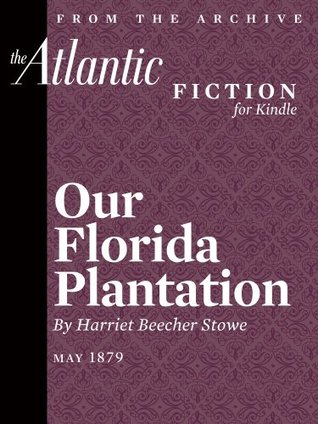
Our Florida Plantation (From The Atlantic Archives)
Harriet Beecher was born in 1811 in Litchfield, Connecticut, into the celebrated Beecher family: her father, Lyman, was a famous Congregationalist minister; her brother, Henry Ward, was a leader of the abolitionist movement; and her sister Catharine founded the academy in Hartford where Harriet was given the kind of education usually reserved for men, including languages, science, ethics, logic, and math. She lived until l896, long enough to publish her most famous book, Uncle Tom’s Cabin, which helped shape public opinion on slavery, and finally see it abolished. She married Calvin Ellis Stowe, a professor in a seminary in Cincinnati, and they were active in the Underground Railroad there, before Calvin moved the family to Brunswick, Maine, where he joined the faculty at Bowdoin College. Stowe had seven children and became one of the most celebrated women writers in the country, producing novels, articles, and essays, many published in the pages of The Atlantic Monthly.
Harriet Beecher was born in 1811 in Litchfield, Connecticut, into the celebrated Beecher family: her father, Lyman, was a famous Congregationalist minister; her brother, Henry Ward, was a leader of the abolitionist movement; and her sister Catharine founded the academy in Hartford where Harriet was given the kind of education usually reserved for men, including languages, science, ethics, logic, and math. She lived until l896, long enough to publish her most famous book, Uncle Tom’s CabinUncle Tom’s Cabin, which helped shape public opinion on slavery, and finally see it abolished. She married Calvin Ellis Stowe, a professor in a seminary in Cincinnati, and they were active in the Underground Railroad there, before Calvin moved the family to Brunswick, Maine, where he joined the faculty at Bowdoin College. Stowe had seven children and became one of the most celebrated women writers in the country, producing novels, articles, and essays, many published in the pages of The Atlantic MonthlyThe Atlantic Monthly.After the Civil War, in the l860s, ’70s, and ’80s, the Stowe family lived in Hartford but wintered in a comfortable home in Florida, on the St. John’s River. Practicing what she preached, Stowe created a racially integrated school in the area, an early example of equal education.
After the Civil War, in the l860s, ’70s, and ’80s, the Stowe family lived in Hartford but wintered in a comfortable home in Florida, on the St. John’s River. Practicing what she preached, Stowe created a racially integrated school in the area, an early example of equal education.“Our Florida Plantation”—pulled from the archives for Kindle—appeared in the May l879 issue of The Atlantic Monthly. Drawing on her familiarity with the area, Stowe begins, “It was a hazy, dreamy, sultry February day …” The story takes place not long after what she calls “the closing of our war” and features several captains of the Union army, who “had conceived the bright idea of hiring a plantation and making their fortunes in raising cotton.”
“Our Florida Plantation”—pulled from the archives for Kindle—appeared in the May l879 issue of The Atlantic MonthlyThe Atlantic Monthly. Drawing on her familiarity with the area, Stowe begins, “It was a hazy, dreamy, sultry February day …” The story takes place not long after what she calls “the closing of our war” and features several captains of the Union army, who “had conceived the bright idea of hiring a plantation and making their fortunes in raising cotton.”Stowe’s prose is remarkably clear and precise. She takes her time with the story, pointing out the pleasures of Florida (“For we had come straight down from the land of whirling storms and deep snowdrifts”), exploring the lives of the newly freed slaves, talking about when “our ship of gold would come sailing joyfully in,” and poking gentle fun at a local character. She meanders to what she calls the “finale of our story,” which arrives like “an army which came by night, without banner or band of music” in the last few action-packed paragraphs.
Stowe’s prose is remarkably clear and precise. She takes her time with the story, pointing out the pleasures of Florida (“For we had come straight down from the land of whirling storms and deep snowdrifts”), exploring the lives of the newly freed slaves, talking about when “our ship of gold would come sailing joyfully in,” and poking gentle fun at a local character. She meanders to what she calls the “finale of our story,” which arrives like “an army which came by night, without banner or band of music” in the last few action-packed paragraphs.Stowe’s “Our Florida Plantation” appears here exactly as it did in The Atlantic Monthly in 1879, including every excess comma.
BUY NOW
Published June 26th 2010 by The Atlantic
Get Bible verse every day in your inbox
Read on Mobile


Group of Brands


1811-1896
Harriet Beecher Stowe was an American abolitionist and author. Harriet was born in Litchfield, Connecticut, as the daughter of an outspoken religious leader Lyman Beecher. She was the sister of the educator and author, Catherine Beecher, clergymen Henry Ward Beecher and Charles Beecher.
Her father was a preacher who was greatly effected by the pro-slavery riots that took place in Cincinnati in 1834.
Stowe's novel Uncle Tom's Cabin (1852) depicted life for African-Americans under slavery; it reached millions as a novel and play, and became influential in the U.S. and Britain and made the political issues of the 1850s regarding slavery tangible to millions, energizing anti-slavery forces in the American North, while provoking widespread anger in the South. Upon meeting Stowe, Abraham Lincoln allegedly remarked, "So this is the little old lady who started this new great war!"
... Show more