
- Bible
- Read the Bible
- Bible Versions
- Verse of the Day
- Reading Plans
- Verses by Topic
- Books of the Bible
- Bible Images
- Study
- Commentaries
- Concordances
- Dictionaries
- Encyclopedias
- Sermons
- Bible Atlas & Maps
- BP Wiki
- Devotionals
- Today's Devotionals
- Light of the World
- All Devotionals
- Inspirational Quotes
- More
- Picture Quotes
- Videos
- Inspirational
- Bible Study
- What The Bible Says
- Bible Q&As
- Daily Bread
- Bible by Genre
- Bible Stories
- Random Bible Verse
- Community
- Store
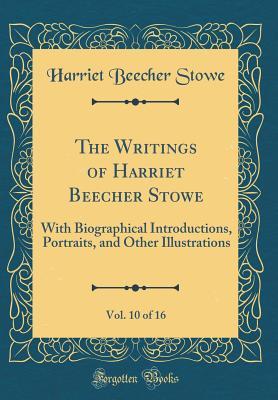
The Writings of Harriet Beecher Stowe, Vol. 10 of 16: With Biographical Introductions, Portraits, and Other Illustrations (Classic Reprint)
by Harriet Beecher Stowe
Excerpt from The Writings of Harriet Beecher Stowe, Vol. 10 of 16: With Biographical Introductions, Portraits, and Other Illustrations
WE begin to be grown-up people. We cannot always remain in the pleasant valley of childhood. I myself, good reader, have dwelt on its scenes longer, because, looking back on it from the extreme end of life, it seems to my weary eyes so fresh and beautiful; the dew of the morning land lies on it, that dew which no coming day will restore.
Our childhood, as the reader has seen, must be confessed to have been reasonably enjoyable. Its influences were all homely, innocent, and pure. There was no seductive vice, no open or covert immorality. Our worst form of roaring dissipation consisted in being too fond of huckleberry parties, or in the immoderate pursuit of chestnuts and walnuts. Even the vagrant associates of uncertain social standing who abounded in Oldtown were characterized by a kind of wood land innocence, and were not much more harmful than woodchucks and squirrels.
About the Publisher
Forgotten Books publishes hundreds of thousands of rare and classic books. Find more at www.forgottenbooks.comwww.forgottenbooks.com
This book is a reproduction of an important historical work. Forgotten Books uses state-of-the-art technology to digitally reconstruct the work, preserving the original format whilst repairing imperfections present in the aged copy. In rare cases, an imperfection in the original, such as a blemish or missing page, may be replicated in our edition. We do, however, repair the vast majority of imperfections successfully; any imperfections that remain are intentionally left to preserve the state of such historical works.
WE begin to be grown-up people. We cannot always remain in the pleasant valley of childhood. I myself, good reader, have dwelt on its scenes longer, because, looking back on it from the extreme end of life, it seems to my weary eyes so fresh and beautiful; the dew of the morning land lies on it, that dew which no coming day will restore.
Our childhood, as the reader has seen, must be confessed to have been reasonably enjoyable. Its influences were all homely, innocent, and pure. There was no seductive vice, no open or covert immorality. Our worst form of roaring dissipation consisted in being too fond of huckleberry parties, or in the immoderate pursuit of chestnuts and walnuts. Even the vagrant associates of uncertain social standing who abounded in Oldtown were characterized by a kind of wood land innocence, and were not much more harmful than woodchucks and squirrels.
About the Publisher
Forgotten Books publishes hundreds of thousands of rare and classic books. Find more at www.forgottenbooks.comwww.forgottenbooks.com
This book is a reproduction of an important historical work. Forgotten Books uses state-of-the-art technology to digitally reconstruct the work, preserving the original format whilst repairing imperfections present in the aged copy. In rare cases, an imperfection in the original, such as a blemish or missing page, may be replicated in our edition. We do, however, repair the vast majority of imperfections successfully; any imperfections that remain are intentionally left to preserve the state of such historical works.
BUY NOW
Hardcover, 428 pages
Published December 4th 2018 by Forgotten Books
Subscribe
Get Bible verse every day in your inbox
Read on Mobile


Group of Brands


© 2026 Bibleportal.com All rights reserved.
1811-1896
Harriet Beecher Stowe was an American abolitionist and author. Harriet was born in Litchfield, Connecticut, as the daughter of an outspoken religious leader Lyman Beecher. She was the sister of the educator and author, Catherine Beecher, clergymen Henry Ward Beecher and Charles Beecher.
Her father was a preacher who was greatly effected by the pro-slavery riots that took place in Cincinnati in 1834.
Stowe's novel Uncle Tom's Cabin (1852) depicted life for African-Americans under slavery; it reached millions as a novel and play, and became influential in the U.S. and Britain and made the political issues of the 1850s regarding slavery tangible to millions, energizing anti-slavery forces in the American North, while provoking widespread anger in the South. Upon meeting Stowe, Abraham Lincoln allegedly remarked, "So this is the little old lady who started this new great war!"
... Show more