
- Bible
- Read the Bible
- Bible Versions
- Verse of the Day
- Reading Plans
- Verses by Topic
- Books of the Bible
- Bible Images
- Study
- Commentaries
- Concordances
- Dictionaries
- Encyclopedias
- Sermons
- Bible Atlas & Maps
- BP Wiki
- Devotionals
- Today's Devotionals
- Light of the World
- All Devotionals
- Inspirational Quotes
- More
- Picture Quotes
- Videos
- Inspirational
- Bible Study
- What The Bible Says
- Bible Q&As
- Daily Bread
- Bible by Genre
- Bible Stories
- Random Bible Verse
- Community
- Store
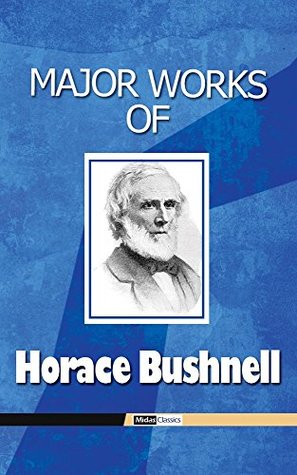
Major Works of Horace Bushnell
by Horace Bushnell
On Horace Bushnell:
Horace Bushnell (April 14, 1802 – February 17, 1876) was an American Congregational minister and theologian.
Bushnell was born in the village of Bantam, township of Litchfield, Connecticut. He attended Yale College where he roomed with future magazinist Nathaniel Parker Willis. Willis credited Bushnell with teaching him the proper technique for sharpening a razor. After graduating in 1827, he was literary editor of the New York Journal of Commerce from 1828–1829, and in 1829 became a tutor at Yale. Here he initially studied law, but in 1831 he entered the theology department of Yale College. In May, 1833 Bushnell was ordained pastor of the North Congregational church in Hartford, Connecticut. He married Mary Apthorp in 1833 and the couple had three children. Bushnell remained in Hartford until 1859 when, due to extended poor health he resigned his pastorate. Thereafter he held no appointed office, but, until his death at Hartford in 1876, he was a prolific author and occasionally preached.
(Source: Wikipedia.org)
“Major Works of Horace Bushnell” contains:
•An aesthetic cover page
•A beginning click-able Table of Contents for all titles
•Inner click-able Tables of Contents for all individual books with multiple chapters
•Nicely organized chapters and text
Author’s works in this collection include:
•THE CHARACTER OF JESUS
•CHRIST AND HIS SALVATION
•CHRISTIAN NURTURE
•SERMONS FOR THE NEW LIFE.
•THE VICARIOUS SACRIFICE, GROUNDED IN PRINCIPLES OF UNIVERSAL OBLIGATION
Horace Bushnell (April 14, 1802 – February 17, 1876) was an American Congregational minister and theologian.
Bushnell was born in the village of Bantam, township of Litchfield, Connecticut. He attended Yale College where he roomed with future magazinist Nathaniel Parker Willis. Willis credited Bushnell with teaching him the proper technique for sharpening a razor. After graduating in 1827, he was literary editor of the New York Journal of Commerce from 1828–1829, and in 1829 became a tutor at Yale. Here he initially studied law, but in 1831 he entered the theology department of Yale College. In May, 1833 Bushnell was ordained pastor of the North Congregational church in Hartford, Connecticut. He married Mary Apthorp in 1833 and the couple had three children. Bushnell remained in Hartford until 1859 when, due to extended poor health he resigned his pastorate. Thereafter he held no appointed office, but, until his death at Hartford in 1876, he was a prolific author and occasionally preached.
(Source: Wikipedia.org)
“Major Works of Horace Bushnell” contains:
•An aesthetic cover page
•A beginning click-able Table of Contents for all titles
•Inner click-able Tables of Contents for all individual books with multiple chapters
•Nicely organized chapters and text
Author’s works in this collection include:
•THE CHARACTER OF JESUS
•CHRIST AND HIS SALVATION
•CHRISTIAN NURTURE
•SERMONS FOR THE NEW LIFE.
•THE VICARIOUS SACRIFICE, GROUNDED IN PRINCIPLES OF UNIVERSAL OBLIGATION
BUY NOW
Kindle Edition
Published May 21st 2016 by Midas Classics
Subscribe
Get Bible verse every day in your inbox
Read on Mobile


Group of Brands


© 2026 Bibleportal.com All rights reserved.
Horace Bushnell was an American Congregational clergyman and theologian. Bushnell was a Yankee born in the village of Bantam, township of Litchfield, Connecticut.
He graduated at Yale in 1827, was literary editor of the New York Journal of Commerce from 1828–1829, and in 1829 became a tutor at Yale. Here he initially studied law, but in 1831 he entered the theology department of Yale College.
In May, 1833 Bushnell was ordained pastor of the North Congregational church in Hartford, Connecticut, where he remained until 1859, when due to extended poor health he resigned his pastorate. Thereafter he held no appointed office, but, until his death at Hartford in 1876, he was a prolific author and occasionally preached.
... Show more