
- Bible
- Read the Bible
- Bible Versions
- Verse of the Day
- Reading Plans
- Verses by Topic
- Books of the Bible
- Bible Images
- Study
- Commentaries
- Concordances
- Dictionaries
- Encyclopedias
- Sermons
- Bible Atlas & Maps
- BP Wiki
- Devotionals
- Today's Devotionals
- Light of the World
- All Devotionals
- Inspirational Quotes
- More
- Picture Quotes
- Videos
- Inspirational
- Bible Study
- What The Bible Says
- Bible Q&As
- Daily Bread
- Bible by Genre
- Bible Stories
- Random Bible Verse
- Community
- Store
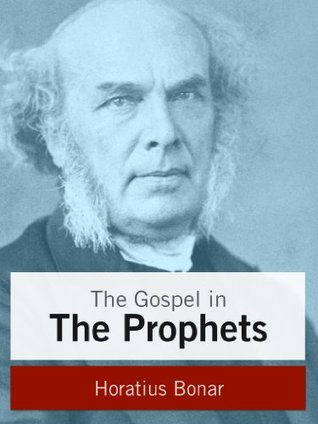
The Gospel in the Prophets
by Horatius Bonar Hymns
Horatius Bonar (1808 – 1889) was a Scottish pastor, poet, and devotional writer.
This book contains the following meditations on the Old Testament prophets:
1. The Vision of the Glory (Isaiah 6:1-13)
2. Man’s Extremity and Satan’s Opportunity (Isaiah 8:19-22)
3. The Day of Clear Vision to the Dim Eyes (Isaiah 32:3)
4. The Unfainting Creator and the Fainting Creature (Isaiah 40:28-31)
5. The Knowledge That Justifies (Isaiah 53:11)
6. The Heritage and Its Title-Deeds (Isaiah 54:17)
7. The Meeting Between the Sinner and God (Isaiah 64:5)
8. God’s Love and God’s Way of Blessing (Jeremiah 3:12,13)
9. Divine Jealousy for the Truth (Jeremiah 5:3)
10. Divine Love and Human Rejection of It (Jeremiah 8:6,7)
11. God’s Desire to Bless the Sinner (Jeremiah 13:27)
12. The Resting-Place Forgotten (Jeremiah 50:6)
13. The Day That Will Right All Wrongs (Lamentations 1:21)
14. The Glory and the Love (Ezekiel 1:28)
15. False Religion and Its Doom (Ezekiel 6:5)
16. No Breath No Life (Ezekiel 37:8)
17. Every Christian a Teacher (Daniel 11:33)
18. Work, Rest, and Recompence (Daniel 12:13)
19. Human Heedlessness and Divine Remembrance (Hosea 7:2)
20. Lies the Food of Man (Hosea 10:13)
21. The Love and the Calling (Hosea 11:1)
22. The Anger and the Goodness (Nahum 1:6,7)
23. Darkness Pursuing the Sinner (Nahum 1:8)
24. Jerusalem the Centre of the World’s Peace (Haggai 2:9)
25. Jerusalem and Her King (Zechariah 9:9,10)
26. Looking to the Pierced One (Zechariah 12:10)
27. The Holiness of Common Things (Zechariah 14:20,21)
28. Wearying Jehovah With Our Words (Malachi 2:17)
29. Dies Irae (Malachi 4:1-6)
"The time is at hand when these eyes shall not be dim," writes Bonar. "There are many partial removals of this dimness even now; times when we see farther and more clearly. At Pentecost this was the case. At the Reformation also. In times of revival it has been so. In individual cases this has been known. Paul was a man that saw clearly. Augustine, Wycliffe, Luther, Calvin, Knox, Rutherford, Edwards; these were clear-sighted men, from whom the Holy Spirit had purged the scales and the dimness. But the reference here is prophetical. The prophet points to a coming; era of perfection, when we shall see Him as he is; see as we are seen, know as we are known. No dimness then; no defective vision; no cloudy atmosphere; no diseased organ of sight. All brightness and distinctness. The cross clear and bright. The light and love unclouded. Christ seen face to face, no longer in a glass darkly. Every ray of glory coming freshly from his revealed countenance; every feature fair and perfect; Himself the chief among ten thousand; His kingdom infinitely glorious. No doubting either as to the things of Christ, or our interest in them. No unbelief; no error; no mist. All the perfection of vision, and the perfection of light. O day of brightness and true vision, dawn! O Morning-star, arise! O Prince of light, light of the world, make haste, end the long darkness of humanity, and cover earth with celestial sunshine!"
This book contains the following meditations on the Old Testament prophets:
1. The Vision of the Glory (Isaiah 6:1-13)
2. Man’s Extremity and Satan’s Opportunity (Isaiah 8:19-22)
3. The Day of Clear Vision to the Dim Eyes (Isaiah 32:3)
4. The Unfainting Creator and the Fainting Creature (Isaiah 40:28-31)
5. The Knowledge That Justifies (Isaiah 53:11)
6. The Heritage and Its Title-Deeds (Isaiah 54:17)
7. The Meeting Between the Sinner and God (Isaiah 64:5)
8. God’s Love and God’s Way of Blessing (Jeremiah 3:12,13)
9. Divine Jealousy for the Truth (Jeremiah 5:3)
10. Divine Love and Human Rejection of It (Jeremiah 8:6,7)
11. God’s Desire to Bless the Sinner (Jeremiah 13:27)
12. The Resting-Place Forgotten (Jeremiah 50:6)
13. The Day That Will Right All Wrongs (Lamentations 1:21)
14. The Glory and the Love (Ezekiel 1:28)
15. False Religion and Its Doom (Ezekiel 6:5)
16. No Breath No Life (Ezekiel 37:8)
17. Every Christian a Teacher (Daniel 11:33)
18. Work, Rest, and Recompence (Daniel 12:13)
19. Human Heedlessness and Divine Remembrance (Hosea 7:2)
20. Lies the Food of Man (Hosea 10:13)
21. The Love and the Calling (Hosea 11:1)
22. The Anger and the Goodness (Nahum 1:6,7)
23. Darkness Pursuing the Sinner (Nahum 1:8)
24. Jerusalem the Centre of the World’s Peace (Haggai 2:9)
25. Jerusalem and Her King (Zechariah 9:9,10)
26. Looking to the Pierced One (Zechariah 12:10)
27. The Holiness of Common Things (Zechariah 14:20,21)
28. Wearying Jehovah With Our Words (Malachi 2:17)
29. Dies Irae (Malachi 4:1-6)
"The time is at hand when these eyes shall not be dim," writes Bonar. "There are many partial removals of this dimness even now; times when we see farther and more clearly. At Pentecost this was the case. At the Reformation also. In times of revival it has been so. In individual cases this has been known. Paul was a man that saw clearly. Augustine, Wycliffe, Luther, Calvin, Knox, Rutherford, Edwards; these were clear-sighted men, from whom the Holy Spirit had purged the scales and the dimness. But the reference here is prophetical. The prophet points to a coming; era of perfection, when we shall see Him as he is; see as we are seen, know as we are known. No dimness then; no defective vision; no cloudy atmosphere; no diseased organ of sight. All brightness and distinctness. The cross clear and bright. The light and love unclouded. Christ seen face to face, no longer in a glass darkly. Every ray of glory coming freshly from his revealed countenance; every feature fair and perfect; Himself the chief among ten thousand; His kingdom infinitely glorious. No doubting either as to the things of Christ, or our interest in them. No unbelief; no error; no mist. All the perfection of vision, and the perfection of light. O day of brightness and true vision, dawn! O Morning-star, arise! O Prince of light, light of the world, make haste, end the long darkness of humanity, and cover earth with celestial sunshine!"
BUY NOW
Kindle Edition, 101 pages
Published January 10th 2014 by Titus Books
Subscribe
Get Bible verse every day in your inbox
Read on Mobile


Group of Brands


© 2026 Bibleportal.com All rights reserved.
The son of James Bonar, Solicitor of Excise for Scotland, he was born and educated in Edinburgh. He comes from a long line of ministers who have served a total of 364 years in the Church of Scotland. One of eleven children, his brothers John James and Andrew Alexander were also ministers of the Free Church of Scotland. He had married Jane Catherine Lundie in 1843 and five of their young children died in succession. Towards the end of their lives, one of their surviving daughters was left a widow with five small children and she returned to live with her parents. Bonar's wife, Jane, died in 1876. He is buried in the Canongate Kirkyard.
In 1853 Bonar earned the Doctor of Divinity degree at the University of Aberdeen.
He entered the Ministry of the Church of Scotland. At first he was put in charge of mission work at St. John's parish in Leith and settled at Kelso. He joined the Free Church at the time of the Disruption of 1843, and in 1867 was moved to Edinburgh to take over the Chalmers Memorial Church (named after his teacher at college, Dr. Thomas Chalmers). In 1883, he was elected Moderator of the General Assembly of the Free Church of Scotland.... Show more