
- Bible
- Read the Bible
- Bible Versions
- Verse of the Day
- Reading Plans
- Verses by Topic
- Books of the Bible
- Bible Images
- Study
- Commentaries
- Concordances
- Dictionaries
- Encyclopedias
- Sermons
- Bible Atlas & Maps
- BP Wiki
- Devotionals
- Today's Devotionals
- Light of the World
- All Devotionals
- Inspirational Quotes
- More
- Picture Quotes
- Videos
- Inspirational
- Bible Study
- What The Bible Says
- Bible Q&As
- Daily Bread
- Bible by Genre
- Bible Stories
- Random Bible Verse
- Community
- Store
The Revelation of St. John
by Horatius Bonar Hymns
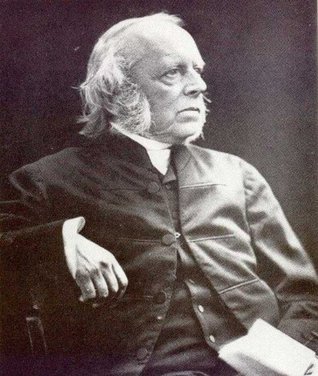
Horatius Bonar - (1808-1889), Scottish churchman and poet
Horatius Bonar had a passionate heart for revival and was a friend and supporter of several revivalists, He was brother to the more well-known Andrew Bonar, and with him defended D. L. Moody's evangelistic ministry in Scotland. He authored a couple of excellent revival works, one including over a hundred biographical sketches and the other an addendum to Rev. John Gillies' Historical Collections bringing it up to date.
He was a powerful soul-winner and is well qualified to pen this brief, but illuminating study of the character of true revivalists.
Horatius was in fact one of eleven children, and of these an older brother, John James, and a younger, Andrew, also became ministers and were all closely involved, together with Thomas Chalmers, William C. Burns and Robert Murray M'Cheyne, in the important spiritual movements which affected many places in Scotland in the 1830s and 1840s.
In the controversy known as the "Great Disruption," Horatius stood firmly with the evangelical ministers and elders who left the Church of Scotland's General Assembly in May 1843 and formed the new Free Church of Scotland. By this time he had started to write hymns, some of which appeared in a collection he published in 1845, but typically, his compositions were not named. His gifts for expressing theological truths in fluent verse form are evident in all his best-known hymns, but in addition he was also blessed with a deep understanding of doctrinal principles.
Examples of the hymns he composed on the fundamental doctrines include, "Glory be to God the Father".....on the Trinity. "0 Love of God, how strong and true".....on Redemption. "Light of the world," - "Rejoice and be glad" - "Done is the work" on the Person and Work of Christ. "Come Lord and tarry not," on His Second Coming, while the hymn "Blessed be God, our God!" conveys a sweeping survey of Justification and Sanctification.
In all this activity, his pastoral work and preaching were never neglected and after almost twenty years laboring in the Scottish Borders at Kelso, Bonar moved back to Edinburgh in 1866 to be minister at the Chalmers Memorial Chapel (now renamed St. Catherine's Argyle Church). He continued his ministry for a further twenty years helping to arrange D.L. Moody's meetings in Edinburgh in 1873 and being appointed moderator of the Free Church ten years later. His health declined by 1887, but he was approaching the age of eighty when he preached in his church for the last time, and he died on 31 May 1889.
Horatius Bonar had a passionate heart for revival and was a friend and supporter of several revivalists, He was brother to the more well-known Andrew Bonar, and with him defended D. L. Moody's evangelistic ministry in Scotland. He authored a couple of excellent revival works, one including over a hundred biographical sketches and the other an addendum to Rev. John Gillies' Historical Collections bringing it up to date.
He was a powerful soul-winner and is well qualified to pen this brief, but illuminating study of the character of true revivalists.
Horatius was in fact one of eleven children, and of these an older brother, John James, and a younger, Andrew, also became ministers and were all closely involved, together with Thomas Chalmers, William C. Burns and Robert Murray M'Cheyne, in the important spiritual movements which affected many places in Scotland in the 1830s and 1840s.
In the controversy known as the "Great Disruption," Horatius stood firmly with the evangelical ministers and elders who left the Church of Scotland's General Assembly in May 1843 and formed the new Free Church of Scotland. By this time he had started to write hymns, some of which appeared in a collection he published in 1845, but typically, his compositions were not named. His gifts for expressing theological truths in fluent verse form are evident in all his best-known hymns, but in addition he was also blessed with a deep understanding of doctrinal principles.
Examples of the hymns he composed on the fundamental doctrines include, "Glory be to God the Father".....on the Trinity. "0 Love of God, how strong and true".....on Redemption. "Light of the world," - "Rejoice and be glad" - "Done is the work" on the Person and Work of Christ. "Come Lord and tarry not," on His Second Coming, while the hymn "Blessed be God, our God!" conveys a sweeping survey of Justification and Sanctification.
In all this activity, his pastoral work and preaching were never neglected and after almost twenty years laboring in the Scottish Borders at Kelso, Bonar moved back to Edinburgh in 1866 to be minister at the Chalmers Memorial Chapel (now renamed St. Catherine's Argyle Church). He continued his ministry for a further twenty years helping to arrange D.L. Moody's meetings in Edinburgh in 1873 and being appointed moderator of the Free Church ten years later. His health declined by 1887, but he was approaching the age of eighty when he preached in his church for the last time, and he died on 31 May 1889.
BUY NOW
Kindle Edition
Published (first published April 14th 2010)
Subscribe
Get Bible verse every day in your inbox
Read on Mobile


Group of Brands


© 2026 Bibleportal.com All rights reserved.
The son of James Bonar, Solicitor of Excise for Scotland, he was born and educated in Edinburgh. He comes from a long line of ministers who have served a total of 364 years in the Church of Scotland. One of eleven children, his brothers John James and Andrew Alexander were also ministers of the Free Church of Scotland. He had married Jane Catherine Lundie in 1843 and five of their young children died in succession. Towards the end of their lives, one of their surviving daughters was left a widow with five small children and she returned to live with her parents. Bonar's wife, Jane, died in 1876. He is buried in the Canongate Kirkyard.
In 1853 Bonar earned the Doctor of Divinity degree at the University of Aberdeen.
He entered the Ministry of the Church of Scotland. At first he was put in charge of mission work at St. John's parish in Leith and settled at Kelso. He joined the Free Church at the time of the Disruption of 1843, and in 1867 was moved to Edinburgh to take over the Chalmers Memorial Church (named after his teacher at college, Dr. Thomas Chalmers). In 1883, he was elected Moderator of the General Assembly of the Free Church of Scotland.... Show more