
- Bible
- Read the Bible
- Bible Versions
- Verse of the Day
- Reading Plans
- Verses by Topic
- Books of the Bible
- Bible Images
- Study
- Commentaries
- Concordances
- Dictionaries
- Encyclopedias
- Sermons
- Bible Atlas & Maps
- BP Wiki
- Devotionals
- Today's Devotionals
- Light of the World
- All Devotionals
- Inspirational Quotes
- More
- Picture Quotes
- Videos
- Inspirational
- Bible Study
- What The Bible Says
- Bible Q&As
- Daily Bread
- Bible by Genre
- Bible Stories
- Random Bible Verse
- Community
- Store
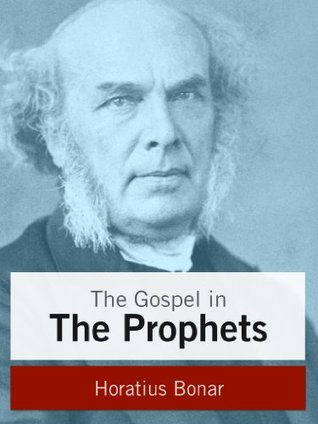
The Gospel in the Prophets
by Horatius Bonar
Horatius Bonar (1808 – 1889) was a Scottish pastor, poet, and devotional writer.
This book contains the following meditations on the Old Testament prophets:
1. The Vision of the Glory (Isaiah 6:1-13)
2. Man’s Extremity and Satan’s Opportunity (Isaiah 8:19-22)
3. The Day of Clear Vision to the Dim Eyes (Isaiah 32:3)
4. The Unfainting Creator and the Fainting Creature (Isaiah 40:28-31)
5. The Knowledge That Justifies (Isaiah 53:11)
6. The Heritage and Its Title-Deeds (Isaiah 54:17)
7. The Meeting Between the Sinner and God (Isaiah 64:5)
8. God’s Love and God’s Way of Blessing (Jeremiah 3:12,13)
9. Divine Jealousy for the Truth (Jeremiah 5:3)
10. Divine Love and Human Rejection of It (Jeremiah 8:6,7)
11. God’s Desire to Bless the Sinner (Jeremiah 13:27)
12. The Resting-Place Forgotten (Jeremiah 50:6)
13. The Day That Will Right All Wrongs (Lamentations 1:21)
14. The Glory and the Love (Ezekiel 1:28)
15. False Religion and Its Doom (Ezekiel 6:5)
16. No Breath No Life (Ezekiel 37:8)
17. Every Christian a Teacher (Daniel 11:33)
18. Work, Rest, and Recompence (Daniel 12:13)
19. Human Heedlessness and Divine Remembrance (Hosea 7:2)
20. Lies the Food of Man (Hosea 10:13)
21. The Love and the Calling (Hosea 11:1)
22. The Anger and the Goodness (Nahum 1:6,7)
23. Darkness Pursuing the Sinner (Nahum 1:8)
24. Jerusalem the Centre of the World’s Peace (Haggai 2:9)
25. Jerusalem and Her King (Zechariah 9:9,10)
26. Looking to the Pierced One (Zechariah 12:10)
27. The Holiness of Common Things (Zechariah 14:20,21)
28. Wearying Jehovah With Our Words (Malachi 2:17)
29. Dies Irae (Malachi 4:1-6)
"The time is at hand when these eyes shall not be dim," writes Bonar. "There are many partial removals of this dimness even now; times when we see farther and more clearly. At Pentecost this was the case. At the Reformation also. In times of revival it has been so. In individual cases this has been known. Paul was a man that saw clearly. Augustine, Wycliffe, Luther, Calvin, Knox, Rutherford, Edwards; these were clear-sighted men, from whom the Holy Spirit had purged the scales and the dimness. But the reference here is prophetical. The prophet points to a coming; era of perfection, when we shall see Him as he is; see as we are seen, know as we are known. No dimness then; no defective vision; no cloudy atmosphere; no diseased organ of sight. All brightness and distinctness. The cross clear and bright. The light and love unclouded. Christ seen face to face, no longer in a glass darkly. Every ray of glory coming freshly from his revealed countenance; every feature fair and perfect; Himself the chief among ten thousand; His kingdom infinitely glorious. No doubting either as to the things of Christ, or our interest in them. No unbelief; no error; no mist. All the perfection of vision, and the perfection of light. O day of brightness and true vision, dawn! O Morning-star, arise! O Prince of light, light of the world, make haste, end the long darkness of humanity, and cover earth with celestial sunshine!"
This book contains the following meditations on the Old Testament prophets:
1. The Vision of the Glory (Isaiah 6:1-13)
2. Man’s Extremity and Satan’s Opportunity (Isaiah 8:19-22)
3. The Day of Clear Vision to the Dim Eyes (Isaiah 32:3)
4. The Unfainting Creator and the Fainting Creature (Isaiah 40:28-31)
5. The Knowledge That Justifies (Isaiah 53:11)
6. The Heritage and Its Title-Deeds (Isaiah 54:17)
7. The Meeting Between the Sinner and God (Isaiah 64:5)
8. God’s Love and God’s Way of Blessing (Jeremiah 3:12,13)
9. Divine Jealousy for the Truth (Jeremiah 5:3)
10. Divine Love and Human Rejection of It (Jeremiah 8:6,7)
11. God’s Desire to Bless the Sinner (Jeremiah 13:27)
12. The Resting-Place Forgotten (Jeremiah 50:6)
13. The Day That Will Right All Wrongs (Lamentations 1:21)
14. The Glory and the Love (Ezekiel 1:28)
15. False Religion and Its Doom (Ezekiel 6:5)
16. No Breath No Life (Ezekiel 37:8)
17. Every Christian a Teacher (Daniel 11:33)
18. Work, Rest, and Recompence (Daniel 12:13)
19. Human Heedlessness and Divine Remembrance (Hosea 7:2)
20. Lies the Food of Man (Hosea 10:13)
21. The Love and the Calling (Hosea 11:1)
22. The Anger and the Goodness (Nahum 1:6,7)
23. Darkness Pursuing the Sinner (Nahum 1:8)
24. Jerusalem the Centre of the World’s Peace (Haggai 2:9)
25. Jerusalem and Her King (Zechariah 9:9,10)
26. Looking to the Pierced One (Zechariah 12:10)
27. The Holiness of Common Things (Zechariah 14:20,21)
28. Wearying Jehovah With Our Words (Malachi 2:17)
29. Dies Irae (Malachi 4:1-6)
"The time is at hand when these eyes shall not be dim," writes Bonar. "There are many partial removals of this dimness even now; times when we see farther and more clearly. At Pentecost this was the case. At the Reformation also. In times of revival it has been so. In individual cases this has been known. Paul was a man that saw clearly. Augustine, Wycliffe, Luther, Calvin, Knox, Rutherford, Edwards; these were clear-sighted men, from whom the Holy Spirit had purged the scales and the dimness. But the reference here is prophetical. The prophet points to a coming; era of perfection, when we shall see Him as he is; see as we are seen, know as we are known. No dimness then; no defective vision; no cloudy atmosphere; no diseased organ of sight. All brightness and distinctness. The cross clear and bright. The light and love unclouded. Christ seen face to face, no longer in a glass darkly. Every ray of glory coming freshly from his revealed countenance; every feature fair and perfect; Himself the chief among ten thousand; His kingdom infinitely glorious. No doubting either as to the things of Christ, or our interest in them. No unbelief; no error; no mist. All the perfection of vision, and the perfection of light. O day of brightness and true vision, dawn! O Morning-star, arise! O Prince of light, light of the world, make haste, end the long darkness of humanity, and cover earth with celestial sunshine!"
BUY NOW
Kindle Edition, 101 pages
Published January 10th 2014 by Titus Books
Subscribe
Get Bible verse every day in your inbox
Read on Mobile


Group of Brands


© 2026 Bibleportal.com All rights reserved.
Horatius Bonar (1808 - 1889)
Bonar has been called “the prince of Scottish hymn writers.” After graduating from the University of Edinburgh, he was ordained in 1838, and became pastor of the North Parish, Kelso. He joined the Free Church of Scotland after the “Disruption” of 1843, and for a while edited the church’s The Border Watch. Bonar remained in Kelso for 28 years, after which he moved to the Chalmers Memorial church in Edinburgh, where he served the rest of his life. Bonar wrote more than 600 hymns.He was a voluminous and highly popular author. He also served as the editor for "The Quarterly journal of Prophecy" from 1848 to 1873 and for the "Christian Treasury" from 1859 to 1879. In addition to many books and tracts wrote a number of hymns, many of which, e.g., "I heard the voice of Jesus say" and "Blessing and Honour and Glory and Power," became known all over the English-speaking world. A selection of these was published as Hymns of Faith and Hope (3 series). His last volume of poetry was My Old Letters. Bonar was also author of several biographies of ministers he had known, including "The Life of the Rev. John Milne of Perth" in 1869, - and in 1884 "The Life and Works of the Rev. G. T. Dodds", who had been married to Bonar's daughter and who had died in 1882 while serving as a missionary in France.
Horatius Bonar comes from a long line of ministers who have served a total of 364 years in the Church of Scotland.
He entered the Ministry of the Church of Scotland. At first he was put in charge of mission work at St. John's parish in Leith and settled at Kelso. He joined the Free Church at the time of the Disruption of 1843, and in 1867 was moved to Edinburgh to take over the Chalmers Memorial Church (named after his teacher at college, Dr. Thomas Chalmers). In 1883, he was elected Moderator of the General Assembly of the Church of Scotland.
He was a voluminous and highly popular author. He also served as the editor for "The Quarterly journal of Prophecy" from 1848 to 1873 and for the "Christian Treasury" from 1859 to 1879. In addition to many books and tracts wrote a number of hymns, many of which, e.g., "I heard the voice of Jesus say" and "Blessing and Honor and Glory and Power," became known all over the English-speaking world.
Horatius Bonar, had a passionate heart for revival and was a friend and supporter of several revivalists, He was brother to the more well-known Andrew Bonar, and with him defended D. L. Moody's evangelistic ministry in Scotland. He authored a couple of excellent revival works, one including over a hundred biographical sketches and the other an addendum to Rev. John Gillies' 'Historical Collections...' bringing it up to date.
He was a powerful soul-winner and is well qualified to pen this brief, but illuminating study of the character of true revivalists.
Horatius was in fact one of eleven children, and of these an older brother, John James, and a younger, Andrew, also became ministers and were all closely involved, together with Thomas Chalmers, William C. Burns and Robert Murray M'Cheyne, in the important spiritual movements which affected many places in Scotland in the 1830s and 1840s.
In the controversy known as the "Great Disruption," Horatius stood firmly with the evangelical ministers and elders who left the Church of Scotland's General Assembly in May 1843 and formed the new Free Church of Scotland. By this time he had started to write hymns, some of which appeared in a collection he published in 1845, but typically, his compositions were not named. His gifts for expressing theological truths in fluent verse form are evident in all his best-known hymns, but in addition he was also blessed with a deep understanding of doctrinal principles.
Examples of the hymns he composed on the fundamental doctrines include, "Glory be to God the Father".....on the Trinity. "0 Love of God, how strong and true".....on Redemption. "Light of the world," - "Rejoice and be glad" - "Done is the work" on the Person and Work of Christ. "Come Lord and tarry not," on His Second Coming, while the hymn "Blessed be God, our God!" conveys a sweeping survey of Justification and Sanctification.
In all this activity, his pastoral work and preaching were never neglected and after almost twenty years labouring in the Scottish Borders at Kelso, Bonar moved back to Edinburgh in 1866 to be minister at the Chalmers Memorial Chapel (now renamed St. Catherine's Argyle Church). He continued his ministry for a further twenty years helping to arrange D.L. Moody's meetings in Edinburgh in 1873 and being appointed moderator of the Free Church ten years later. His health declined by 1887, but he was approaching the age of eighty when he preached in his church for the last time, and he died on 31 May 1889.
... Show more