
- Bible
- Read the Bible
- Bible Versions
- Verse of the Day
- Reading Plans
- Verses by Topic
- Books of the Bible
- Bible Images
- Study
- Commentaries
- Concordances
- Dictionaries
- Encyclopedias
- Sermons
- Bible Atlas & Maps
- BP Wiki
- Devotionals
- Today's Devotionals
- Light of the World
- All Devotionals
- Inspirational Quotes
- More
- Picture Quotes
- Videos
- Inspirational
- Bible Study
- What The Bible Says
- Bible Q&As
- Daily Bread
- Bible by Genre
- Bible Stories
- Random Bible Verse
- Community
- Store
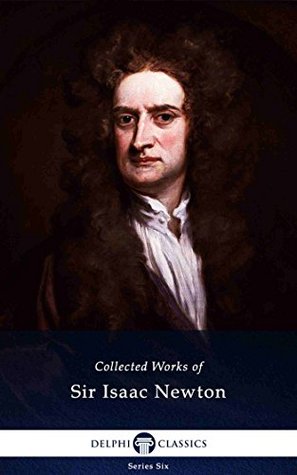
Collected Works of Sir Isaac Newton
by Isaac Newton
English physicist and mathematician, Sir Isaac Newton is widely regarded as one of the most influential scientists of all time. Newton’s book ‘Philosophiæ Naturalis Principia Mathematica’ laid the foundations for classical mechanics and ‘Optiks’ made seminal contributions to modern physical optics. This comprehensive eBook presents Newton’s collected works, with numerous illustrations, rare texts, informative introductions and the usual Delphi bonus material. (Version 1)
* Beautifully illustrated with images relating to Newton’s life and works
* New introductions, specially written for this collection, by Professor Kenneth Richard Seddon, OBE (QUILL, The Queen’s University of Belfast)
* Images of how the books were first published, giving your eReader a taste of the original texts
* Excellent formatting of the texts
* Key works are fully illustrated with their original diagrams
* Features three biographies - discover Newton’s intriguing life
* Scholarly ordering of texts into chronological order and genres
Please visit www.delphiclassics.comwww.delphiclassics.com to browse through our range of exciting titles
CONTENTS:
Scientific Works
PHILOSOPHIÆ NATURALIS PRINCIPIA MATHEMATICA
THE MATHEMATICAL PRINCIPLES OF NATURAL PHILOSOPHY (MOTTE TRANSLATION)
OPTICKS
Theological Works
THE CHRONOLOGY OF ANCIENT KINGDOMS AMENDED
OBSERVATIONS ON DANIEL AND THE APOCALYPSE OF ST. JOHN
AN HISTORICAL ACCOUNT OF TWO NOTABLE CORRUPTIONS OF SCRIPTURE
The Biographies
MEMOIRS OF SIR ISAAC NEWTON’S LIFE by William Stukeley
SIR ISAAC NEWTON by Sarah K. Bolton
SIR ISAAC NEWTON by Henry Martyn Taylor
Please visit www.delphiclassics.comwww.delphiclassics.com to browse through our range of exciting titles or to purchase this eBook as a Parts Edition of individual eBooks
* Beautifully illustrated with images relating to Newton’s life and works
* New introductions, specially written for this collection, by Professor Kenneth Richard Seddon, OBE (QUILL, The Queen’s University of Belfast)
* Images of how the books were first published, giving your eReader a taste of the original texts
* Excellent formatting of the texts
* Key works are fully illustrated with their original diagrams
* Features three biographies - discover Newton’s intriguing life
* Scholarly ordering of texts into chronological order and genres
Please visit www.delphiclassics.comwww.delphiclassics.com to browse through our range of exciting titles
CONTENTS:
Scientific Works
PHILOSOPHIÆ NATURALIS PRINCIPIA MATHEMATICA
THE MATHEMATICAL PRINCIPLES OF NATURAL PHILOSOPHY (MOTTE TRANSLATION)
OPTICKS
Theological Works
THE CHRONOLOGY OF ANCIENT KINGDOMS AMENDED
OBSERVATIONS ON DANIEL AND THE APOCALYPSE OF ST. JOHN
AN HISTORICAL ACCOUNT OF TWO NOTABLE CORRUPTIONS OF SCRIPTURE
The Biographies
MEMOIRS OF SIR ISAAC NEWTON’S LIFE by William Stukeley
SIR ISAAC NEWTON by Sarah K. Bolton
SIR ISAAC NEWTON by Henry Martyn Taylor
Please visit www.delphiclassics.comwww.delphiclassics.com to browse through our range of exciting titles or to purchase this eBook as a Parts Edition of individual eBooks
BUY NOW
Kindle Edition
Published May 3rd 2016 by Delphi Classics
Subscribe
Get Bible verse every day in your inbox
Read on Mobile


Group of Brands


© 2026 Bibleportal.com All rights reserved.
Sir Isaac Newton was an English physicist, mathematician, astronomer, natural philosopher, alchemist, and theologian who is considered one of the most influential people in human history.
Newton remains influential to scientists, as demonstrated by a 2005 survey of scientists in Britain's Royal Society asking who had the greater effect on the history of science, Newton or Albert Einstein. Newton was deemed the more influential.[8]
Newton also wrote on Judaeo-Christian prophecy, whose decipherment was essential, he thought, to the understanding of God. His book on the subject, which was reprinted well into the Victorian Age, represented lifelong study. Its message was that Christianity went astray in the 4th century AD, when the first Council of Nicaea propounded erroneous doctrines of the nature of Christ. The full extent of Newton's unorthodoxy was recognized only in the present century: but although a critic of accepted Trinitarian dogmas and the Council of Nicaea, he possessed a deep religious sense, venerated the Bible and accepted its account of creation. In late editions of his scientific works he expressed a strong sense of God's providential role in nature.
... Show more