
- Bible
- Read the Bible
- Bible Versions
- Verse of the Day
- Reading Plans
- Verses by Topic
- Books of the Bible
- Bible Images
- Study
- Commentaries
- Concordances
- Dictionaries
- Encyclopedias
- Sermons
- Bible Atlas & Maps
- BP Wiki
- Devotionals
- Today's Devotionals
- Light of the World
- All Devotionals
- Inspirational Quotes
- More
- Picture Quotes
- Videos
- Inspirational
- Bible Study
- What The Bible Says
- Bible Q&As
- Daily Bread
- Bible by Genre
- Bible Stories
- Random Bible Verse
- Community
- Store
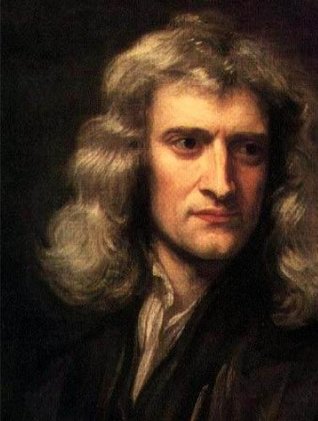
Isaac Newton on the Principia and Calculus (Illustrated)
by Isaac Newton
The book has an active table of contents for readers to access each chapter of the following titles:
1) THE MATHEMATICAL PRINCIPLES OF NATURAL PHILOSOPHY – ISAAC NEWTON
2) THE METHOD OF FLUXIONS AND INFINITE SERIES - ISAAC NEWTON
3) LIFE OF SIR ISAAC NEWT
The key contribution of Newton to the modern science and engineering is the book THE MATHEMATICAL PRINCIPLES OF NATURAL PHILOSOPHY. THE MATHEMATICAL PRINCIPLES OF NATURAL PHILOSOPHY is also called Principia.
Book I of the Principia details the foundations of the science of mechanics.
Book II inaugurates the theory of fluids. Book III shows the law of gravitation at work in the universe.
The other important contribution by Newton to mathematical field is the book THE METHOD OF FLUXIONS AND INFINITE SERIES. In this book, Newton made contributions to all branches of mathematics then studied and his solutions to the contemporary problems in analytical geometry of drawing tangents to curves (differentiation) and defining areas bounded by curves (integration). He discovered general methods of resolving problems of curvature, embraced in his "method of fluxions" and "inverse method of fluxions", respectively equivalent to Leibniz's later differential and integral calculus.
Newton also discovered measurable, mathematical patterns in the phenomenon of color through his book Opticks. He published it in 1704 and Opticks established Newton as a pioneer of the interweaving of pure theory with quantitative experimentation.
Newton’s contribution to Enlightenment was also profound. His conception of the Universe based upon Natural and rationally understandable laws became one of the seeds for Enlightenment ideology. John Locke and François-Marie Arouet applied concepts of Natural Law to political systems advocating intrinsic rights; Adam Smith applied Natural conceptions of psychology and self-interest to economic systems.
According to the very popular story, Newton figured out that the same force governed the motion of the Moon and the apple when he was on seeing an apple fall in his orchard in 1666. The story inspired millions of young minds around world to explore natural law of governing the Universe.
Newton once said: If I have seen further it is by standing on the shoulders of giants. This book is for those by standing on Newton’s shoulder to explore the world in any fields without fear.
1) THE MATHEMATICAL PRINCIPLES OF NATURAL PHILOSOPHY – ISAAC NEWTON
2) THE METHOD OF FLUXIONS AND INFINITE SERIES - ISAAC NEWTON
3) LIFE OF SIR ISAAC NEWT
The key contribution of Newton to the modern science and engineering is the book THE MATHEMATICAL PRINCIPLES OF NATURAL PHILOSOPHY. THE MATHEMATICAL PRINCIPLES OF NATURAL PHILOSOPHY is also called Principia.
Book I of the Principia details the foundations of the science of mechanics.
Book II inaugurates the theory of fluids. Book III shows the law of gravitation at work in the universe.
The other important contribution by Newton to mathematical field is the book THE METHOD OF FLUXIONS AND INFINITE SERIES. In this book, Newton made contributions to all branches of mathematics then studied and his solutions to the contemporary problems in analytical geometry of drawing tangents to curves (differentiation) and defining areas bounded by curves (integration). He discovered general methods of resolving problems of curvature, embraced in his "method of fluxions" and "inverse method of fluxions", respectively equivalent to Leibniz's later differential and integral calculus.
Newton also discovered measurable, mathematical patterns in the phenomenon of color through his book Opticks. He published it in 1704 and Opticks established Newton as a pioneer of the interweaving of pure theory with quantitative experimentation.
Newton’s contribution to Enlightenment was also profound. His conception of the Universe based upon Natural and rationally understandable laws became one of the seeds for Enlightenment ideology. John Locke and François-Marie Arouet applied concepts of Natural Law to political systems advocating intrinsic rights; Adam Smith applied Natural conceptions of psychology and self-interest to economic systems.
According to the very popular story, Newton figured out that the same force governed the motion of the Moon and the apple when he was on seeing an apple fall in his orchard in 1666. The story inspired millions of young minds around world to explore natural law of governing the Universe.
Newton once said: If I have seen further it is by standing on the shoulders of giants. This book is for those by standing on Newton’s shoulder to explore the world in any fields without fear.
BUY NOW
Kindle Edition
Published October 31st 2014 by www.WealthOfNation.com
Subscribe
Get Bible verse every day in your inbox
Read on Mobile


Group of Brands


© 2026 Bibleportal.com All rights reserved.
Sir Isaac Newton was an English physicist, mathematician, astronomer, natural philosopher, alchemist, and theologian who is considered one of the most influential people in human history.
Newton remains influential to scientists, as demonstrated by a 2005 survey of scientists in Britain's Royal Society asking who had the greater effect on the history of science, Newton or Albert Einstein. Newton was deemed the more influential.[8]
Newton also wrote on Judaeo-Christian prophecy, whose decipherment was essential, he thought, to the understanding of God. His book on the subject, which was reprinted well into the Victorian Age, represented lifelong study. Its message was that Christianity went astray in the 4th century AD, when the first Council of Nicaea propounded erroneous doctrines of the nature of Christ. The full extent of Newton's unorthodoxy was recognized only in the present century: but although a critic of accepted Trinitarian dogmas and the Council of Nicaea, he possessed a deep religious sense, venerated the Bible and accepted its account of creation. In late editions of his scientific works he expressed a strong sense of God's providential role in nature.
... Show more