
- Bible
- Read the Bible
- Bible Versions
- Verse of the Day
- Reading Plans
- Verses by Topic
- Books of the Bible
- Bible Images
- Study
- Commentaries
- Concordances
- Dictionaries
- Encyclopedias
- Sermons
- Bible Atlas & Maps
- BP Wiki
- Devotionals
- Today's Devotionals
- Light of the World
- All Devotionals
- Inspirational Quotes
- More
- Picture Quotes
- Videos
- Inspirational
- Bible Study
- What The Bible Says
- Bible Q&As
- Daily Bread
- Bible by Genre
- Bible Stories
- Random Bible Verse
- Community
- Store
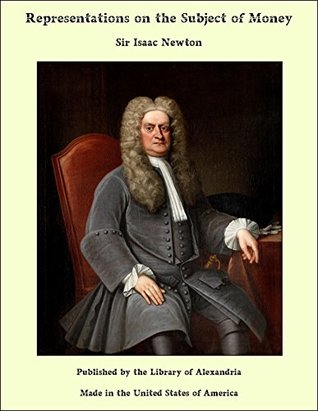
Representations on the Subject of Money
by Isaac Newton
ACCORDING to your Lordship’s Order, signified to me by Mr. Secretary Harley, in his Letter of February 26th last, I have considered the Letter of his Grace the Duke of Ormond, Her Majesty’s Lieutenant General and General Governor of Ireland, sent to your Lordship, together with the Representation sent to his Grace from the Lords of Her Majesty’s Most Honourable Privy Council of that Kingdom, mentioning a late Proclamation for making current in that Kingdom some Pieces of Foreign Gold and proposing to make current there, by further Proclamation, several other Pieces of Foreign Gold therein named, to prevent the Counterfeiting thereof: and as to the Value of the Pieces, I humbly represent, that the Spanish Pistoles, one with another, as they are brought hither by the Merchant, weigh 103 Grains each at a Medium, and are in Fineness half a Grain worse than Standard, and after the Rate that a Guinea is valued in England at 1l. 1s. 6d. are here worth 17s. 1d. and in Ireland, where the Silver Money is raised a Penny in the Shilling, if the Gold be raised in the same Proportion, become worth 18s. 6d. And in Proportion to the Quadruple Pistole weighs 412 Grains, the Double Pistole 206 Grains, and the Quarter Pistole 253/4 Grains: But in the Representation the Quadruple Pistoles are said to weigh 408 Grains, the Double Pistole 204 Grains, and the Quarter Pistoles 25 and an half Grains, whence I gather, that in the former Proclamation the Weight of the Pistole was but 102 Grains, which is a Grain lighter than the just Weight, this Grain, as I conceive, being abated to give a legal Currency to such lighter Pieces as want not above a Grain of their just Weight; and upon this Consideration the Quadruple, Double, and Quarter Pistoles may be put in Weight and Value as is expressed in the Representation; and so may the Double and Quarter Luidores, they being of the same weight, Fineness and Value with the Double and Quarter Pistoles.
BUY NOW
Kindle Edition, 10 pages
Published November 9th 2016 by Library of Alexandria
Subscribe
Get Bible verse every day in your inbox
Read on Mobile


Group of Brands


© 2026 Bibleportal.com All rights reserved.
Sir Isaac Newton was an English physicist, mathematician, astronomer, natural philosopher, alchemist, and theologian who is considered one of the most influential people in human history.
Newton remains influential to scientists, as demonstrated by a 2005 survey of scientists in Britain's Royal Society asking who had the greater effect on the history of science, Newton or Albert Einstein. Newton was deemed the more influential.[8]
Newton also wrote on Judaeo-Christian prophecy, whose decipherment was essential, he thought, to the understanding of God. His book on the subject, which was reprinted well into the Victorian Age, represented lifelong study. Its message was that Christianity went astray in the 4th century AD, when the first Council of Nicaea propounded erroneous doctrines of the nature of Christ. The full extent of Newton's unorthodoxy was recognized only in the present century: but although a critic of accepted Trinitarian dogmas and the Council of Nicaea, he possessed a deep religious sense, venerated the Bible and accepted its account of creation. In late editions of his scientific works he expressed a strong sense of God's providential role in nature.
... Show more