The Sermons of John Angell James includes 59 of James' addresses and sermons given throughout his life. From subjects like Happiness and Youth Warned! to Sins Remembered and Prayers Practiced James brings us closer to Him through his inspired words. Many are saying, "Who can show us any good?" Look on us with favor, Lord. You have put more joy in my heart than they have when their grain and new wine abound. (Psalm 4:6-7) Reader, this little tract comes to you with the high pretension, (and a higher one it cannot make, ) of pointing out to you what true happiness is, where it is to be found, and how it is to be obtained. To such a subject you cannot be, ought not to be, and are not, indifferent. As one among the countless millions whose dwelling-place is in a valley of tears, and as a part of the "whole creation, which groans and travails in pain together until now," you are interested in a treatise which addresses you in the character of a comforter, to perform the charitable office of lightening your weeping eyes, and hushing the sighs of your troubled bosom. John Angell James was an English Nonconformist clergyman, writer and ardent slavery abolitionist.

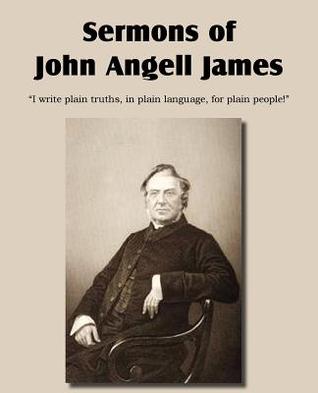


John Angell James was an English Nonconformist clergyman and writer, born at Blandford Forum. After seven years apprenticeship to a linen-draper in Poole, Dorset, he decided to become a preacher, and in 1802 he went to David Bogue's training institution at Gosport in Hampshire. A year and a half later, on a visit to Birmingham, his preaching was so highly esteemed by the congregation of Carrs Lane Independent chapel that they invited him to exercise his ministry amongst them; he settled there in 1805, and was ordained in May 1806. For several years his success as a preacher was comparatively small; but he became suddenly popular in about 1814, and began to attract large crowds. At the same time his religious writings, the best known of which are The Anxious Inquirer and An Earnest Ministry, acquired a wide circulation.
He was one of the founders of the Evangelical Alliance and of the Congregational Union of England and Wales. Municipal interests appealed strongly to him, and he was also for many years chairman of Spring Hill (afterwards Mansfield) College. He was also an ardent slavery abolitionist.
... Show more