
- Bible
- Read the Bible
- Bible Versions
- Verse of the Day
- Reading Plans
- Verses by Topic
- Books of the Bible
- Bible Images
- Study
- Commentaries
- Concordances
- Dictionaries
- Encyclopedias
- Sermons
- Bible Atlas & Maps
- BP Wiki
- Devotionals
- Today's Devotionals
- Light of the World
- All Devotionals
- Inspirational Quotes
- More
- Picture Quotes
- Videos
- Inspirational
- Bible Study
- What The Bible Says
- Bible Q&As
- Daily Bread
- Bible by Genre
- Bible Stories
- Random Bible Verse
- Community
- Store
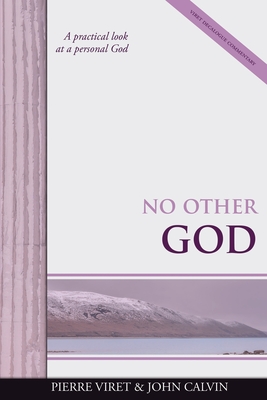
No Other God: A practical look at a personal God
by John Calvin
Pierre Viret (1511-1571), a Reformer from French Switzerland, was a close friend and associate of William Farel and John Calvin. Entering the ministry at only twenty years of age, Viret assisted William Farel in bringing the reformation to Geneva, after which he pastored churches at Lausanne and Geneva and ministered in various cities in France. Viret was a prolific writer. The majority of his numerous works were penned not for theologians, but rather for the members of his and other congregations. Written in French (instead of the typical Latin), Viret's books offered the common workingman an engaging, easy-to-read instruction in the teaching of the Reformed Faith.No Other God is an English translation of the first section of Viret's commentary on the Ten Commandments, published originally in Geneva in 1564. Within this volume Viret exposits the first commandment as well as the preface to the Law. In order to render his writing as understandable as possible, Viret wrote his commentary as a conversation between two fictitious characters, Daniel and Timothy. Throughout the course of their conversation in this volume, Timothy and Daniel discuss God's presence among His creatures (and particularly among His chosen people), His names and titles, and why He chose to reveal Himself in the way that He did. They also discuss how the Law given to Israel is applicable to Christians today, and the difference between human and divine laws. The question of how God's Law is to be fulfilled or transgressed is considered, as well as the practical implications of the fact that God looks at a man's heart and affections as well as at his words and external works.At Timothy's request, Daniel examines the nature of God and how the true God is to be distinguished from false gods. Before the conversation ends, the pair also addresses the honor which God requires of us in His Law, the honor we owe to men, the nature of true faith and trust, the fruits of true faith, and much more.Joining Pierre Viret is fellow-Reformer John Calvin with a sermon on the first commandment of the Law.
BUY NOW
Paperback, 126 pages
Published February 5th 2020 by Independently Published
Subscribe
Get Bible verse every day in your inbox
Read on Mobile


Group of Brands


© 2026 Bibleportal.com All rights reserved.
John Calvin (1509 - 1584)
Was an influential French theologian and pastor during the Protestant Reformation. He was a principal figure in the development of the system of Christian theology later called Calvinism. Originally trained as a humanist lawyer, he broke from the Roman Catholic Church around 1530. After religious tensions provoked a violent uprising against Protestants in France, Calvin fled to Basel, Switzerland, where he published the first edition of his seminal work The Institutes of the Christian Religion in 1536.Calvin's writing and preachings provided the seeds for the branch of theology that bears his name. The Reformed, Congregational, and Presbyterian churches, which look to Calvin as the chief expositor of their beliefs, have spread throughout the world.
John Calvin was an influential French theologian and pastor during the Protestant Reformation. He was a principal figure in the development of the system of Christian theology later called Calvinism. Originally trained as a humanist lawyer, he broke from the Roman Catholic Church around 1530. After religious tensions provoked a violent uprising against Protestants in France, Calvin fled to Basel, Switzerland, where in 1536 he published the first edition of his seminal work Institutes of the Christian Religion.
Calvin's writing and preaching provided the seeds for the branch of theology that bears his name. The Presbyterian and other Reformed churches, which look to Calvin as a chief expositor of their beliefs, have spread throughout the world. Calvin's thought exerted considerable influence over major religious figures and entire religious movements, such as Puritanism, and some have argued that his ideas have contributed to the rise of capitalism, individualism, and representative democracy in the West.
Founder of Calvinism. John Calvin, a French scholar who became a leading preacher and dominant force in the Reformation of the 16th Century, studied at the University of Paris and at the University of Orleans. He became dissatisfied with the teachings of the Roman Catholic Church and allied himself with the cause of the Protestant Reformation in 1532.
When the king of France decided to settle the religious question in his country in favor of the Catholics, Calvin fled to Geneva, Switzerland, where his writings and lectures made Geneva the Rome of Protestantism. His institutes of the Christian religion became the basis for the Presbyterian way of thought and church life. Calvinism is the main doctrine of the Presbyterian and Reformed Churches.
... Show more