
- Bible
- Read the Bible
- Bible Versions
- Verse of the Day
- Reading Plans
- Verses by Topic
- Books of the Bible
- Bible Images
- Study
- Commentaries
- Concordances
- Dictionaries
- Encyclopedias
- Sermons
- Bible Atlas & Maps
- BP Wiki
- Devotionals
- Today's Devotionals
- Light of the World
- All Devotionals
- Inspirational Quotes
- More
- Picture Quotes
- Videos
- Inspirational
- Bible Study
- What The Bible Says
- Bible Q&As
- Daily Bread
- Bible by Genre
- Bible Stories
- Random Bible Verse
- Community
- Store
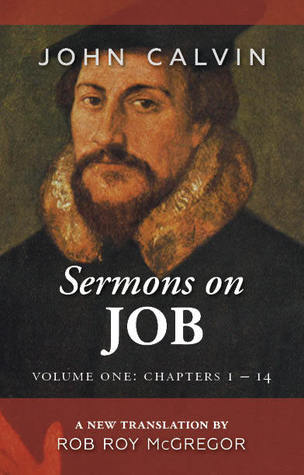
Sermons on Job Volume One: Chapters 1-14
by John Calvin
The name of John Calvin (1509-64) is justly renowned in a number of contexts. The Reformation’s greatest systematic theologian, he was also a Christian strategist and transformer of society, as his enormous correspondence and his influence in Geneva bear witness. A prolific scholar, well-versed in the Latin of the academics, he also worked hard at communicating to ordinary men and women in his native French language.
Above all, Calvin was a pastor. Indeed, it has been said of him that he became a theologian in order to be a better pastor. Nowhere is that more clearly seen than in his sermons.
In 1549, the Campagnie des Étrangers, refugees who thought highly of his ministry, employed a professional scribe, Denis Raguenier, to record and translate Calvin’s sermons.
Thanks to the foresight of these sixteenth-century Christians we can still read the 159 sermons Calvin preached on the Book of Job on week-days in 1554-5. They abound in faithful and lively exposition, and remain one of the finest examples of evangelical preaching – faithful to the biblical text and thoughtfully applied to the individual and society.
In 1993 the Banner of Truth Trust reprinted a facsimile edition of Arthur Golding’s 1574 translation of Calvin’s sermons on Job. At that time the publisher expressed the hope that ‘Perhaps one day the massive work of retranslating Calvin from the original French into modern English will be done.’ That day has now well and truly come! Several new translations of Calvin’s sermons have recently been published (on Ephesians, Galatians, 2 Samuel 1-13, Acts 1-7, Gen. 1-20, The Beatitudes, Luke 1-2, etc.), and a new translation of Calvin’s Institutes of the Christian Religion (1541 ed.) has also recently been added to this impressive list of volumes. Now, thanks to Dr Rob Roy McGregor, the first 56 of Calvin’s 159 sermons on Job have been translated into modern, colourful, and vigorous English.
This first volume covers Calvin’s expositions of Job chapters 1-14.
Above all, Calvin was a pastor. Indeed, it has been said of him that he became a theologian in order to be a better pastor. Nowhere is that more clearly seen than in his sermons.
In 1549, the Campagnie des Étrangers, refugees who thought highly of his ministry, employed a professional scribe, Denis Raguenier, to record and translate Calvin’s sermons.
Thanks to the foresight of these sixteenth-century Christians we can still read the 159 sermons Calvin preached on the Book of Job on week-days in 1554-5. They abound in faithful and lively exposition, and remain one of the finest examples of evangelical preaching – faithful to the biblical text and thoughtfully applied to the individual and society.
In 1993 the Banner of Truth Trust reprinted a facsimile edition of Arthur Golding’s 1574 translation of Calvin’s sermons on Job. At that time the publisher expressed the hope that ‘Perhaps one day the massive work of retranslating Calvin from the original French into modern English will be done.’ That day has now well and truly come! Several new translations of Calvin’s sermons have recently been published (on Ephesians, Galatians, 2 Samuel 1-13, Acts 1-7, Gen. 1-20, The Beatitudes, Luke 1-2, etc.), and a new translation of Calvin’s Institutes of the Christian Religion (1541 ed.) has also recently been added to this impressive list of volumes. Now, thanks to Dr Rob Roy McGregor, the first 56 of Calvin’s 159 sermons on Job have been translated into modern, colourful, and vigorous English.
This first volume covers Calvin’s expositions of Job chapters 1-14.
BUY NOW
Kindle Edition
Published 2015 by Banner of Truth
Subscribe
Get Bible verse every day in your inbox
Read on Mobile


Group of Brands


© 2026 Bibleportal.com All rights reserved.
John Calvin (1509 - 1584)
Was an influential French theologian and pastor during the Protestant Reformation. He was a principal figure in the development of the system of Christian theology later called Calvinism. Originally trained as a humanist lawyer, he broke from the Roman Catholic Church around 1530. After religious tensions provoked a violent uprising against Protestants in France, Calvin fled to Basel, Switzerland, where he published the first edition of his seminal work The Institutes of the Christian Religion in 1536.Calvin's writing and preachings provided the seeds for the branch of theology that bears his name. The Reformed, Congregational, and Presbyterian churches, which look to Calvin as the chief expositor of their beliefs, have spread throughout the world.
John Calvin was an influential French theologian and pastor during the Protestant Reformation. He was a principal figure in the development of the system of Christian theology later called Calvinism. Originally trained as a humanist lawyer, he broke from the Roman Catholic Church around 1530. After religious tensions provoked a violent uprising against Protestants in France, Calvin fled to Basel, Switzerland, where in 1536 he published the first edition of his seminal work Institutes of the Christian Religion.
Calvin's writing and preaching provided the seeds for the branch of theology that bears his name. The Presbyterian and other Reformed churches, which look to Calvin as a chief expositor of their beliefs, have spread throughout the world. Calvin's thought exerted considerable influence over major religious figures and entire religious movements, such as Puritanism, and some have argued that his ideas have contributed to the rise of capitalism, individualism, and representative democracy in the West.
Founder of Calvinism. John Calvin, a French scholar who became a leading preacher and dominant force in the Reformation of the 16th Century, studied at the University of Paris and at the University of Orleans. He became dissatisfied with the teachings of the Roman Catholic Church and allied himself with the cause of the Protestant Reformation in 1532.
When the king of France decided to settle the religious question in his country in favor of the Catholics, Calvin fled to Geneva, Switzerland, where his writings and lectures made Geneva the Rome of Protestantism. His institutes of the Christian religion became the basis for the Presbyterian way of thought and church life. Calvinism is the main doctrine of the Presbyterian and Reformed Churches.
... Show more