This selection of the writings of John Calvin (1509—1564) is the first for general readers to appear in many years. It showcases his powerful legacy, which has had far-reaching consequences for the development of religion and culture in Western Europe and in the shaping of American identity.
Calvin was a prodigious preacher and writer, and his sermons, Bible commentaries, tracts, and letters fill dozens of volumes. The works chosen for John Calvin: Steward of God’s Covenant John Calvin: Steward of God’s Covenant highlight ideas central to the Reformation but also to his influence on modern life, e.g., the importance of a work ethic and the notion of being “called” to action in the world; his belief in universal education for boys and girls; and his belief in the sanctity and freedom of individual conscience. Calvin’s theology of the “elect” of God motivated the English and Dutch Calvinists who settled the Atlantic seaboard, their Promised Land. The traditions of their communities and churches and laws produced the widespread present-day American belief in a divinely favored national destiny.
In her brilliant preface to this edition, Pulitzer Prize—winning novelist Marilynne Robinson makes the clearest connection between John Calvin’s own biblical and patristic heritage and the heritage he in turn left the modern world.

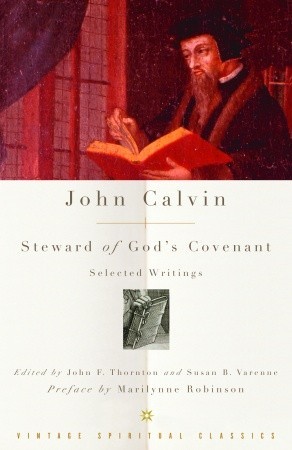


John Calvin (1509 - 1584)
Was an influential French theologian and pastor during the Protestant Reformation. He was a principal figure in the development of the system of Christian theology later called Calvinism. Originally trained as a humanist lawyer, he broke from the Roman Catholic Church around 1530. After religious tensions provoked a violent uprising against Protestants in France, Calvin fled to Basel, Switzerland, where he published the first edition of his seminal work The Institutes of the Christian Religion in 1536.Calvin's writing and preachings provided the seeds for the branch of theology that bears his name. The Reformed, Congregational, and Presbyterian churches, which look to Calvin as the chief expositor of their beliefs, have spread throughout the world.
John Calvin was an influential French theologian and pastor during the Protestant Reformation. He was a principal figure in the development of the system of Christian theology later called Calvinism. Originally trained as a humanist lawyer, he broke from the Roman Catholic Church around 1530. After religious tensions provoked a violent uprising against Protestants in France, Calvin fled to Basel, Switzerland, where in 1536 he published the first edition of his seminal work Institutes of the Christian Religion.
Calvin's writing and preaching provided the seeds for the branch of theology that bears his name. The Presbyterian and other Reformed churches, which look to Calvin as a chief expositor of their beliefs, have spread throughout the world. Calvin's thought exerted considerable influence over major religious figures and entire religious movements, such as Puritanism, and some have argued that his ideas have contributed to the rise of capitalism, individualism, and representative democracy in the West.
Founder of Calvinism. John Calvin, a French scholar who became a leading preacher and dominant force in the Reformation of the 16th Century, studied at the University of Paris and at the University of Orleans. He became dissatisfied with the teachings of the Roman Catholic Church and allied himself with the cause of the Protestant Reformation in 1532.
When the king of France decided to settle the religious question in his country in favor of the Catholics, Calvin fled to Geneva, Switzerland, where his writings and lectures made Geneva the Rome of Protestantism. His institutes of the Christian religion became the basis for the Presbyterian way of thought and church life. Calvinism is the main doctrine of the Presbyterian and Reformed Churches.
... Show more