
- Bible
- Read the Bible
- Bible Versions
- Verse of the Day
- Reading Plans
- Verses by Topic
- Books of the Bible
- Bible Images
- Study
- Commentaries
- Concordances
- Dictionaries
- Encyclopedias
- Sermons
- Bible Atlas & Maps
- BP Wiki
- Devotionals
- Today's Devotionals
- Light of the World
- All Devotionals
- Inspirational Quotes
- More
- Picture Quotes
- Videos
- Inspirational
- Bible Study
- What The Bible Says
- Bible Q&As
- Daily Bread
- Bible by Genre
- Bible Stories
- Random Bible Verse
- Community
- Store
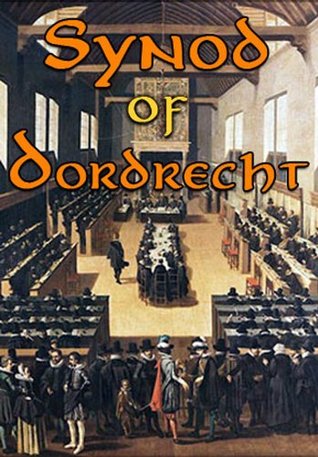
Synod of Dordrecht
by John Calvin
Synod of Dordrecht
by John Calvin
"The Synod of Dort was a National Synod held in Dordrecht in 1618/19, by the Dutch Reformed Church, in order to settle a serious controversy in the Dutch churches initiated by the rise of Arminianism. The first meeting was on 13 November 1618, and the final meeting, the 154th, was on 9 May 1619. Voting representatives from the Reformed churches in eight foreign countries were also invited. Dort was a contemporary colloquial English term for the town of Dordrecht. The Synod is often also referred to as Synod of Dordt, or Synod of Dordrecht."
About the Author:
"John Calvin was born "John Cauvin" on July 10, 1509 at Noyon in France. His father, Gerard Cauvin was a church leader holding ecclesiastical offices for the lordship of Noyon. Calvin's mother was Jeanne le Franc, the daughter of an innkeeper at Cambrai, who afterwards came to reside at Noyon. Gerard Cauvin was esteemed as a man of considerable wisdom and prudence, and his wife was said to be that rare combination of both a godly and attractive lady. She bore him five sons, of whom John was the second. John Calvin lived to the age of 55, dying on May 27, 1564.
John Calvin's father destined him from the start for an ecclesiastical career, and paid for his education in the household of the noble family of Hangest de Montmor. In May 1521 he was appointed to a chaplaincy in the cathedral of Noyon. The plague having visited Noyon, the young Hangests were sent to Paris in August 1523, and Calvin accompanied them. He lived with his uncle and attended as an out-student the College de la Marche. From the College de la Marche he moved to the College de Montaigu, where the atmosphere was more ecclesiastical and where he had for instructor a Spaniard who is described as a man of learning and to whom Calvin was indebted for some sound training in dialectics and the scholastic philosophy. John Calvin speedily outstripped all his competitors in grammatical studies, and by his skill and acumen as a student of philosophy, and debate. Although not yet ordained, Calvin preached several sermons to the people."
by John Calvin
"The Synod of Dort was a National Synod held in Dordrecht in 1618/19, by the Dutch Reformed Church, in order to settle a serious controversy in the Dutch churches initiated by the rise of Arminianism. The first meeting was on 13 November 1618, and the final meeting, the 154th, was on 9 May 1619. Voting representatives from the Reformed churches in eight foreign countries were also invited. Dort was a contemporary colloquial English term for the town of Dordrecht. The Synod is often also referred to as Synod of Dordt, or Synod of Dordrecht."
About the Author:
"John Calvin was born "John Cauvin" on July 10, 1509 at Noyon in France. His father, Gerard Cauvin was a church leader holding ecclesiastical offices for the lordship of Noyon. Calvin's mother was Jeanne le Franc, the daughter of an innkeeper at Cambrai, who afterwards came to reside at Noyon. Gerard Cauvin was esteemed as a man of considerable wisdom and prudence, and his wife was said to be that rare combination of both a godly and attractive lady. She bore him five sons, of whom John was the second. John Calvin lived to the age of 55, dying on May 27, 1564.
John Calvin's father destined him from the start for an ecclesiastical career, and paid for his education in the household of the noble family of Hangest de Montmor. In May 1521 he was appointed to a chaplaincy in the cathedral of Noyon. The plague having visited Noyon, the young Hangests were sent to Paris in August 1523, and Calvin accompanied them. He lived with his uncle and attended as an out-student the College de la Marche. From the College de la Marche he moved to the College de Montaigu, where the atmosphere was more ecclesiastical and where he had for instructor a Spaniard who is described as a man of learning and to whom Calvin was indebted for some sound training in dialectics and the scholastic philosophy. John Calvin speedily outstripped all his competitors in grammatical studies, and by his skill and acumen as a student of philosophy, and debate. Although not yet ordained, Calvin preached several sermons to the people."
BUY NOW
Kindle Edition, 57 pages
Published October 15th 2010
Subscribe
Get Bible verse every day in your inbox
Read on Mobile


Group of Brands


© 2026 Bibleportal.com All rights reserved.
John Calvin (1509 - 1584)
Was an influential French theologian and pastor during the Protestant Reformation. He was a principal figure in the development of the system of Christian theology later called Calvinism. Originally trained as a humanist lawyer, he broke from the Roman Catholic Church around 1530. After religious tensions provoked a violent uprising against Protestants in France, Calvin fled to Basel, Switzerland, where he published the first edition of his seminal work The Institutes of the Christian Religion in 1536.Calvin's writing and preachings provided the seeds for the branch of theology that bears his name. The Reformed, Congregational, and Presbyterian churches, which look to Calvin as the chief expositor of their beliefs, have spread throughout the world.
John Calvin was an influential French theologian and pastor during the Protestant Reformation. He was a principal figure in the development of the system of Christian theology later called Calvinism. Originally trained as a humanist lawyer, he broke from the Roman Catholic Church around 1530. After religious tensions provoked a violent uprising against Protestants in France, Calvin fled to Basel, Switzerland, where in 1536 he published the first edition of his seminal work Institutes of the Christian Religion.
Calvin's writing and preaching provided the seeds for the branch of theology that bears his name. The Presbyterian and other Reformed churches, which look to Calvin as a chief expositor of their beliefs, have spread throughout the world. Calvin's thought exerted considerable influence over major religious figures and entire religious movements, such as Puritanism, and some have argued that his ideas have contributed to the rise of capitalism, individualism, and representative democracy in the West.
Founder of Calvinism. John Calvin, a French scholar who became a leading preacher and dominant force in the Reformation of the 16th Century, studied at the University of Paris and at the University of Orleans. He became dissatisfied with the teachings of the Roman Catholic Church and allied himself with the cause of the Protestant Reformation in 1532.
When the king of France decided to settle the religious question in his country in favor of the Catholics, Calvin fled to Geneva, Switzerland, where his writings and lectures made Geneva the Rome of Protestantism. His institutes of the Christian religion became the basis for the Presbyterian way of thought and church life. Calvinism is the main doctrine of the Presbyterian and Reformed Churches.
... Show more