
- Bible
- Read the Bible
- Bible Versions
- Verse of the Day
- Reading Plans
- Verses by Topic
- Books of the Bible
- Bible Images
- Study
- Commentaries
- Concordances
- Dictionaries
- Encyclopedias
- Sermons
- Bible Atlas & Maps
- BP Wiki
- Devotionals
- Today's Devotionals
- Light of the World
- All Devotionals
- Inspirational Quotes
- More
- Picture Quotes
- Videos
- Inspirational
- Bible Study
- What The Bible Says
- Bible Q&As
- Daily Bread
- Bible by Genre
- Bible Stories
- Random Bible Verse
- Community
- Store
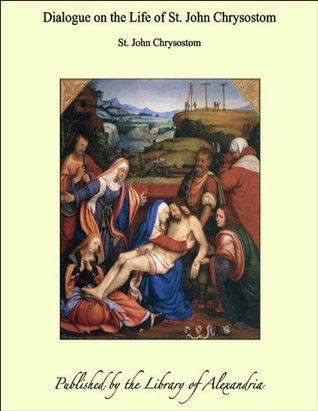
Dialogue on the Life of St. John Chrysostom
by John Chrysostom
The Subject of the Memoir This treatise, obviously written by one who had full information, and was an eye-witness of many of the incidents which he narrates, is our best authority for the life of St. Chrysostom; we have other “lives,” of no great value, by Theodore, Bishop of Trimithus (c. 680), George, Bishop of Alexandria (c. 620), ” Leo the Emperor” (c. 900), and an anonymous writer; and accounts contained in the fifth-century Church Histories of Socrates, Sozomen, Theodoret and Philostorgius, the theologian Photius (c. 850), and the pagan writer Zosimus, besides a few other references in ancient authors. From these various sources we are able to draw not only a record of Chrysostom’s life, but also a picture of the man himself; and, incidentally, to gather light upon the life of the Church in his days, and information as to uses and observances, some of which have fallen into desuetude, while others are still practised among us. The more carefully we study his life, the more lovable the man appears, and the more conscious we are of our debt to him, for the noble standard of devotional, ministerial and intellectual Christian life which he so fearlessly, faithfully and outspokenly maintained,1 and bequeathed to us; and the more admirable seems his life, by contrast with the lives of many of his contemporaries, pagan and, alas! even Christian. But he had the defects of his good qualities. “He was a man who in his enthusiasm for virtue was over-bitter, and given to wrath rather |viii than to modest dealings; from the uprightness of his life he took no thought for the future, and from his simplicity of character acted without deep consideration. He used unmeasured freedom of speech with those whom he encountered, and as a teacher greatly benefited his hearers; but was considered by those who did not know him to be arrogant in his behaviour.” 2
BUY NOW
Kindle Edition, 347 pages
Published July 29th 2009 by Library of Alexandria
Subscribe
Get Bible verse every day in your inbox
Read on Mobile


Group of Brands


© 2026 Bibleportal.com All rights reserved.
John Chrysostom (349 - 407)
Read freely text sermons and articles by the speaker John Chrysostom in text and pdf format Archbishop of Constantinople, was an important Early Church Father. He is known for his preaching and public speaking, his denunciation of abuse of authority by both ecclesiastical and political leaders, the Divine Liturgy of St. John Chrysostom, and his ascetic sensibilities. The epithet Χρυσόστομος (Chrysostomos, anglicized as Chrysostom) means "golden-mouthed" in Greek and given for his celebrated eloquence.The Eastern Orthodox and Byzantine Catholic churches honor him as a saint and count him among the Three Holy Hierarchs, together with Basil the Great and Gregory Nazianzus. He is recognized by the Eastern Orthodox Church and the Catholic Church as a saint and as a Doctor of the Church. Churches of the Western tradition, including the Roman Catholic Church, some Anglican provinces, and some Lutheran churches, commemorate him on 13 September. Some other Lutheran churches and Anglican provinces commemorate him on the traditional Eastern feast day of 27 January. Chrysostom's extant homiletical works are vast, including many hundreds of exegetical homilies on both the New Testament (especially the works of Saint Paul) and the Old Testament (particularly on Genesis). Among his extant exegetical works are sixty-seven homilies on Genesis, fifty-nine on the Psalms, ninety on the Gospel of Matthew, eighty-eight on the Gospel of John, and fifty-five on the Acts of the Apostles.
John Chrysostom, Archbishop of Constantinople, was an important Early Church Father. He is known for his eloquence in preaching and public speaking, and his denunciation of abuse of authority by both ecclesiastical and political leaders.
Chrysostom is known in Christianity chiefly as a preacher, theologian and liturgist, particularly in the Eastern Orthodox Church.
During a time when city clergy were subject to criticism for their high lifestyle, John was determined to reform his clergy in Constantinople. These efforts were met with resistance and limited success. He was an excellent preacher. As a theologian, he has been and continues to be very important in Eastern Christianity, and is generally considered the most prominent doctor of the Greek Church, but has been less important to Western Christianity.
His writings have survived to the present day more so than any of the other Greek Fathers. He rejected the contemporary trend for allegory, instead speaking plainly and applying Bible passages and lessons to everyday life.
... Show more