
- Bible
- Read the Bible
- Bible Versions
- Verse of the Day
- Reading Plans
- Verses by Topic
- Books of the Bible
- Bible Images
- Study
- Commentaries
- Concordances
- Dictionaries
- Encyclopedias
- Sermons
- Bible Atlas & Maps
- BP Wiki
- Devotionals
- Today's Devotionals
- Light of the World
- All Devotionals
- Inspirational Quotes
- More
- Picture Quotes
- Videos
- Inspirational
- Bible Study
- What The Bible Says
- Bible Q&As
- Daily Bread
- Bible by Genre
- Bible Stories
- Random Bible Verse
- Community
- Store
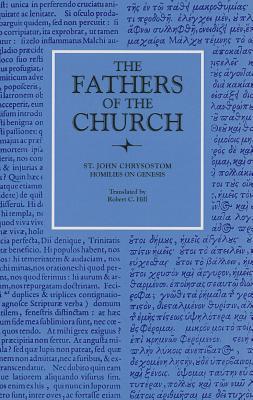
Homilies on Genesis, 46-67
by John Chrysostom
St. John Chrysostom delivered his Homilies on GenesisHomilies on Genesis sometime between A.D. 385 and A.D. 388, while yet a priest at Antioch. In the homilies in this volume, the last of three, Chrysostom concludes his examination of the lives and virtues of the Old Testament patriarchs Abraham, Isaac, Jacob, and Joseph as recounted in the last three chapters of Genesis.
Known for his eloquent preaching, Chrysostom delivered these final twenty-two homilies after Pentecost. His motive for examining the accounts of the lives of the patriarchs is to show how the just forebears of the Israelites, in a time when both the law and the Gospel were yet unpreached, were able to live Christian lives with only simple trust in God and the balanced, almost ingenuous manners of antiquity. His interest in the events and characters of Genesis is largely moral, even moralistic; he tends to see Scripture as hagiography. His style of commentary, although not really thorough exegesis, arises out of his deep conviction of the divine inspiration of Scripture--hence the habitual attention to detail, "not idly or to no purpose" being his frequent comment on the precision of the text.
As an exegete, Chrysostom may seem disappointing to those grounded in the methods of modern biblical scholarship, since he largely ignores any sense of Scripture other than the literal and is generally unaware of how to resolve difficulties and appreciate subtleties that a knowledge of the original text would provide. However, what lacks in scientific accuracy he more than compensates for with his earnest practice of pastoral care.
This final volume of the homilies includes a general index and an index of biblical citations, the latter indicating the rich scriptural diet Chrysostom's congregation--who came daily for his homilies--enjoyed.
Known for his eloquent preaching, Chrysostom delivered these final twenty-two homilies after Pentecost. His motive for examining the accounts of the lives of the patriarchs is to show how the just forebears of the Israelites, in a time when both the law and the Gospel were yet unpreached, were able to live Christian lives with only simple trust in God and the balanced, almost ingenuous manners of antiquity. His interest in the events and characters of Genesis is largely moral, even moralistic; he tends to see Scripture as hagiography. His style of commentary, although not really thorough exegesis, arises out of his deep conviction of the divine inspiration of Scripture--hence the habitual attention to detail, "not idly or to no purpose" being his frequent comment on the precision of the text.
As an exegete, Chrysostom may seem disappointing to those grounded in the methods of modern biblical scholarship, since he largely ignores any sense of Scripture other than the literal and is generally unaware of how to resolve difficulties and appreciate subtleties that a knowledge of the original text would provide. However, what lacks in scientific accuracy he more than compensates for with his earnest practice of pastoral care.
This final volume of the homilies includes a general index and an index of biblical citations, the latter indicating the rich scriptural diet Chrysostom's congregation--who came daily for his homilies--enjoyed.
BUY NOW
Paperback, 296 pages
Published September 25th 2006 by Catholic University of America Press (first published January 1st 1992)
Subscribe
Get Bible verse every day in your inbox
Read on Mobile


Group of Brands


© 2026 Bibleportal.com All rights reserved.
John Chrysostom (349 - 407)
Read freely text sermons and articles by the speaker John Chrysostom in text and pdf format Archbishop of Constantinople, was an important Early Church Father. He is known for his preaching and public speaking, his denunciation of abuse of authority by both ecclesiastical and political leaders, the Divine Liturgy of St. John Chrysostom, and his ascetic sensibilities. The epithet Χρυσόστομος (Chrysostomos, anglicized as Chrysostom) means "golden-mouthed" in Greek and given for his celebrated eloquence.The Eastern Orthodox and Byzantine Catholic churches honor him as a saint and count him among the Three Holy Hierarchs, together with Basil the Great and Gregory Nazianzus. He is recognized by the Eastern Orthodox Church and the Catholic Church as a saint and as a Doctor of the Church. Churches of the Western tradition, including the Roman Catholic Church, some Anglican provinces, and some Lutheran churches, commemorate him on 13 September. Some other Lutheran churches and Anglican provinces commemorate him on the traditional Eastern feast day of 27 January. Chrysostom's extant homiletical works are vast, including many hundreds of exegetical homilies on both the New Testament (especially the works of Saint Paul) and the Old Testament (particularly on Genesis). Among his extant exegetical works are sixty-seven homilies on Genesis, fifty-nine on the Psalms, ninety on the Gospel of Matthew, eighty-eight on the Gospel of John, and fifty-five on the Acts of the Apostles.
John Chrysostom, Archbishop of Constantinople, was an important Early Church Father. He is known for his eloquence in preaching and public speaking, and his denunciation of abuse of authority by both ecclesiastical and political leaders.
Chrysostom is known in Christianity chiefly as a preacher, theologian and liturgist, particularly in the Eastern Orthodox Church.
During a time when city clergy were subject to criticism for their high lifestyle, John was determined to reform his clergy in Constantinople. These efforts were met with resistance and limited success. He was an excellent preacher. As a theologian, he has been and continues to be very important in Eastern Christianity, and is generally considered the most prominent doctor of the Greek Church, but has been less important to Western Christianity.
His writings have survived to the present day more so than any of the other Greek Fathers. He rejected the contemporary trend for allegory, instead speaking plainly and applying Bible passages and lessons to everyday life.
... Show more