
- Bible
- Read the Bible
- Bible Versions
- Verse of the Day
- Reading Plans
- Verses by Topic
- Books of the Bible
- Bible Images
- Study
- Commentaries
- Concordances
- Dictionaries
- Encyclopedias
- Sermons
- Bible Atlas & Maps
- BP Wiki
- Devotionals
- Today's Devotionals
- Light of the World
- All Devotionals
- Inspirational Quotes
- More
- Picture Quotes
- Videos
- Inspirational
- Bible Study
- What The Bible Says
- Bible Q&As
- Daily Bread
- Bible by Genre
- Bible Stories
- Random Bible Verse
- Community
- Store
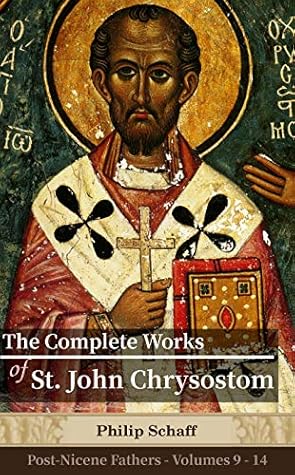
The Complete Works of St. John Chrysostom: Cross-linked to the Bible with linked footnotes
by John Chrysostom
Saint John Chrysostom (349 - 407) was the Archbishop of Constantinople and an important Early Church Father. He is famous for his preaching, his Bible commentaries, his denunciation of abuse of authority by both ecclesiastical and political leaders, the Divine Liturgy of Saint John Chrysostom, and his ascetic sensibilities. His preaching earned him the name Chrysostom, which in Greek means "golden-mouthed." Chrysostom was among the most prolific authors in the early Christian Church, exceeded only by Augustine of Hippo in the quantity of his surviving writings.
He is honored as a saint in the Oriental Orthodox, Eastern Orthodox, Catholic, Anglican, and Lutheran churches. The Eastern Orthodox, together with the Byzantine Catholics, hold him in high regard as one of the Three Holy Hierarchs (alongside Basil the Great and Gregory of Nazianzus). In the Roman Catholic Church he is recognized as a Doctor of the Church.
This ebook version is linked to the Bible and to the footnotes, and includes the following titles:
-Treatise Concerning The Christian Priesthood
-An Exhortation To Theodore After His Fall
-Letter To A Young Widow
-Homilies On S. Ignatius And S. Babylas
-Homily Concerning Lowliness Of Mind
-Instructions To Catechumens
-Three Homilies Concerning The Power Of Demons
-Homily On The Passage (Matt. XXVI. 19)
-Homily On The Paralytic Let Down Through The Roof
-Homily To Those Who Had Not Attended The Assembly
-Homily Against Publishing The Errors Of The Brethren
-Two Homilies On Eutropius
-A Treatise To Prove That No One Can Harm The Man Who Does Not Injure Himself
-Letters Of St. Chrysostom To Olympias
-Correspondence Of St. Chrysostom With The Bishop Of Rome
-The Homilies On The Statues To The People Of Antioch
-The Homilies Of St. John Chrysostom
-A Commentary On The Acts Of The Apostles
-The Homilies Of St. John Chrysostom On Paul's Epistle To The Romans
-Homilies On First Corinthians
-Homilies On Second Corinthians
-The Commentary And Homilies Of St. John Chrysostom On Galatians And Ephesians
-The Homilies On Philippians, Colossians, And Thessalonians
-The Homilies On Timothy, Titus, And Philemon
-The Homilies On The Gospel Of St. John
-The Homilies On The Epistle To The Hebrews
He is honored as a saint in the Oriental Orthodox, Eastern Orthodox, Catholic, Anglican, and Lutheran churches. The Eastern Orthodox, together with the Byzantine Catholics, hold him in high regard as one of the Three Holy Hierarchs (alongside Basil the Great and Gregory of Nazianzus). In the Roman Catholic Church he is recognized as a Doctor of the Church.
This ebook version is linked to the Bible and to the footnotes, and includes the following titles:
-Treatise Concerning The Christian Priesthood
-An Exhortation To Theodore After His Fall
-Letter To A Young Widow
-Homilies On S. Ignatius And S. Babylas
-Homily Concerning Lowliness Of Mind
-Instructions To Catechumens
-Three Homilies Concerning The Power Of Demons
-Homily On The Passage (Matt. XXVI. 19)
-Homily On The Paralytic Let Down Through The Roof
-Homily To Those Who Had Not Attended The Assembly
-Homily Against Publishing The Errors Of The Brethren
-Two Homilies On Eutropius
-A Treatise To Prove That No One Can Harm The Man Who Does Not Injure Himself
-Letters Of St. Chrysostom To Olympias
-Correspondence Of St. Chrysostom With The Bishop Of Rome
-The Homilies On The Statues To The People Of Antioch
-The Homilies Of St. John Chrysostom
-A Commentary On The Acts Of The Apostles
-The Homilies Of St. John Chrysostom On Paul's Epistle To The Romans
-Homilies On First Corinthians
-Homilies On Second Corinthians
-The Commentary And Homilies Of St. John Chrysostom On Galatians And Ephesians
-The Homilies On Philippians, Colossians, And Thessalonians
-The Homilies On Timothy, Titus, And Philemon
-The Homilies On The Gospel Of St. John
-The Homilies On The Epistle To The Hebrews
BUY NOW
Kindle Edition, 10739 pages
Published July 23rd 2019
Subscribe
Get Bible verse every day in your inbox
Read on Mobile


Group of Brands


© 2026 Bibleportal.com All rights reserved.
John Chrysostom (349 - 407)
Read freely text sermons and articles by the speaker John Chrysostom in text and pdf format Archbishop of Constantinople, was an important Early Church Father. He is known for his preaching and public speaking, his denunciation of abuse of authority by both ecclesiastical and political leaders, the Divine Liturgy of St. John Chrysostom, and his ascetic sensibilities. The epithet Χρυσόστομος (Chrysostomos, anglicized as Chrysostom) means "golden-mouthed" in Greek and given for his celebrated eloquence.The Eastern Orthodox and Byzantine Catholic churches honor him as a saint and count him among the Three Holy Hierarchs, together with Basil the Great and Gregory Nazianzus. He is recognized by the Eastern Orthodox Church and the Catholic Church as a saint and as a Doctor of the Church. Churches of the Western tradition, including the Roman Catholic Church, some Anglican provinces, and some Lutheran churches, commemorate him on 13 September. Some other Lutheran churches and Anglican provinces commemorate him on the traditional Eastern feast day of 27 January. Chrysostom's extant homiletical works are vast, including many hundreds of exegetical homilies on both the New Testament (especially the works of Saint Paul) and the Old Testament (particularly on Genesis). Among his extant exegetical works are sixty-seven homilies on Genesis, fifty-nine on the Psalms, ninety on the Gospel of Matthew, eighty-eight on the Gospel of John, and fifty-five on the Acts of the Apostles.
John Chrysostom, Archbishop of Constantinople, was an important Early Church Father. He is known for his eloquence in preaching and public speaking, and his denunciation of abuse of authority by both ecclesiastical and political leaders.
Chrysostom is known in Christianity chiefly as a preacher, theologian and liturgist, particularly in the Eastern Orthodox Church.
During a time when city clergy were subject to criticism for their high lifestyle, John was determined to reform his clergy in Constantinople. These efforts were met with resistance and limited success. He was an excellent preacher. As a theologian, he has been and continues to be very important in Eastern Christianity, and is generally considered the most prominent doctor of the Greek Church, but has been less important to Western Christianity.
His writings have survived to the present day more so than any of the other Greek Fathers. He rejected the contemporary trend for allegory, instead speaking plainly and applying Bible passages and lessons to everyday life.
... Show more