
- Bible
- Read the Bible
- Bible Versions
- Verse of the Day
- Reading Plans
- Verses by Topic
- Books of the Bible
- Bible Images
- Study
- Commentaries
- Concordances
- Dictionaries
- Encyclopedias
- Sermons
- Bible Atlas & Maps
- BP Wiki
- Devotionals
- Today's Devotionals
- Light of the World
- All Devotionals
- Inspirational Quotes
- More
- Picture Quotes
- Videos
- Inspirational
- Bible Study
- What The Bible Says
- Bible Q&As
- Daily Bread
- Bible by Genre
- Bible Stories
- Random Bible Verse
- Community
- Store
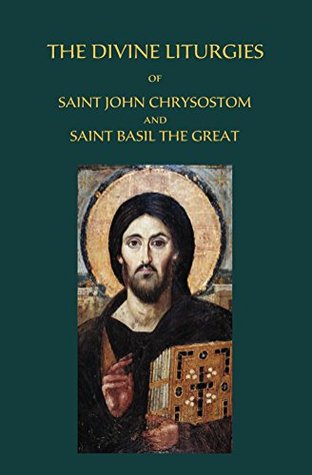
The Divine Liturgies of Saint John Chrysostom and Saint Basil the Great
by John Chrysostom
Published by the Institute for Orthodox Christian Studies, Cambridge, this translation into modern English is of the two major Liturgies of the Orthodox Church, that of St John Chrysostom (died 407 A.D.)which is used on most occasions when the communion is celebrated, and the fuller Liturgy attributed to St Basil the Great (died 379 A.D.), now used on 1 January, the Feast Day of the Saint, on the first five Sundays of Great Lent, and on Holy Saturday. Both liturgies express the essence of the Orthodox Christian faith, and have been in use since the early centuries of the Christian era. St Basil's Liturgy was for many centuries the most used, that of St John Chrysostom taking priority only in the early medieval period. Though both have had material added to them, recent scholarship, by comparing phrases and expressions in the liturgies with works undoubtedly by the two saints, have established that the traditional attributions are likely to be correct.
These two translations into modern English were first commissioned by Archbishop Gibran (Ramlawi) for the Antiochian Orthodox Archdiocese of Australasia, to meet a need expressed by the youth of the archdiocese for an elegant and intelligible translation of the services into a modern English that worshippers and visiting friends from varied ethnic backgrounds might find comprehensible and moving.
On the publication of the St John Chrysostom Liturgy in its modern version, Philip Tovey in his review for NEWS OF LITURGY wrote: 'This English version of the Orthodox Liturgy is done by David Frost to the high standard we might expect. It is a fresh translation which brings the liturgy to life . . . Indeed, the move to good Modern English shows the Orthodox Liturgy to be something living, rather than looking like a fossil. This translation is another great help in our appreciation of the Divine Liturgy.'
This collection also contains translations of the short hymns, troparia and kontakia, that are used on the Sundays and Great Feasts of the Church's year.
The text is intended as the foundation English version to be used in a project of the Institute for Orthodox Christian Studies, Cambridge, to provide parallel texts of the Liturgy for use in the various ethnic Orthodox Churches in Great Britain, whereby texts authorized by each Church can be paired with a common English translation of quality that can establish itself as a version familiar to all Orthodox who are bi-lingual and which will be acceptable to those from ethnic Churches who wish to worship in the language of their adopted country.
These two translations into modern English were first commissioned by Archbishop Gibran (Ramlawi) for the Antiochian Orthodox Archdiocese of Australasia, to meet a need expressed by the youth of the archdiocese for an elegant and intelligible translation of the services into a modern English that worshippers and visiting friends from varied ethnic backgrounds might find comprehensible and moving.
On the publication of the St John Chrysostom Liturgy in its modern version, Philip Tovey in his review for NEWS OF LITURGY wrote: 'This English version of the Orthodox Liturgy is done by David Frost to the high standard we might expect. It is a fresh translation which brings the liturgy to life . . . Indeed, the move to good Modern English shows the Orthodox Liturgy to be something living, rather than looking like a fossil. This translation is another great help in our appreciation of the Divine Liturgy.'
This collection also contains translations of the short hymns, troparia and kontakia, that are used on the Sundays and Great Feasts of the Church's year.
The text is intended as the foundation English version to be used in a project of the Institute for Orthodox Christian Studies, Cambridge, to provide parallel texts of the Liturgy for use in the various ethnic Orthodox Churches in Great Britain, whereby texts authorized by each Church can be paired with a common English translation of quality that can establish itself as a version familiar to all Orthodox who are bi-lingual and which will be acceptable to those from ethnic Churches who wish to worship in the language of their adopted country.
BUY NOW
Kindle Edition, 144 pages
Published April 10th 2015 by Aquila Books/ IOCS (first published March 20th 2015)
Subscribe
Get Bible verse every day in your inbox
Read on Mobile


Group of Brands


© 2026 Bibleportal.com All rights reserved.
John Chrysostom (349 - 407)
Read freely text sermons and articles by the speaker John Chrysostom in text and pdf format Archbishop of Constantinople, was an important Early Church Father. He is known for his preaching and public speaking, his denunciation of abuse of authority by both ecclesiastical and political leaders, the Divine Liturgy of St. John Chrysostom, and his ascetic sensibilities. The epithet Χρυσόστομος (Chrysostomos, anglicized as Chrysostom) means "golden-mouthed" in Greek and given for his celebrated eloquence.The Eastern Orthodox and Byzantine Catholic churches honor him as a saint and count him among the Three Holy Hierarchs, together with Basil the Great and Gregory Nazianzus. He is recognized by the Eastern Orthodox Church and the Catholic Church as a saint and as a Doctor of the Church. Churches of the Western tradition, including the Roman Catholic Church, some Anglican provinces, and some Lutheran churches, commemorate him on 13 September. Some other Lutheran churches and Anglican provinces commemorate him on the traditional Eastern feast day of 27 January. Chrysostom's extant homiletical works are vast, including many hundreds of exegetical homilies on both the New Testament (especially the works of Saint Paul) and the Old Testament (particularly on Genesis). Among his extant exegetical works are sixty-seven homilies on Genesis, fifty-nine on the Psalms, ninety on the Gospel of Matthew, eighty-eight on the Gospel of John, and fifty-five on the Acts of the Apostles.
John Chrysostom, Archbishop of Constantinople, was an important Early Church Father. He is known for his eloquence in preaching and public speaking, and his denunciation of abuse of authority by both ecclesiastical and political leaders.
Chrysostom is known in Christianity chiefly as a preacher, theologian and liturgist, particularly in the Eastern Orthodox Church.
During a time when city clergy were subject to criticism for their high lifestyle, John was determined to reform his clergy in Constantinople. These efforts were met with resistance and limited success. He was an excellent preacher. As a theologian, he has been and continues to be very important in Eastern Christianity, and is generally considered the most prominent doctor of the Greek Church, but has been less important to Western Christianity.
His writings have survived to the present day more so than any of the other Greek Fathers. He rejected the contemporary trend for allegory, instead speaking plainly and applying Bible passages and lessons to everyday life.
... Show more