
- Bible
- Read the Bible
- Bible Versions
- Verse of the Day
- Reading Plans
- Verses by Topic
- Books of the Bible
- Bible Images
- Study
- Commentaries
- Concordances
- Dictionaries
- Encyclopedias
- Sermons
- Bible Atlas & Maps
- BP Wiki
- Devotionals
- Today's Devotionals
- Light of the World
- All Devotionals
- Inspirational Quotes
- More
- Picture Quotes
- Videos
- Inspirational
- Bible Study
- What The Bible Says
- Bible Q&As
- Daily Bread
- Bible by Genre
- Bible Stories
- Random Bible Verse
- Community
- Store
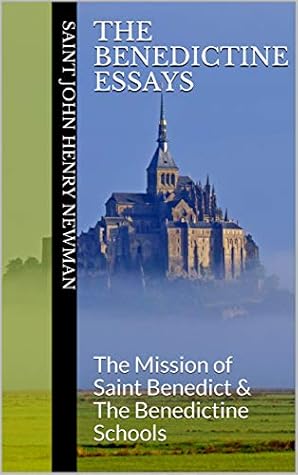
The Benedictine Essays: The Mission of Saint Benedict & The Benedictine Schools (Spirituality of St. John Henry Newman Book 2)
St. Benedict was the "Father of many nations." He has been styled "the Patriarch of the West," a title which there are many reasons for ascribing to him. Not only was he the first to establish a perpetual monastic order in Western Christendom; but his Rule is the monastic norm of the first thousand years of the Church, and gave foundational shape to the whole of Western Christianity.
St. Benedict was the "Father of many nations." He has been styled "the Patriarch of the West," a title which there are many reasons for ascribing to him. Not only was he the first to establish a perpetual monastic order in Western Christendom; but his Rule is the monastic norm of the first thousand years of the Church, and gave foundational shape to the whole of Western Christianity.Newly published as a standalone volume, the Benedictine Essays of St. John Henry Newman was previously only available as part of the Historical Sketches appended to The Rise and Progress of Universities. Now for the first time ever, these two scholarly essays are brought together to highlight the powerful impact that St. Benedict and the Benedictine monastic way of life had in shaping the history of Western Civilization, expounded upon through the brilliant genius of the Catholic Church’s most recently canonized saint: John Henry Cardinal Newman.
Newly published as a standalone volume, the Benedictine Essays of St. John Henry Newman was previously only available as part of the Historical Sketches appended to The Rise and Progress of Universities. Now for the first time ever, these two scholarly essays are brought together to highlight the powerful impact that St. Benedict and the Benedictine monastic way of life had in shaping the history of Western Civilization, expounded upon through the brilliant genius of the Catholic Church’s most recently canonized saint: John Henry Cardinal Newman.Benedictine monasticism has been poured out over the earth, rather than been sent, with a silent mysterious operation, while men slept, and through the romantic adventures of individuals, which are well nigh without record; and thus it has come down to us, not risen up among us, and is found rather than established. Its separate and scattered monasteries occupy the land, each in its place, with a majesty parallel, but superior, to that of old aristocratic houses.
Benedictine monasticism has been poured out over the earth, rather than been sent, with a silent mysterious operation, while men slept, and through the romantic adventures of individuals, which are well nigh without record; and thus it has come down to us, not risen up among us, and is found rather than established. Its separate and scattered monasteries occupy the land, each in its place, with a majesty parallel, but superior, to that of old aristocratic houses.This volume has been properly edited and formatted for modern readers (not merely photopied images of old print), complete with original footnotes, for use both in scholarly/academic settings, and also for personal enrichment. Newman’s mastery of English language is in full force in this pair of essays dedicated to the history and spirit of Benedictine Monasticism and the original meaning of the idea of the “Benedict Option”.
This volume has been properly edited and formatted for modern readers (not merely photopied images of old print), complete with original footnotes, for use both in scholarly/academic settings, and also for personal enrichment. Newman’s mastery of English language is in full force in this pair of essays dedicated to the history and spirit of Benedictine Monasticism and the original meaning of the idea of the “Benedict Option”.About the Author
About the Author About the AuthorJohn Henry Newman (1801-1890) was an Anglican clergyman and leader of the Oxford Movement who eventually undertook the long and arduous journey that led to his conversion to the Roman Catholic Church. He was ordained a Catholic priest and became founder of the English Oratory of St. Philip Neri. Cardinal Newman is one of the preeminent masters of the English language, and his life and spiritual writings have led countless people into the Church. St. John Henry Newman has been acclaimed by the highest authorities as the consummate exemplar of a Saint for modern times.
John Henry Newman (1801-1890) was an Anglican clergyman and leader of the Oxford Movement who eventually undertook the long and arduous journey that led to his conversion to the Roman Catholic Church. He was ordained a Catholic priest and became founder of the English Oratory of St. Philip Neri. Cardinal Newman is one of the preeminent masters of the English language, and his life and spiritual writings have led countless people into the Church. St. John Henry Newman has been acclaimed by the highest authorities as the consummate exemplar of a Saint for modern times.BUY NOW
Published September 23rd 2019 by Acropolis Scholars, LLC
Get Bible verse every day in your inbox
Read on Mobile


Group of Brands


John Henry Newman was a Roman Catholic priest and cardinal who converted to Roman Catholicism from Anglicanism in October 1845. In early life, he was a major figure in the Oxford Movement to bring the Church of England back to its Catholic roots.
Eventually his studies in history persuaded him to become a Roman Catholic. Both before and after becoming a Roman Catholic, he wrote a number of influential books.
... Show more