This book is a 2020 re-print of “Letters by the Rev. John Newton, originally printed 1869. It contains several letters never published before 1869, with Biographical Sketches and Illustrative Notes by the Rev. Josiah Bull, M.A. Religious Tract Society.
Mr. Newton was a great and useful, if not a very accomplished letter-writer. His homely good sense, and his practical piety, made his correspondence very valuable, especially in his letter-writing days. He himself published several series of his letters—' Omricon,' 'Cardiphonia,' and 'Letters to a Wife,’" in addition to which several volumes of posthumous letters were published. Mr. Bull tells us that there are yet more. He has made a selection from these various collections, has added some unpublished ones, classified them under the names of Newton's different correspondents, and prefixed to each series a short biographical notice. Thus, he has put together a very interesting volume, which will be prized by many to whom the volumes referred to are inaccessible. In good sense and instructiveness, if not in intellectual power, Newton's letters deserve to be placed by the side of Samuel Rutherford's.

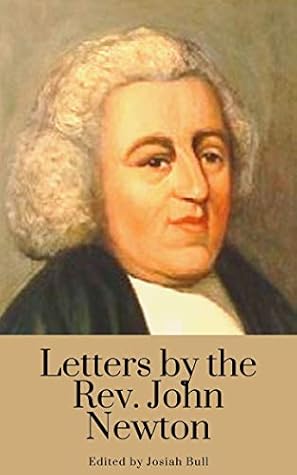


He was a strong support of the Evangelicals in the Church of England, and was a friend of the dissenting clergy as well as of the ministry of his own church.
He was the author of many hymns, including "Amazing Grace".
John Henry Newton was an English Anglican clergyman and former slave-ship captain. He was the author of many hymns, including "Amazing Grace".
Sailing back to England in 1748 aboard the merchant ship, he experienced a spiritual conversion in the Greyhound, which was hauling a load of beeswax and dyer's wood. The ship encountered a severe storm off the coast of Donegal and almost sank. Newton awoke in the middle of the night and finally called out to God as the ship filled with water. It was this experience which he later marked as the beginnings of his conversion to evangelical Christianity. As the ship sailed home, Newton began to read the Bible and other religious literature. By the time he reached Britain, he had accepted the doctrines of Evangelical Christianity.
He became well-known as an evangelical lay minister, and applied for the Anglican priesthood in 1757, although it was more than seven years before he was eventually accepted and ordained into the Church of England.
Newton joined English abolitionist William Wilberforce, leader of the Parliamentary campaign to abolish the slave trade, and lived to see the passage of the Slave Trade Act 1807.
... Show more