Over 150 letters. John Newton converted slave-trader, preacher, and hymn-writer, was one of the most colourful figures in the Evangelical Awakening of the eighteenth century. 'Once an infidel and libertine, a servant of slaves in Africa,' he wrote for this epitaph, 'by rich mercy of Jesus Christ, preserved, restored, pardoned, and appointed to preach the faith he had long laboured to destroy.' It was through his prolific correspondence that Newton fulfilled his distinctive word as 'the letter-writer parexcellence of the Evangelical Revival'. His grasp of Scripture and deep personal experience of the 'amazing grace' of God, his many friends (among them, Whitefield, Cowper and Wilberforce), his manifold trials, his country pastorate, his strong, clear, idiomatic style- all these factors combined to prepare the author of 'How sweet the Name of Jesus sounds', for the exercise of his special gift. These letters, selected by his biographer, Josiah Bull, bear the practical imprint of all of Newton's writings; they cover a wide variety of subjects and aim 'to conform the believer to Christ'. Among them are several that were not previously published in earlier collections of his correspondence. Of particular value and interest are the biographical sketches and historical notes supplied by the editor.

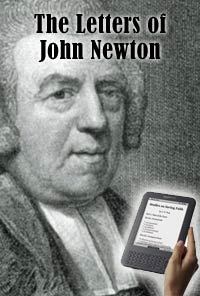


He was a strong support of the Evangelicals in the Church of England, and was a friend of the dissenting clergy as well as of the ministry of his own church.
He was the author of many hymns, including "Amazing Grace".
John Henry Newton was an English Anglican clergyman and former slave-ship captain. He was the author of many hymns, including "Amazing Grace".
Sailing back to England in 1748 aboard the merchant ship, he experienced a spiritual conversion in the Greyhound, which was hauling a load of beeswax and dyer's wood. The ship encountered a severe storm off the coast of Donegal and almost sank. Newton awoke in the middle of the night and finally called out to God as the ship filled with water. It was this experience which he later marked as the beginnings of his conversion to evangelical Christianity. As the ship sailed home, Newton began to read the Bible and other religious literature. By the time he reached Britain, he had accepted the doctrines of Evangelical Christianity.
He became well-known as an evangelical lay minister, and applied for the Anglican priesthood in 1757, although it was more than seven years before he was eventually accepted and ordained into the Church of England.
Newton joined English abolitionist William Wilberforce, leader of the Parliamentary campaign to abolish the slave trade, and lived to see the passage of the Slave Trade Act 1807.
... Show more