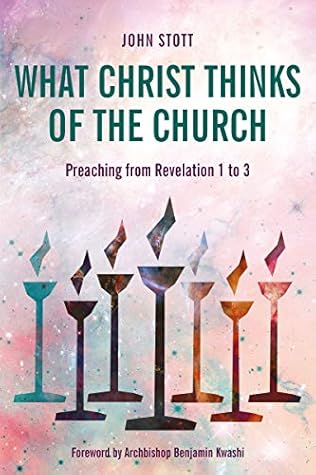
Christ’s letters to the seven churches still resonate today. Like those ancient churches, most churches today lie somewhere on the continuum between flourishing and withering, between faithfulness and faithlessness, between comfort and persecution. Using seven key themes, John Stott illustrates the timeless relevance of Christ’s exhortations and warnings to the universal church, while pointing to Christ, the Lamb turned Shepherd, who knows the unique opportunities and challenges that face each church. This is a helpful guide for preachers looking to feed their flock with this often visited passage from John’s vision of the apocalypse.



John Robert Walmsley Stott is a British Christian leader and Anglican clergyman who is noted as a leader of the worldwide evangelical movement. He is famous as one of the principal authors of the Lausanne Covenant in 1974.
Stott was ordained in 1945 and went on to become a curate at All Souls Church, Langham Place (1945-1950) then rector (1950-75). This was the church in which he had grown up, and in which he has spent almost all of his life, aside from a few years spent in Cambridge.
Stott played a central role at two landmark events in the history of British evangelicalism. He was chairing the National Assembly of Evangelicals in 1966, a convention organised by the Evangelical Alliance, when Martyn Lloyd-Jones made an unexpected call for evangelicals to unite together as evangelicals and no longer within their 'mixed' denominations.
... Show more