
- Bible
- Read the Bible
- Bible Versions
- Verse of the Day
- Reading Plans
- Verses by Topic
- Books of the Bible
- Bible Images
- Study
- Commentaries
- Concordances
- Dictionaries
- Encyclopedias
- Sermons
- Bible Atlas & Maps
- BP Wiki
- Devotionals
- Today's Devotionals
- Light of the World
- All Devotionals
- Inspirational Quotes
- More
- Picture Quotes
- Videos
- Inspirational
- Bible Study
- What The Bible Says
- Bible Q&As
- Daily Bread
- Bible by Genre
- Bible Stories
- Random Bible Verse
- Community
- Store
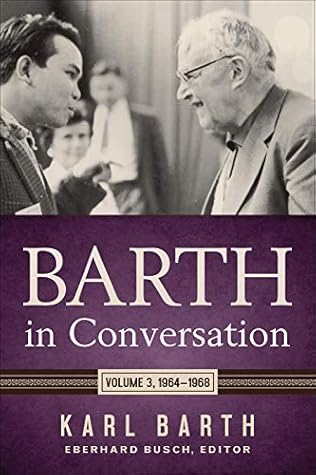
Barth in Conversation: Volume 3: 1964-1968
In recognition of Karl Barth’s stature as a theologian and public figure in the life of Europe and the West, Swiss publisher Theologischer Verlag Zurich (TVZ) published Conversations, a collection of correspondence, articles, interviews, and other short-form writings by Barth. Collected in three volumes, Conversationsreveals the depth and breadth of Barth’s theological thought as well as his humor and humanity. Now, for the first time in English, the third and final volume is offered here. Volume 3 covers the period from 1964 to 1968, the year of Barth’s death. As such, it represents the culmination of the great theologian’s thoughts on a broad range of subjects, from the challenges of living as the church in an increasingly secular world to the distinctive joys and challenges of the pastoral vocation.
In recognition of Karl Barth’s stature as a theologian and public figure in the life of Europe and the West, Swiss publisher Theologischer Verlag Zurich (TVZ) published ConversationsConversations, a collection of correspondence, articles, interviews, and other short-form writings by Barth. Collected in three volumes, ConversationsConversationsreveals the depth and breadth of Barth’s theological thought as well as his humor and humanity. Now, for the first time in English, the third and final volume is offered here. Volume 3 covers the period from 1964 to 1968, the year of Barth’s death. As such, it represents the culmination of the great theologian’s thoughts on a broad range of subjects, from the challenges of living as the church in an increasingly secular world to the distinctive joys and challenges of the pastoral vocation.BUY NOW
Published November 12th 2019 by Westminster John Knox Press
Get Bible verse every day in your inbox
Read on Mobile


Group of Brands


Karl Barth was a Swiss Reformed theologian whom critics hold to be among the most important Christian thinkers of the 20th century.
Beginning with his experience as a pastor, he rejected his training in the predominant liberal theology typical of 19th-century Protestantism. Instead he embarked on a new theological path initially called dialectical theology, due to its stress on the paradoxical nature of divine truth (e.g., God's relationship to humanity embodies both grace and judgment). Other critics have referred to Barth as the father of neo-orthodoxy -- a term emphatically rejected by Barth himself. The most accurate description of his work might be "a theology of the Word." Barth's theological thought emphasized the sovereignty of God, particularly through his innovative doctrine of election.
Barth tries to recover the Doctrine of the Trinity in theology from its putative loss in liberalism. His argument follows from the idea that God is the object of God's own self-knowledge, and revelation in the Bible means the self-unveiling to humanity of the God who cannot be discovered by humanity simply through its own efforts.
... Show more