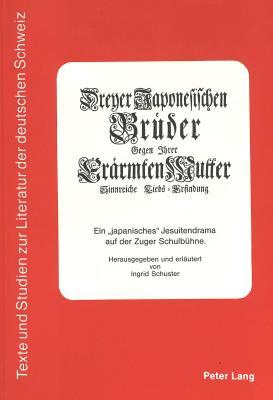
Zahlreiche Jesuitenkollegien fuhrten mit ihren Schulern Dramen auf, zu denen Berichte der in Japan tatigen Missionare den Stoff lieferten. Die Buhnensprache war lateinisch, und nur ganz wenige Texte sind erhalten. Hier liegt nun der einzigartige Fall vor, dass sich eine "deutsche" Bearbeitung eines solchen Stuckes mit japanischer Thematik erhalten hat - ein fur die Schulbuhne in Zug verfasster Text aus dem Jahre 1747. Auch der Stoff ist aussergewohnlich: er wurzelt in der chinesisch-konfuzianischen Erbauungsliteratur und hat auch in die japanische Literatur Eingang gefunden."



Karl Barth was a Swiss Reformed theologian whom critics hold to be among the most important Christian thinkers of the 20th century.
Beginning with his experience as a pastor, he rejected his training in the predominant liberal theology typical of 19th-century Protestantism. Instead he embarked on a new theological path initially called dialectical theology, due to its stress on the paradoxical nature of divine truth (e.g., God's relationship to humanity embodies both grace and judgment). Other critics have referred to Barth as the father of neo-orthodoxy -- a term emphatically rejected by Barth himself. The most accurate description of his work might be "a theology of the Word." Barth's theological thought emphasized the sovereignty of God, particularly through his innovative doctrine of election.
Barth tries to recover the Doctrine of the Trinity in theology from its putative loss in liberalism. His argument follows from the idea that God is the object of God's own self-knowledge, and revelation in the Bible means the self-unveiling to humanity of the God who cannot be discovered by humanity simply through its own efforts.
... Show more