
- Bible
- Read the Bible
- Bible Versions
- Verse of the Day
- Reading Plans
- Verses by Topic
- Books of the Bible
- Bible Images
- Study
- Commentaries
- Concordances
- Dictionaries
- Encyclopedias
- Sermons
- Bible Atlas & Maps
- BP Wiki
- Devotionals
- Today's Devotionals
- Light of the World
- All Devotionals
- Inspirational Quotes
- More
- Picture Quotes
- Videos
- Inspirational
- Bible Study
- What The Bible Says
- Bible Q&As
- Daily Bread
- Bible by Genre
- Bible Stories
- Random Bible Verse
- Community
- Store
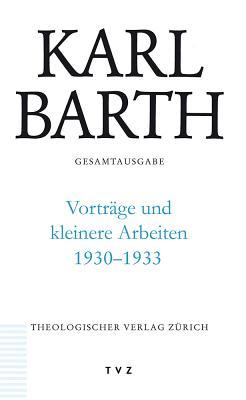
English summary: From "Die Not der evangelischen Kirche" (the plight of the protestant church) to "Theologische Existenz heute" (theological existence today) the new volume of the complete edition contains some of Karl Barth's most significant essays. The edited texts from the final phase of the Weimar Republic and from the year the Nazis came to power allow for new and more accurate insights into the structures and context of the emerging "Kirchenkampf" (struggle between state and church), and also into Barth's theology and his activities at the time. Alongside almost 'classic' texts, many of them now published in a scholarly edition for the very first time, this volume also presents previously unknown and unpublished material. Due to high frequency of Barth's publications, especially in 1933, this work can also be read as a to a large extent daily chronology of the upcoming "Kirchenkampf" and its historical background. German description: Von der Not der evangelischen Kirche zur Theologischen Existenz heute: Der neue Band der Gesamtausgabe enthalt einige der bedeutendsten Aufsatze Karl Barths. Die Edition der Texte aus der Endphase der Weimarer Republik und dem Jahr der nationalsozialistischen Machtubernahme erlaubt neue und genauere Einblicke in die Strukturen und Zusammenhange des beginnenden Kirchenkampfs sowie in Barths Theologie und sein Wirken in dieser Zeit. Neben den nahezu klassischen Texten, die hier zum grossen Teil erstmals in einer wissenschaftlichen Edition erscheinen, bietet der Band bisher Unbekanntes und Ungedrucktes. Aufgrund der ungeheuren Dichte der Textfolge gerade im Jahr 1933 lasst er sich auch als oft tagesgenaue Chronologie des heraufziehenden Kirchenkampfes und seiner Vorgeschichte lesen.
BUY NOW
Hardcover, 676 pages
Published December 1st 2013 by Theologischer Verlag (first published October 1st 2013)
Subscribe
Get Bible verse every day in your inbox
Read on Mobile


Group of Brands


© 2026 Bibleportal.com All rights reserved.
Karl Barth was a Swiss Reformed theologian whom critics hold to be among the most important Christian thinkers of the 20th century.
Beginning with his experience as a pastor, he rejected his training in the predominant liberal theology typical of 19th-century Protestantism. Instead he embarked on a new theological path initially called dialectical theology, due to its stress on the paradoxical nature of divine truth (e.g., God's relationship to humanity embodies both grace and judgment). Other critics have referred to Barth as the father of neo-orthodoxy -- a term emphatically rejected by Barth himself. The most accurate description of his work might be "a theology of the Word." Barth's theological thought emphasized the sovereignty of God, particularly through his innovative doctrine of election.
Barth tries to recover the Doctrine of the Trinity in theology from its putative loss in liberalism. His argument follows from the idea that God is the object of God's own self-knowledge, and revelation in the Bible means the self-unveiling to humanity of the God who cannot be discovered by humanity simply through its own efforts.
... Show more