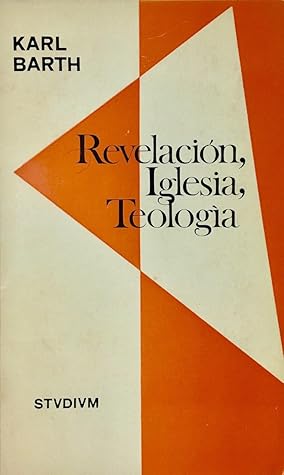
Presentamos aquí tres conferencias de Karl Barth. Cada una aborda un tema: Revelación, Iglesia, Teología. Nada tan sugestivo, transcendente y actual y, además, en labios de Karl Barth.
Con Karl Barth se puede estar o no estar de acuerdo. Su confesionalidad protestante lógicamente determina o matiza no pocos de sus asertos, cosa de la que un católico no puede prescindir. Con todo -amén de no pocas otras cosas-, es imposible leer a Karl Barth sin sentir cercano a Dios. La transcendencia divina, o mejor de Dios, ha hecho tal mella en el alma del gran teólogo, que al leerle no podemos por menos de sentir el escalofrío de lo divino. Dios está con nosotros; su gracia nos lo ha hecho familiar; pero... es gracia.
En la tendencia actual de humanizar, a «antropologizar» en la esfera de lo religioso, resulta más necesario que nunca no perder de vista las distancias. Para ir a Dios, no hay que deshumanizar. Pero también: Para ir a Dios, no hay que desdivinizar. El problema es demasiado serio para resolverlo a la ligera. Y, desde luego, la voz de Karl Barth no es la menos autorizada en este debate.



Karl Barth was a Swiss Reformed theologian whom critics hold to be among the most important Christian thinkers of the 20th century.
Beginning with his experience as a pastor, he rejected his training in the predominant liberal theology typical of 19th-century Protestantism. Instead he embarked on a new theological path initially called dialectical theology, due to its stress on the paradoxical nature of divine truth (e.g., God's relationship to humanity embodies both grace and judgment). Other critics have referred to Barth as the father of neo-orthodoxy -- a term emphatically rejected by Barth himself. The most accurate description of his work might be "a theology of the Word." Barth's theological thought emphasized the sovereignty of God, particularly through his innovative doctrine of election.
Barth tries to recover the Doctrine of the Trinity in theology from its putative loss in liberalism. His argument follows from the idea that God is the object of God's own self-knowledge, and revelation in the Bible means the self-unveiling to humanity of the God who cannot be discovered by humanity simply through its own efforts.
... Show more