
- Bible
- Read the Bible
- Bible Versions
- Verse of the Day
- Reading Plans
- Verses by Topic
- Books of the Bible
- Bible Images
- Study
- Commentaries
- Concordances
- Dictionaries
- Encyclopedias
- Sermons
- Bible Atlas & Maps
- BP Wiki
- Devotionals
- Today's Devotionals
- Light of the World
- All Devotionals
- Inspirational Quotes
- More
- Picture Quotes
- Videos
- Inspirational
- Bible Study
- What The Bible Says
- Bible Q&As
- Daily Bread
- Bible by Genre
- Bible Stories
- Random Bible Verse
- Community
- Store
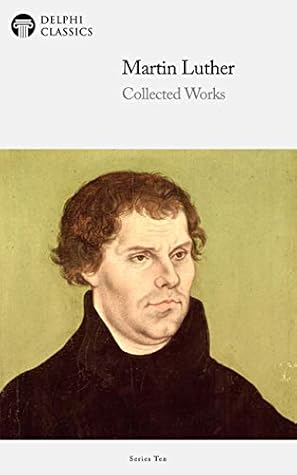
Delphi Collected Works of Martin Luther
by Martin Luther
The German theologian and religious reformer, Martin Luther was the catalyst of the sixteenth century Protestant Reformation. Luther set on course a movement that reformulated the basic tenets of Christian belief, resulting in the division of Western Christendom between Roman Catholicism and the new Protestant traditions. One of the most influential figures in the history of Christianity, Luther produced a wide body of works, challenging the authority and office of the Pope by teaching that the Bible is the only source of divinely revealed knowledge. His landmark translation of the Bible into the German vernacular made religion more accessible to everyday people, having a tremendous impact on both the church and German culture. This comprehensive eBook presents Luther’s collected works, with numerous illustrations, rare texts, informative introductions and the usual Delphi bonus material. (Version 1)
* Beautifully illustrated with images relating to Luther’s life and works
* Concise introductions to the major texts
* All of the major treatises, with individual contents tables
* Translators of the works: Henry Wace, C. M. Jacobs, Adolph Spaeth, A. T. W. Steinhaeuser, W. A. Lambert, R. Massie, E. H. Gillett, Henry Cole, John Camden Hotten, Robert E. Smith, Friedrich Bente, W. H. T. Dau, Henry Bell, and John Nicholas Lenker
* Features the original 1545 German translation of the Bible - Luther's great achievement for his fellow men
* Excellent formatting of the texts
* Easily locate the works you want to read
* Features three biographies, including Hartmann Grisar’s seminal 6-volume study – discover Luther’s intriguing life
* Scholarly ordering of texts into chronological order
Please visit www.delphiclassics.comwww.delphiclassics.com to browse through our range of exciting titles
CONTENTS:
The Books
Ninety-Five Theses (1517)
Treatise on Baptism (1519)
A Treatise Concerning the Blessed Sacrament and Concerning the Brotherhoods (1519)
To the Christian Nobility of the German Nation (1520)
On the Babylonian Captivity of the Church (1520)
A Treatise on Christian Liberty (1520)
Discussion of Confession (1520)
The Fourteen of Consolation (1520)
Treatise on Good Works (1520)
Treatise on the New Testament (1520)
The Papacy at Rome (1520)
A Treatise Concerning the Ban (1520)
A Brief Explanation of the Ten Commandments, the Creed, and the Lord’s Prayer (1520)
The Eight Wittenberg Sermons (1522)
That Doctrines of Men are to be Rejected (1522)
Against Henry, King of the English (1522)
Luther Bible (Original German Text, 1545)
The Epistles of St. Peter and St. Jude Preached and Explained (1524)
Hymns (1524)
On the Bondage of the Will (1525)
The Book of Vagabonds (1528)
On War against the Turk (1529)
Small Catechism (1529)
Large Catechism (1529)
An Open Letter on Translating (1530)
Commentary on Genesis (1535)
Smalcald Articles (1537)
Selections from Luther’s ‘Table Talk’
The Biographies
Luther by Hartmann Grisar
Life of Luther by Gustav Just
Martin Luther by Thomas Martin Lindsay
* Beautifully illustrated with images relating to Luther’s life and works
* Concise introductions to the major texts
* All of the major treatises, with individual contents tables
* Translators of the works: Henry Wace, C. M. Jacobs, Adolph Spaeth, A. T. W. Steinhaeuser, W. A. Lambert, R. Massie, E. H. Gillett, Henry Cole, John Camden Hotten, Robert E. Smith, Friedrich Bente, W. H. T. Dau, Henry Bell, and John Nicholas Lenker
* Features the original 1545 German translation of the Bible - Luther's great achievement for his fellow men
* Excellent formatting of the texts
* Easily locate the works you want to read
* Features three biographies, including Hartmann Grisar’s seminal 6-volume study – discover Luther’s intriguing life
* Scholarly ordering of texts into chronological order
Please visit www.delphiclassics.comwww.delphiclassics.com to browse through our range of exciting titles
CONTENTS:
The Books
Ninety-Five Theses (1517)
Treatise on Baptism (1519)
A Treatise Concerning the Blessed Sacrament and Concerning the Brotherhoods (1519)
To the Christian Nobility of the German Nation (1520)
On the Babylonian Captivity of the Church (1520)
A Treatise on Christian Liberty (1520)
Discussion of Confession (1520)
The Fourteen of Consolation (1520)
Treatise on Good Works (1520)
Treatise on the New Testament (1520)
The Papacy at Rome (1520)
A Treatise Concerning the Ban (1520)
A Brief Explanation of the Ten Commandments, the Creed, and the Lord’s Prayer (1520)
The Eight Wittenberg Sermons (1522)
That Doctrines of Men are to be Rejected (1522)
Against Henry, King of the English (1522)
Luther Bible (Original German Text, 1545)
The Epistles of St. Peter and St. Jude Preached and Explained (1524)
Hymns (1524)
On the Bondage of the Will (1525)
The Book of Vagabonds (1528)
On War against the Turk (1529)
Small Catechism (1529)
Large Catechism (1529)
An Open Letter on Translating (1530)
Commentary on Genesis (1535)
Smalcald Articles (1537)
Selections from Luther’s ‘Table Talk’
The Biographies
Luther by Hartmann Grisar
Life of Luther by Gustav Just
Martin Luther by Thomas Martin Lindsay
BUY NOW
Kindle Edition, Delphi Series Ten #19, 13767 pages
Published November 28th 2019 by Delphi Classics
Subscribe
Get Bible verse every day in your inbox
Read on Mobile


Group of Brands


© 2026 Bibleportal.com All rights reserved.
Martin Luther changed the course of Western civilization by initiating the Protestant Reformation. As a priest and theology professor, he confronted indulgence salesmen with his 95 Theses in 1517. Luther strongly disputed their claim that freedom from God's punishment of sin could be purchased with money. His refusal to retract all of his writings at the demand of Pope Leo X in 1520 and the Holy Roman Emperor Charles V at the Diet of Worms meeting in 1521 resulted in his excommunication by the pope and condemnation as an outlaw by the emperor.
Luther taught that salvation is a free gift of God and received only by grace through faith in Jesus as redeemer from sin, not from good works. His theology challenged the authority of the pope of the Roman Catholic Church by teaching that the Bible is the only source of divinely revealed knowledge and opposed sacerdotalism by considering all baptized Christians to be a holy priesthood.
His translation of the Bible into the language of the people (instead of Latin) made it more accessible, causing a tremendous impact on the church and on German culture. It fostered the development of a standard version of the German language, added several principles to the art of translation, and influenced the translation into English of the King James Bible. His hymns inspired the development of singing in churches. His marriage to Katharina von Bora set a model for the practice of clerical marriage, allowing Protestant priests to marry.
... Show more