"During Bugenhagen's absence Luther preached a long while for him, regularly, on the fifth, sixth and seventh chapters of Matthew, beginning Nov. 9, 1530. These sermons were then published, first in 1532, at Wittenberg, under Joseph Klug, in quarto; in 1533 at Marburg, in octavo; and in 1539, again in Wittenberg, in quarto, under Johann Weiss. In 1533 they were also translated into Latin by Vincent Obsopoeus."
In this Irmischer edition these sermons are thrown into the form of a running commentary, and as such they are now presented to the English reading public by the Lutheran Publication Society.
When requested by a committee of this Board to translate this work, I called attention to the peculiar roughness and even fierceness of Luther's way of expressing himself and of denouncing the minions of the papacy. But the committee judged it best that Luther should be allowed to speak for himself, presuming that intelligent English readers will make due allowance for the style of speech common in that day, and for the peculiarly aggravating circumstances under which that noble man of God was called to labor. An admirable vindication of these "Asperities" appeared in the ninth volume of our excellent Quarterly Review, in 1881; it is from the pen of Rev. Dr. Morris, one of Luther's most enthusiastic admirers.
Charles A. Hay.
Gettysburg, Feb. 11, 1892.

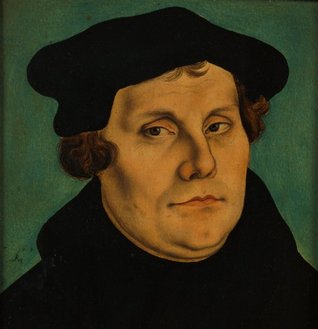


Martin Luther changed the course of Western civilization by initiating the Protestant Reformation. As a priest and theology professor, he confronted indulgence salesmen with his 95 Theses in 1517. Luther strongly disputed their claim that freedom from God's punishment of sin could be purchased with money. His refusal to retract all of his writings at the demand of Pope Leo X in 1520 and the Holy Roman Emperor Charles V at the Diet of Worms meeting in 1521 resulted in his excommunication by the pope and condemnation as an outlaw by the emperor.
Luther taught that salvation is a free gift of God and received only by grace through faith in Jesus as redeemer from sin, not from good works. His theology challenged the authority of the pope of the Roman Catholic Church by teaching that the Bible is the only source of divinely revealed knowledge and opposed sacerdotalism by considering all baptized Christians to be a holy priesthood.
His translation of the Bible into the language of the people (instead of Latin) made it more accessible, causing a tremendous impact on the church and on German culture. It fostered the development of a standard version of the German language, added several principles to the art of translation, and influenced the translation into English of the King James Bible. His hymns inspired the development of singing in churches. His marriage to Katharina von Bora set a model for the practice of clerical marriage, allowing Protestant priests to marry.
... Show more