Om verdslig øvrighed er Martin Luthers vigtigste skrift om forholdet mellem kristendom og politik. Her fremstiller han sin berømte sondring mellem de to regimenter, det åndelige og det verdslige. Dermed lægger han op til en klar opdeling mellem kirke og stat.
Toregimentelæren betyder dog ikke en fuldstændig adskillelse af religion og politik for Luther. Tværtimod har den kristne i sin tro et særligt grundlag for at involvere sig i det politiske, fordi den kristnes virke er præget af næstekærlighed og dermed er orienteret mod det menneskelige fællesskab. Luthers opfattelse er, at politik ikke kan bruges til at gøre mennesker kristne med, men kristne mennesker bruger politik til at gavne andre.
Bogen rummer foruden Luthers tyske tekst og den nye danske oversættelse også en historisk introduktion og en indføring i selve tankegangen, og den giver således et godt grundlag for at forstå den aktuelle diskussion om forholdet mellem religion og politik i et land med luthersk tradition.

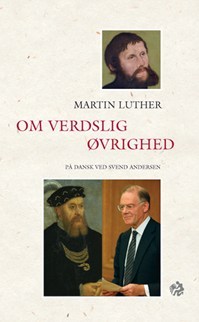


Martin Luther changed the course of Western civilization by initiating the Protestant Reformation. As a priest and theology professor, he confronted indulgence salesmen with his 95 Theses in 1517. Luther strongly disputed their claim that freedom from God's punishment of sin could be purchased with money. His refusal to retract all of his writings at the demand of Pope Leo X in 1520 and the Holy Roman Emperor Charles V at the Diet of Worms meeting in 1521 resulted in his excommunication by the pope and condemnation as an outlaw by the emperor.
Luther taught that salvation is a free gift of God and received only by grace through faith in Jesus as redeemer from sin, not from good works. His theology challenged the authority of the pope of the Roman Catholic Church by teaching that the Bible is the only source of divinely revealed knowledge and opposed sacerdotalism by considering all baptized Christians to be a holy priesthood.
His translation of the Bible into the language of the people (instead of Latin) made it more accessible, causing a tremendous impact on the church and on German culture. It fostered the development of a standard version of the German language, added several principles to the art of translation, and influenced the translation into English of the King James Bible. His hymns inspired the development of singing in churches. His marriage to Katharina von Bora set a model for the practice of clerical marriage, allowing Protestant priests to marry.
... Show more