All that the pope decrees and does I will receive, on this condition, that I first test it by the Holy Scriptures. He must remain under Christ, and submit to be judged by the Holy Scriptures. But these Roman knaves come along, place him above Christ, and make him a judge over the Scriptures; they say that he cannot err, and whatever is dreamed at Rome, nay, everything which they dare to come out with, they would prescribe for us as articles of faith. And as if that were not enough, they would introduce a new kind of faith, so that we are to believe what we can see with our bodily eyes; whereas faith, by its very nature, is of the things which no one sees or feels, as St. Paul says in Hebrews 11. Now the Roman authority and fellowship1 is a bodily thing, and can be seen by any one. If the pope came to that—which may God forbid!—I would say right out that he is the real Antichrist, of whom all the Scriptures speak.

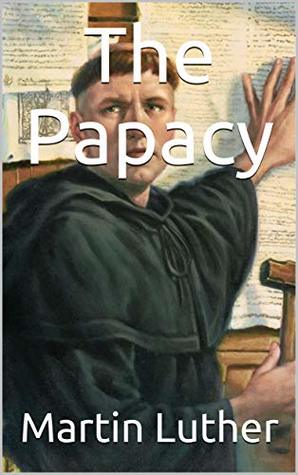


Martin Luther changed the course of Western civilization by initiating the Protestant Reformation. As a priest and theology professor, he confronted indulgence salesmen with his 95 Theses in 1517. Luther strongly disputed their claim that freedom from God's punishment of sin could be purchased with money. His refusal to retract all of his writings at the demand of Pope Leo X in 1520 and the Holy Roman Emperor Charles V at the Diet of Worms meeting in 1521 resulted in his excommunication by the pope and condemnation as an outlaw by the emperor.
Luther taught that salvation is a free gift of God and received only by grace through faith in Jesus as redeemer from sin, not from good works. His theology challenged the authority of the pope of the Roman Catholic Church by teaching that the Bible is the only source of divinely revealed knowledge and opposed sacerdotalism by considering all baptized Christians to be a holy priesthood.
His translation of the Bible into the language of the people (instead of Latin) made it more accessible, causing a tremendous impact on the church and on German culture. It fostered the development of a standard version of the German language, added several principles to the art of translation, and influenced the translation into English of the King James Bible. His hymns inspired the development of singing in churches. His marriage to Katharina von Bora set a model for the practice of clerical marriage, allowing Protestant priests to marry.
... Show more