
- Bible
- Read the Bible
- Bible Versions
- Verse of the Day
- Reading Plans
- Verses by Topic
- Books of the Bible
- Bible Images
- Study
- Commentaries
- Concordances
- Dictionaries
- Encyclopedias
- Sermons
- Bible Atlas & Maps
- BP Wiki
- Devotionals
- Today's Devotionals
- Light of the World
- All Devotionals
- Inspirational Quotes
- More
- Picture Quotes
- Videos
- Inspirational
- Bible Study
- What The Bible Says
- Bible Q&As
- Daily Bread
- Bible by Genre
- Bible Stories
- Random Bible Verse
- Community
- Store
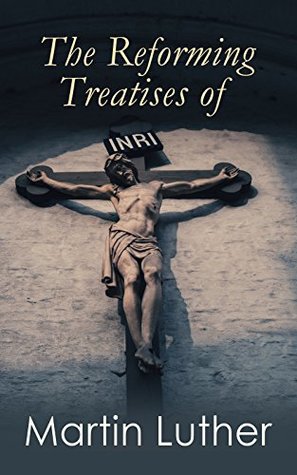
"Address to the Christian Nobility of the German Nation" is the first of the three tracts written by Martin Luther in 1520. In this work, he defined for the first time the signature doctrines of the priesthood of all believers and the two kingdoms. After the church made a strong attempt at drawing distinct lines on saying who had authority in the spiritual sphere and its matters. This division of Christians into spheres motivated Luther to write on the "three walls" the "Romanists" created to protect themselves from reform.
"Prelude on the Babylonian Captivity of the Church" is a theological treatise, the second of the three major tracts from 1520. In this work Luther examines the seven sacraments of the Catholic Church in the light of his interpretation of the Bible. With regard to the Eucharist, he advocates restoring the cup to the laity, dismisses the Catholic doctrine of Transubstantiation but affirms the real presence of the body and blood of Christ in the Eucharist, and rejects the teaching that the Mass is a sacrifice offered to God.
"A Treatise on Christian Liberty" is the third of Luther's major reforming treatises of 1520. It developed the concept that as fully forgiven children of God, Christians are no longer compelled to keep God's law; however, they freely and willingly serve God and their neighbors. Luther also further develops the concept of justification by faith. In the treatise, Luther stated, "A Christian is a perfectly free lord of all, subject to none. A Christian is a perfectly dutiful servant of all, subject to all."
"Prelude on the Babylonian Captivity of the Church" is a theological treatise, the second of the three major tracts from 1520. In this work Luther examines the seven sacraments of the Catholic Church in the light of his interpretation of the Bible. With regard to the Eucharist, he advocates restoring the cup to the laity, dismisses the Catholic doctrine of Transubstantiation but affirms the real presence of the body and blood of Christ in the Eucharist, and rejects the teaching that the Mass is a sacrifice offered to God.
"A Treatise on Christian Liberty" is the third of Luther's major reforming treatises of 1520. It developed the concept that as fully forgiven children of God, Christians are no longer compelled to keep God's law; however, they freely and willingly serve God and their neighbors. Luther also further develops the concept of justification by faith. In the treatise, Luther stated, "A Christian is a perfectly free lord of all, subject to none. A Christian is a perfectly dutiful servant of all, subject to all."
BUY NOW
Kindle Edition, 284 pages
Published April 2nd 2018 by e-artnow
Subscribe
Get Bible verse every day in your inbox
Read on Mobile


Group of Brands


© 2026 Bibleportal.com All rights reserved.
Martin Luther changed the course of Western civilization by initiating the Protestant Reformation. As a priest and theology professor, he confronted indulgence salesmen with his 95 Theses in 1517. Luther strongly disputed their claim that freedom from God's punishment of sin could be purchased with money. His refusal to retract all of his writings at the demand of Pope Leo X in 1520 and the Holy Roman Emperor Charles V at the Diet of Worms meeting in 1521 resulted in his excommunication by the pope and condemnation as an outlaw by the emperor.
Luther taught that salvation is a free gift of God and received only by grace through faith in Jesus as redeemer from sin, not from good works. His theology challenged the authority of the pope of the Roman Catholic Church by teaching that the Bible is the only source of divinely revealed knowledge and opposed sacerdotalism by considering all baptized Christians to be a holy priesthood.
His translation of the Bible into the language of the people (instead of Latin) made it more accessible, causing a tremendous impact on the church and on German culture. It fostered the development of a standard version of the German language, added several principles to the art of translation, and influenced the translation into English of the King James Bible. His hymns inspired the development of singing in churches. His marriage to Katharina von Bora set a model for the practice of clerical marriage, allowing Protestant priests to marry.
... Show more