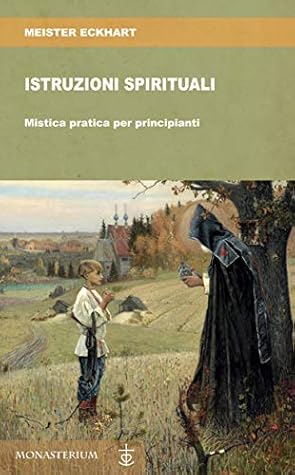
Con questi suoi consigli ai giovani novizi del monastero, Meister Eckhart si rivela un gigante dell’introspezione nella profondità dell’anima, per realizzare un fecondo rapporto con Dio. Gli insegnamenti di uno tra i maggiori mistici medievali sono sorprendentemente freschi e attuali: solo la contemplazione assoluta del Mistero, di quel Dio che desidera rivelarsi all’uomo ma paradossalmente gli risulta inconoscibile, permette l’incontro vitale che diventa salvezza. Questo avviene nel qui e ora del tempo di ciascuno –dei novizi di allora come degli uomini di oggi –grazie a queste riflessioni dirette e feconde come solo un vero padre spirituale è capace di dare.



Meister is German for "Master", referring to the academic title Magister in theologia he obtained in Paris. Coming into prominence during the decadent Avignon Papacy and a time of increased tensions between the Franciscans and Eckhart's Dominican Order of Preacher Friars, he was brought up on charges later in life before the local Franciscan-led Inquisition. Tried as a heretic by Pope John XXII, his "Defence" is famous for his reasoned arguments to all challenged articles of his writing and his refutation of heretical intent. He purportedly died before his verdict was received, although no record of his death or burial site has ever been discovered.
Meister Eckhart is sometimes (erroneously) referred to as "Johannes Eckhart", although Eckhart was his given name and von Hochheim was his surname.
"Perhaps no mystic in the history of Christianity has been more influential and more controversial than the Dominican Meister Eckart. Few, if any, mystics have been as challenging to modern day readers and as resistant to agreed-upon interpretation."
—Bernard McGinn, The Mystical Thought of Meister Eckhart... Show more