
- Bible
- Read the Bible
- Bible Versions
- Verse of the Day
- Reading Plans
- Verses by Topic
- Books of the Bible
- Bible Images
- Study
- Commentaries
- Concordances
- Dictionaries
- Encyclopedias
- Sermons
- Bible Atlas & Maps
- BP Wiki
- Devotionals
- Today's Devotionals
- All Devotionals
- Inspirational Quotes
- More
- Picture Quotes
- Videos
- Inspirational
- Bible Study
- What The Bible Says
- Bible Q&As
- Daily Bread
- Bible by Genre
- Bible Stories
- Random Bible Verse
- Community
- Store
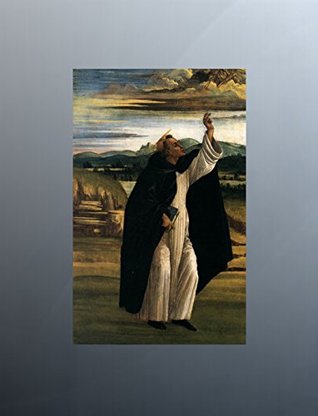
The Life, Selected Sermons and Treaties (Cologne Cadre Series Book 4)
by Meister Eckhart
The importance of Eckhart in the history of scholastic philosophy is considerable. At that period all the efforts of religious philosophy were directed to widen theology, and to effect reconciliation between reasons and faith. The fundamental idea of Eckhart’s philosophy is that of the Absolute or Abstract Unity conceived as the sole real existence. His God is the agnostic of the Neo-Platonist: He is absolutely devoid of attributes, which would be a limitation of His Infinity. God is incomprehensible, in fact, with regard to our limited intelligence, God is the origin and end of every being. How then, it may be asked, can God be a Person? The answer is, that by the eternal generation of the Son the Father becomes conscious of Himself, and the Love reflected back to the Father by the Son is the Holy Spirit. Together with the Son, God also begets the ideal forms of created things.
The Absolute is thus the common background of God and the Universe. Just as the Son does, so everything born of God tends to return to Him, and to lose itself in the unity of His Being. This theology is really Pantheism. Of the Absolute we have no cognizance but only of phenomena, but by the resolute endeavor to abstract ourselves from time and space, we can, according to Eckhart, at rare moments, attain to the Absolute by virtue of what he calls the spark (Funkelein) of the soul, which comes direct from God? This is really God acting in man, to know God is to be one with God. This is the final end of all our activity, and the means of attaining to there is completeness.
Within these pages you will discover the life of the man, the issues regarding the myths and the facts which comprise the legend, which has been both passed down within the class room and gleaned from the remain extant works, which he has penned; and more importantly, why he is termed Meister.
This is Vol. 4 of the Cologne Cadre Series.
The Absolute is thus the common background of God and the Universe. Just as the Son does, so everything born of God tends to return to Him, and to lose itself in the unity of His Being. This theology is really Pantheism. Of the Absolute we have no cognizance but only of phenomena, but by the resolute endeavor to abstract ourselves from time and space, we can, according to Eckhart, at rare moments, attain to the Absolute by virtue of what he calls the spark (Funkelein) of the soul, which comes direct from God? This is really God acting in man, to know God is to be one with God. This is the final end of all our activity, and the means of attaining to there is completeness.
Within these pages you will discover the life of the man, the issues regarding the myths and the facts which comprise the legend, which has been both passed down within the class room and gleaned from the remain extant works, which he has penned; and more importantly, why he is termed Meister.
This is Vol. 4 of the Cologne Cadre Series.
BUY NOW
Kindle Edition, 430 pages
Published January 31st 2016 by Revelation Insight
Subscribe
Get Bible verse every day in your inbox
Read on Mobile


Group of Brands


© 2026 Bibleportal.com All rights reserved.
Meister is German for "Master", referring to the academic title Magister in theologia he obtained in Paris. Coming into prominence during the decadent Avignon Papacy and a time of increased tensions between the Franciscans and Eckhart's Dominican Order of Preacher Friars, he was brought up on charges later in life before the local Franciscan-led Inquisition. Tried as a heretic by Pope John XXII, his "Defence" is famous for his reasoned arguments to all challenged articles of his writing and his refutation of heretical intent. He purportedly died before his verdict was received, although no record of his death or burial site has ever been discovered.
Meister Eckhart is sometimes (erroneously) referred to as "Johannes Eckhart", although Eckhart was his given name and von Hochheim was his surname.
"Perhaps no mystic in the history of Christianity has been more influential and more controversial than the Dominican Meister Eckart. Few, if any, mystics have been as challenging to modern day readers and as resistant to agreed-upon interpretation."
—Bernard McGinn, The Mystical Thought of Meister Eckhart... Show more