
- Bible
- Read the Bible
- Bible Versions
- Verse of the Day
- Reading Plans
- Verses by Topic
- Books of the Bible
- Bible Images
- Study
- Commentaries
- Concordances
- Dictionaries
- Encyclopedias
- Sermons
- Bible Atlas & Maps
- BP Wiki
- Devotionals
- Today's Devotionals
- Light of the World
- All Devotionals
- Inspirational Quotes
- More
- Picture Quotes
- Videos
- Inspirational
- Bible Study
- What The Bible Says
- Bible Q&As
- Daily Bread
- Bible by Genre
- Bible Stories
- Random Bible Verse
- Community
- Store
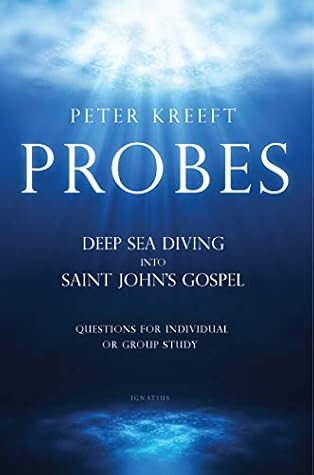
Probes: Deep Sea Diving into Saint John's Gospel: Questions for Individual or Group Study
This is no ordinary book. It is a set of probing questions (1,450 in fact) designed to help individuals or groups, especially groups, to dive deeply into Saint John’s Gospel. No answers are provided, but the questions are phrased in such a way as to set a person in a reliable direction for finding the answers.
This is no ordinary book. It is a set of probing questions (1,450 in fact) designed to help individuals or groups, especially groups, to dive deeply into Saint John’s Gospel. No answers are provided, but the questions are phrased in such a way as to set a person in a reliable direction for finding the answers.The questions correspond to the verses of the Gospel and require active and personal interaction. Some of the questions are easy, some difficult, and they are marked accordingly. Some questions include background information or hints that help the reader along. Some were written with a fair bit of humor. Any person or group using these questions to explore John will find themselves entertained as well as informed and inspired.
The questions correspond to the verses of the Gospel and require active and personal interaction. Some of the questions are easy, some difficult, and they are marked accordingly. Some questions include background information or hints that help the reader along. Some were written with a fair bit of humor. Any person or group using these questions to explore John will find themselves entertained as well as informed and inspired.BUY NOW
Published August 5th 2019 by Ignatius Press
Get Bible verse every day in your inbox
Read on Mobile


Group of Brands


Peter John Kreeft is a professor of philosophy at Boston College and The King's College, and author of numerous books as well as a popular writer on Christian theology, and specifically Roman Catholic apologetics. He also formulated together with Ronald K. Tacelli, SJ, "Twenty Arguments for the Existence of God".
Kreeft took his A.B. at Calvin College (1959), and an M.A. at Fordham University (1961). In the same university he completed his doctoral studies in 1965. He briefly did post graduate studies at Yale University. He joined the Philosophy faculty of the Department of Philosophy of Boston College in 1965. In 1994 he was a signer of the document Evangelicals and Catholics Together.
... Show more