No word in our language is more misunderstood than the word “heart.’ And almost no word is more important, for it refers to what is at the very center of our soul. We have mapped the outer world, in fact the whole universe, with amazing exactness . . . but we have neglected the world within. This new book by venerable Catholic thinker Peter Kreeft offers a map of that inner world, of the self.
In it, he takes up the mantle of Dietrich von Hildebrand and plumbs the depths of that most misunderstood (by the world) and overlooked (by philosophers and theologians) part of the human being.
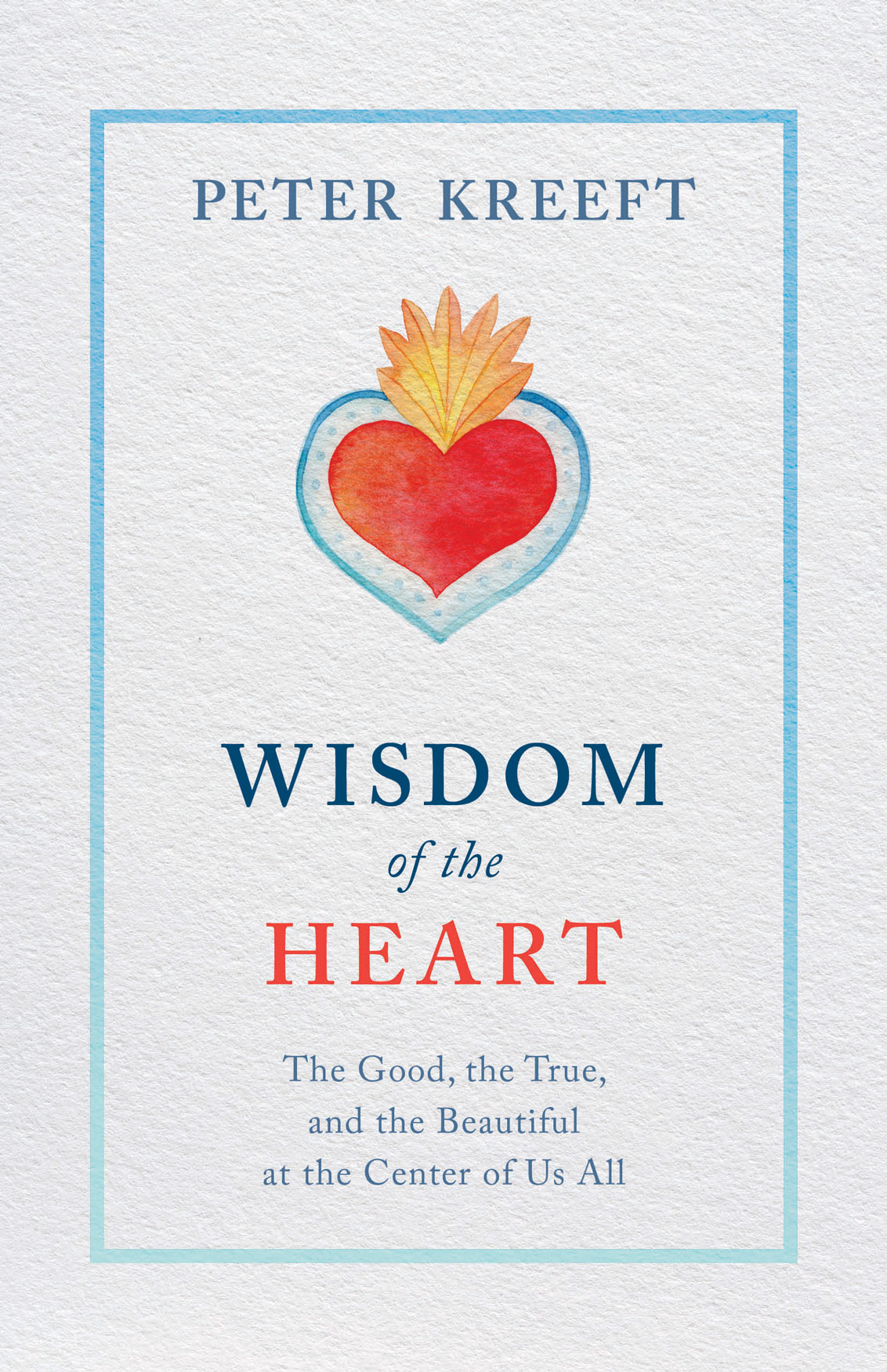
In Wisdom of the HeartWisdom of the Heart, Kreeft examines the two common understandings of the heart’s purpose and shows how they are not at odds, but rather different (and essential) facets:
Feeling and emotion: can reduce us to action without thinking, but also drives us to compassion, empathy, and gratitude
Love: An act of the will, designed so that we can follow Jesus’ commandment to love God and others
This book, therefore, is a psychological aid to understanding the philosophy behind St. John Paul’s “Theology of the Body” while exploring the three dimensions of persons: the will, the mind, and the emotions, and their three loves: the good, the true, and the beautiful.
A new masterwork by one of the foremost Catholic philosophers of our time, Wisdom of the HeartWisdom of the Heart is essential reading for understanding ourselves, our God, and our relationship with him.



Peter John Kreeft is a professor of philosophy at Boston College and The King's College, and author of numerous books as well as a popular writer on Christian theology, and specifically Roman Catholic apologetics. He also formulated together with Ronald K. Tacelli, SJ, "Twenty Arguments for the Existence of God".
Kreeft took his A.B. at Calvin College (1959), and an M.A. at Fordham University (1961). In the same university he completed his doctoral studies in 1965. He briefly did post graduate studies at Yale University. He joined the Philosophy faculty of the Department of Philosophy of Boston College in 1965. In 1994 he was a signer of the document Evangelicals and Catholics Together.
... Show more