
- Bible
- Read the Bible
- Bible Versions
- Verse of the Day
- Reading Plans
- Verses by Topic
- Books of the Bible
- Bible Images
- Study
- Commentaries
- Concordances
- Dictionaries
- Encyclopedias
- Sermons
- Bible Atlas & Maps
- BP Wiki
- Devotionals
- Today's Devotionals
- Light of the World
- All Devotionals
- Inspirational Quotes
- More
- Picture Quotes
- Videos
- Inspirational
- Bible Study
- What The Bible Says
- Bible Q&As
- Daily Bread
- Bible by Genre
- Bible Stories
- Random Bible Verse
- Community
- Store
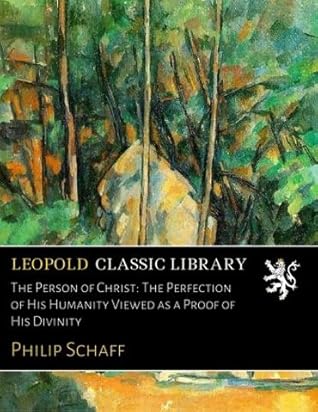
The Person of Christ: The Perfection of His Humanity Viewed as a Proof of His Divinity
Books about Jesus, the Gospels and the Acts discuss a number of aspects surrounding study of the Bible of the New Testament, comprising the four gospels of Matthew, Mark, Luke and John. The many titles in this category include: A Brief Exposition of St Paul's Epistle to the Romans, A Commentary on St. Paul's Epistle to the Galatians, A Commentary on the Book of the Acts of the Apostles, A Commentary on the Gospel of S. Mark, An exposition of the Gospel of St. Luke: consisting of an analysis of each chapter and of a commentary, critical, exegetical, doctrinal, and moral, Der Sogenannte Historische Jesus und der Geschichtliche, Biblische Christus, How is the Divinity of Jesus Depicted in the Gospels and Epistles?, Indirect Testimony of History to the Genuineness of the Gospels, The Epistle of Paul to the Romans, and The Epistle to the Hebrews, Its Doctrine and Significance.
Books about Jesus, the Gospels and the Acts discuss a number of aspects surrounding study of the Bible of the New Testament, comprising the four gospels of Matthew, Mark, Luke and John. The many titles in this category include: A Brief Exposition of St Paul's Epistle to the Romans, A Commentary on St. Paul's Epistle to the Galatians, A Commentary on the Book of the Acts of the Apostles, A Commentary on the Gospel of S. Mark, An exposition of the Gospel of St. Luke: consisting of an analysis of each chapter and of a commentary, critical, exegetical, doctrinal, and moral, Der Sogenannte Historische Jesus und der Geschichtliche, Biblische Christus, How is the Divinity of Jesus Depicted in the Gospels and Epistles?, Indirect Testimony of History to the Genuineness of the Gospels, The Epistle of Paul to the Romans, and The Epistle to the Hebrews, Its Doctrine and Significance. Also in this BookBooks about Administration of the Christian Church discuss leading personages of the Christian churches, including bishops, priests, nuns, their spiritual leadership and administrative roles, and the church's relationship to the state. Titles include: Bishop John Selwyn, a memoir, Leaders of the Church 1800-1900. Dr. Pusey, The State and the Church, The organization of the early Christian churches, The Government of Religious Communities, The Pulpit and Politics or Christianity and state, The Valerian Persecution, Civil Government and Religion, or Christianity and the American Constitution, L'abbesse de Jouarre, and Christianity and the Roman Government: A Study in Imperial Administration.
Books about Administration of the Christian Church discuss leading personages of the Christian churches, including bishops, priests, nuns, their spiritual leadership and administrative roles, and the church's relationship to the state. Titles include: Bishop John Selwyn, a memoir, Leaders of the Church 1800-1900. Dr. Pusey, The State and the Church, The organization of the early Christian churches, The Government of Religious Communities, The Pulpit and Politics or Christianity and state, The Valerian Persecution, Civil Government and Religion, or Christianity and the American Constitution, L'abbesse de Jouarre, and Christianity and the Roman Government: A Study in Imperial Administration. And in this BookBooks about the History of Christianity discuss the origins and development of the Christian religion over the past two millennia, during which time Christianity spread throughout Europe, went through a Protestant Reformation in the 16th and 16th centuries, and developed several branches, including Orthodoxy, and from the Roman Catholic tradition emerged the Lutheran, Calvinist, Presbyterian and Anglican / Episcopalian traditions. Titles in this vast category include: A translation of the Latin writings of St. Patrick, Christianity and the Roman government, Church life and thought in North Africa A.D. 200, Die Mariologie Des Hl. Augustinus, Early Church Classics. The Epistle to Diognetus, History of the Christian Church from the Ascension of Jesus Christ to the Conversion of Constantine.The Ninth Edition, History of the Progress and Suppression of the Reformation in Spain in the Sixteenth Century, and How St. Andrew came to Scotland.
Books about the History of Christianity discuss the origins and development of the Christian religion over the past two millennia, during which time Christianity spread throughout Europe, went through a Protestant Reformation in the 16th and 16th centuries, and developed several branches, including Orthodoxy, and from the Roman Catholic tradition emerged the Lutheran, Calvinist, Presbyterian and Anglican / Episcopalian traditions. Titles in this vast category include: A translation of the Latin writings of St. Patrick, Christianity and the Roman government, Church life and thought in North Africa A.D. 200, Die Mariologie Des Hl. Augustinus, Early Church Classics. The Epistle to Diognetus, History of the Christian Church from the Ascension of Jesus Christ to the Conversion of Constantine.The Ninth Edition, History of the Progress and Suppression of the Reformation in Spain in the Sixteenth Century, and How St. Andrew came to Scotland. About usLeopold Classic Library’s aim is to provide readers with the highest quality reproductions of fiction and non-fiction literature that has stood the test of time. Our titles are produced from scans of the original books and as a result may sometimes have imperfections. To ensure a high-quality product we have:
Leopold Classic Library’sLeopold Classic Library’s aim is to provide readers with the highest quality reproductions of fiction and non-fiction literature that has stood the test of time. Our titles are produced from scans of the original books and as a result may sometimes have imperfections. To ensure a high-quality product we have:thoroughly reviewed every page of all the books in the catalog
repaired some of the text in some cases, and
rejected titles that are not of the highest quality.
If You can't find the book You're looking for, please write to us. We will look for it in our catalog and find the best price for You in our eBay store.
If You can't find the book You're looking for, please write to us. We will look for it in our catalog and find the best price for You in our eBay store.If You can't find the book You're looking for, please write to us. We will look for it in our catalog and find the best price for You in our eBay store.Come home to the books that made a difference!
Come home to the books that made a difference!Come home to the books that made a difference!Thank you for your interest in our books!
Thank you for your interest in our books!BUY NOW
Published March 31st 2016 by Leopold Classic Library
Get Bible verse every day in your inbox
Read on Mobile


Group of Brands


On his journey he stayed in England and met Edward Pusey and other Tractarians. His inaugural address on The Principle of Protestantism, delivered in German at Reading, Pennsylvania, in 1844, and published in German with an English version by John Williamson Nevin was a pioneer work in English in the field of symbolics (that is, the authoritative ecclesiastical formulations of religious doctrines in creeds or confessions). This address and the "Mercersburg Theology" which he taught seemed too pro-Catholic to some, and he was charged with heresy. But, at the synod at York in 1845, he was unanimously acquitted.
Schaff's broad views strongly influenced the German Reformed Church, through his teaching at Mercersburg, through his championship of English in German Reformed churches and schools in America, through his hymnal (1859), through his labours as chairman of the committee which prepared a new liturgy, and by his edition (1863) of the Heidelberg Catechism. His History of the Apostolic Church (in German, 1851; in English, 1853) and his History of the Christian Church (7 vols., 1858-1890), opened a new period in American study of ecclesiastical history.
In 1854, he visited Europe, representing the American German churches at the ecclesiastical diet at Frankfort and at the Swiss pastoral conference at Basel. He lectured in Germany on America, and received the degree of D.D. from Berlin.
In consequence of the ravages of the American Civil War the theological seminary at Mercersburg was closed for a while and so in 1863 Dr. Schaff became secretary of the Sabbath Committee (which fought the “continental Sunday”) in New York City, and held the position till 1870. In 1865 he founded the first German Sunday School in Stuttgart. In 1862-1867 he lectured on church history at Andover.
Schaff was a member of the Leipzig Historical Society, the Netherland Historical Society, and other historical and literary societies in Europe and America. He was one of the founders, and honorary secretary, of the American branch of the Evangelical Alliance, and was sent to Europe in 1869, 1872, and 1873 to arrange for the general conference of the Alliance, which, after two postponements on account of the Franco-Prussian War, was held in New York in October 1873. Schaff was also, in 1871, one of the Alliance delegates to the emperor of Russia to plead for the religious liberty of his subjects in the Baltic provinces.
He became a professor at Union Theological Seminary, New York City in 1870 holding first the chair of theological encyclopedia and Christian symbolism till 1873, of Hebrew and the cognate languages till 1874, of sacred literature till 1887, and finally of church history, till his death. He also served as president of the committee that translated the American Standard Version of the Bible, though he died before it was published in 1901.
His History of the Christian Church resembled Neander's work, though less biographical, and was pictorial rather than philosophical. He also wrote biographies, catechisms and hymnals for children, manuals of religious verse, lectures and essays on Dante, etc. He translated Johann Jakob Herzog's Real-Encyklopädie für protestantische Theologie und Kirche into English.
... Show more