
- Bible
- Read the Bible
- Bible Versions
- Verse of the Day
- Reading Plans
- Verses by Topic
- Books of the Bible
- Bible Images
- Study
- Commentaries
- Concordances
- Dictionaries
- Encyclopedias
- Sermons
- Bible Atlas & Maps
- BP Wiki
- Devotionals
- Today's Devotionals
- Light of the World
- All Devotionals
- Inspirational Quotes
- More
- Picture Quotes
- Videos
- Inspirational
- Bible Study
- What The Bible Says
- Bible Q&As
- Daily Bread
- Bible by Genre
- Bible Stories
- Random Bible Verse
- Community
- Store
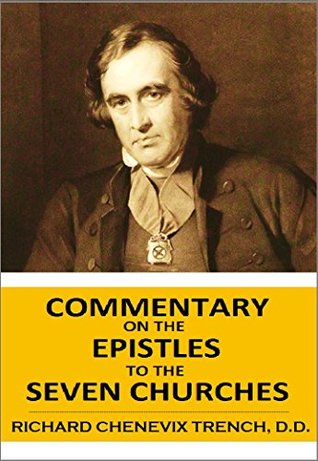
Commentary on the Epistles to the Seven Churches
by Richard Chenevix Trench
Richard Chenevix Trench ( 1807 – 1886) was an Anglican archbishop and poet. In 1851 he established his fame as a philologist by The Study of Words, originally delivered as lectures to the pupils of the Diocesan Training School, Winchester.
There are, perhaps, few men who have acquired a higher reputation for scholarly attainments than Dean Trench, particularly in the department of the English language. He appears to have studied our mother tongue with a peculiar relish, and in all his writings, in so far as they have come under our observation, he exhibits a refinement of taste, in this respect, which constitutes a striking characteristic. On this account, if from no other consideration, we think it would be well for those who are providing themselves with a library, to select the works of this author among the first.
This, however, is not the only commendable qualification of Trench. The reader will be sure to find on every page indications of good sound sense. He will find matter worthy of reflection.
Beside the ripe learning, the doctrinal sobriety, and the devout spirit of this writer, one can greatly admire his good, masculine commonsense. An intimate acquaintance with modern hermeneutical science, as cultivated in the German schools, has not spoiled him as a biblical guide. His fondness for word-criticism finds a rich opportunity to indulge itself, in the peculiar phraseology of these chapters of the Apocalypse. His remarks upon Greek and Hebrew symbolism and his application of them to the interpretation of the "white stone" and the "new name," as referring to the Urim and Thummin of the high priest are worthy of consideration.
His Commentary on the Epistles to the Seven Churches has been elaborated by him, on the ground-work of three lectures delivered to the theological students at King's College.
This book was originally published in 1863 and has been reformatted for the Kindle and may contain an occasional defect from the original publication or from the reformatting.
There are, perhaps, few men who have acquired a higher reputation for scholarly attainments than Dean Trench, particularly in the department of the English language. He appears to have studied our mother tongue with a peculiar relish, and in all his writings, in so far as they have come under our observation, he exhibits a refinement of taste, in this respect, which constitutes a striking characteristic. On this account, if from no other consideration, we think it would be well for those who are providing themselves with a library, to select the works of this author among the first.
This, however, is not the only commendable qualification of Trench. The reader will be sure to find on every page indications of good sound sense. He will find matter worthy of reflection.
Beside the ripe learning, the doctrinal sobriety, and the devout spirit of this writer, one can greatly admire his good, masculine commonsense. An intimate acquaintance with modern hermeneutical science, as cultivated in the German schools, has not spoiled him as a biblical guide. His fondness for word-criticism finds a rich opportunity to indulge itself, in the peculiar phraseology of these chapters of the Apocalypse. His remarks upon Greek and Hebrew symbolism and his application of them to the interpretation of the "white stone" and the "new name," as referring to the Urim and Thummin of the high priest are worthy of consideration.
His Commentary on the Epistles to the Seven Churches has been elaborated by him, on the ground-work of three lectures delivered to the theological students at King's College.
This book was originally published in 1863 and has been reformatted for the Kindle and may contain an occasional defect from the original publication or from the reformatting.
BUY NOW
Kindle Edition, 180 pages
Published October 17th 2015 (first published March 1st 1997)
Subscribe
Get Bible verse every day in your inbox
Read on Mobile


Group of Brands


© 2026 Bibleportal.com All rights reserved.
1807-1886
Richard Chenevix Trench was an Anglican archbishop and poet. In 1851 he established his fame as a philologist by The Study of Words, originally delivered as lectures to the pupils of the Diocesan Training School, Winchester.
In 1856 Trench became Dean of Westminster, a position which suited him. Here he introduced evening nave services. In January 1864 he was advanced to the post of Archbishop of Dublin. Arthur Penrhyn Stanley had been first choice, but was rejected by the Irish Church, and, according to Bishop Wilberforce's correspondence, Trench's appointment was favoured neither by the prime minister nor the lord-lieutenant. It was, moreover, unpopular in Ireland, and a blow to English literature; yet it turned out to be fortunate. Trench could not prevent the disestablishment of the Irish Church, though he resisted with dignity. But, when the disestablished communion had to be reconstituted under the greatest difficulties, it was important that the occupant of his position should be a man of a liberal and genial spirit.
... Show more