
- Bible
- Read the Bible
- Bible Versions
- Verse of the Day
- Reading Plans
- Verses by Topic
- Books of the Bible
- Bible Images
- Study
- Commentaries
- Concordances
- Dictionaries
- Encyclopedias
- Sermons
- Bible Atlas & Maps
- BP Wiki
- Devotionals
- Today's Devotionals
- Light of the World
- All Devotionals
- Inspirational Quotes
- More
- Picture Quotes
- Videos
- Inspirational
- Bible Study
- What The Bible Says
- Bible Q&As
- Daily Bread
- Bible by Genre
- Bible Stories
- Random Bible Verse
- Community
- Store
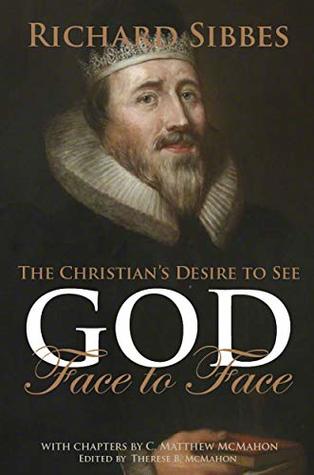
The Christian’s Desire to See God Face to Face
by Richard Sibbes
Richard Sibbes (1577–1635) was an inspiring Christ-centered minister and experiential preacher. He influenced Anglicanism, Presbyterianism, and Independency, was a pastor of pastors, and lived a life of moderation. Daniel Neal describes him as a celebrated preacher, an educated divine, and a charitable and humble man who repeatedly underestimated his gifts.
In this extraordinary work on Psalm 27:4, Sibbes instructs the reader concerning the beatific vision of God. He lays out the desire and affection of the holy prophet David, whose goal was to dwell with God, face to face. In this he lifts the reader to heights of sweetness concerning the object of the Christian’s desire: dwelling with God through Christ. He directs the reader to taste of Christ now, so that they will experience that coveted glimpse of God in their understanding, only to be encouraged that they will one day experience it face to face with Christ in heaven.
Such a sanctuary of thought is a high mountain of blessedness and causes the feet of our meditation of God to run like hind’s feet on high places upon the mountain of spices (Psalm 18:33; Hab. 3:19; Song 8:14). Sibbes is simple in this, yet profound. This is a work worthy to reflect and digest to find refreshment for the soul which will be enlivened to new heights of holy contemplation.
This work is not a scan or facsimile, has been carefully transcribed by hand being made easy to read in modern English, and has an active table of contents for electronic versions.
In this extraordinary work on Psalm 27:4, Sibbes instructs the reader concerning the beatific vision of God. He lays out the desire and affection of the holy prophet David, whose goal was to dwell with God, face to face. In this he lifts the reader to heights of sweetness concerning the object of the Christian’s desire: dwelling with God through Christ. He directs the reader to taste of Christ now, so that they will experience that coveted glimpse of God in their understanding, only to be encouraged that they will one day experience it face to face with Christ in heaven.
Such a sanctuary of thought is a high mountain of blessedness and causes the feet of our meditation of God to run like hind’s feet on high places upon the mountain of spices (Psalm 18:33; Hab. 3:19; Song 8:14). Sibbes is simple in this, yet profound. This is a work worthy to reflect and digest to find refreshment for the soul which will be enlivened to new heights of holy contemplation.
This work is not a scan or facsimile, has been carefully transcribed by hand being made easy to read in modern English, and has an active table of contents for electronic versions.
BUY NOW
Kindle Edition, 80 pages
Published August 6th 2018 by Puritan Publications
Subscribe
Get Bible verse every day in your inbox
Read on Mobile


Group of Brands


© 2026 Bibleportal.com All rights reserved.
Richard Sibbes was an English theologian. He is known as a Biblical exegete, and as a representative, with William Perkins and John Preston, of what has been called "main-line" Puritanism.
He attended St John's College, Cambridge from 1595. He was lecturer at Holy Trinity Church, Cambridge, from 1610 or 1611 to 1615 or 1616. It is erroneously held by 18th and 19th century scholars that Sibbes was deprived of his various academic posts on account of his Puritanism. In fact he was never deprived of any of his posts, due to his ingenuity of the system.
He was then preacher at Gray's Inn, London, from 1617, returning to Cambridge as Master of Catherine Hall in 1626, without giving up the London position.
He was the author of several devotional works expressing intense religious feeling -- The Saint's Cordial (1629), The Bruised Reed and Smoking Flax (1631, exegesis of Isaiah 42:3), The Soules Conflict (1635), etc.
... Show more