Richard Sibbes's little Puritan classic is an insightful meditation on 2 Cor 3:17,18: "Now the Lord is that Spirit: and where the Spirit of the Lord is, there is liberty. But we all, with open face beholding as in a glass the glory of the Lord, are changed into the same image from glory to glory, even as by the Spirit of the Lord."
"If we will have the Spirit," Sibbes urges, "study the gospel of Christ. What is the reason that before Christ there was so little Spirit in comparison? There was but a little measure of the knowledge of Christ. The more Christ is discovered, the more is the Spirit given; and according to the manifestation of Christ what he hath done for us, and what he hath, the more the riches of Christ is unfolded in the church, the more the Spirit goes along with them. The more the free grace and love of God in Christ alone is made known to the church, the more Spirit there is; and again back again, the more Spirit the more knowledge of Christ; for there is a reciprocal going of these two, the knowledge of Christ and the Spirit."

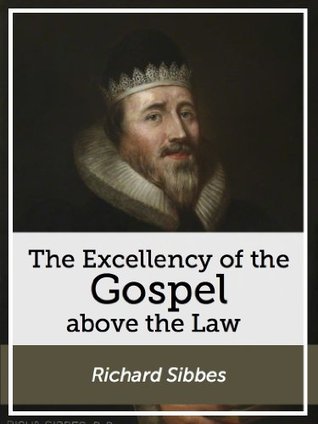


Richard Sibbes was an English theologian. He is known as a Biblical exegete, and as a representative, with William Perkins and John Preston, of what has been called "main-line" Puritanism.
He attended St John's College, Cambridge from 1595. He was lecturer at Holy Trinity Church, Cambridge, from 1610 or 1611 to 1615 or 1616. It is erroneously held by 18th and 19th century scholars that Sibbes was deprived of his various academic posts on account of his Puritanism. In fact he was never deprived of any of his posts, due to his ingenuity of the system.
He was then preacher at Gray's Inn, London, from 1617, returning to Cambridge as Master of Catherine Hall in 1626, without giving up the London position.
He was the author of several devotional works expressing intense religious feeling -- The Saint's Cordial (1629), The Bruised Reed and Smoking Flax (1631, exegesis of Isaiah 42:3), The Soules Conflict (1635), etc.
... Show more