
- Bible
- Read the Bible
- Bible Versions
- Verse of the Day
- Reading Plans
- Verses by Topic
- Books of the Bible
- Bible Images
- Study
- Commentaries
- Concordances
- Dictionaries
- Encyclopedias
- Sermons
- Bible Atlas & Maps
- BP Wiki
- Devotionals
- Today's Devotionals
- Light of the World
- All Devotionals
- Inspirational Quotes
- More
- Picture Quotes
- Videos
- Inspirational
- Bible Study
- What The Bible Says
- Bible Q&As
- Daily Bread
- Bible by Genre
- Bible Stories
- Random Bible Verse
- Community
- Store
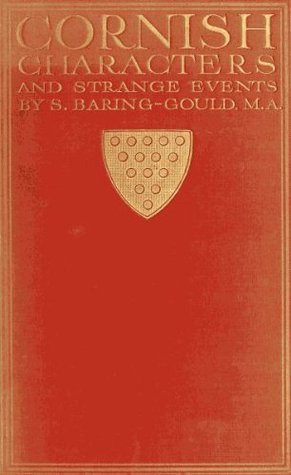
Cornish Characters
by Sabine Baring-Gould
Excerpt:
Cornwall, peopled mainly by Celts, but with an infusion of English blood, stands and always has stood apart from the rest of England, much, but in a less degree, as has Wales. That which brought it into more intimate association with English thought, interests, and progress was the loss of the old Cornish tongue.
The isolation in which Cornwall had stood has tended to develop in it much originality of character; and the wildness of the coast has bred a hardy race of seamen and smugglers; the mineral wealth, moreover, drew thousands of men underground, and the underground life of the mines has a peculiar effect on mind and character: it is cramping in many ways, but it tends to develop a good deal of religious enthusiasm, that occasionally breaks forth in wild forms of fanaticism. Cornwall has produced admirable sailors, men who have won deathless renown in warfare at sea, as "Old Dreadnought" Boscawen, Pellew, Lord Exmouth, etc., and daring and adventurous smugglers, like "The King of Prussia," who combined great religious fervour with entire absence of scruple in the matter of defrauding the king's revenue. It has produced men of science who have made for themselves a world-fame, as Adams the astronomer, and Sir[Pg viii] Humphry Davy the chemist; men who have been benefactors to their race, as Henry Trengrouse, Sir Goldsworthy Gurney, and Trevithick. It has sent forth at least one notable painter, the miner's boy Opie, and a dramatist, Samuel Foote, and a great singer in his day, Incledon. But it has not given to literature a great poet. Minor rhymes have been produced in great quantities, but none of great worth. Philosophers have issued from the mines, as Samuel Drew, eccentrics many, as Sir James Tillie, John Knill, and Daniel Gumb. And Cornwall has contributed a certain number of rascals—but fewer in number than almost any other county, if we exclude wreckers and smugglers from the catalogue of rascality.
Cornwall, peopled mainly by Celts, but with an infusion of English blood, stands and always has stood apart from the rest of England, much, but in a less degree, as has Wales. That which brought it into more intimate association with English thought, interests, and progress was the loss of the old Cornish tongue.
The isolation in which Cornwall had stood has tended to develop in it much originality of character; and the wildness of the coast has bred a hardy race of seamen and smugglers; the mineral wealth, moreover, drew thousands of men underground, and the underground life of the mines has a peculiar effect on mind and character: it is cramping in many ways, but it tends to develop a good deal of religious enthusiasm, that occasionally breaks forth in wild forms of fanaticism. Cornwall has produced admirable sailors, men who have won deathless renown in warfare at sea, as "Old Dreadnought" Boscawen, Pellew, Lord Exmouth, etc., and daring and adventurous smugglers, like "The King of Prussia," who combined great religious fervour with entire absence of scruple in the matter of defrauding the king's revenue. It has produced men of science who have made for themselves a world-fame, as Adams the astronomer, and Sir[Pg viii] Humphry Davy the chemist; men who have been benefactors to their race, as Henry Trengrouse, Sir Goldsworthy Gurney, and Trevithick. It has sent forth at least one notable painter, the miner's boy Opie, and a dramatist, Samuel Foote, and a great singer in his day, Incledon. But it has not given to literature a great poet. Minor rhymes have been produced in great quantities, but none of great worth. Philosophers have issued from the mines, as Samuel Drew, eccentrics many, as Sir James Tillie, John Knill, and Daniel Gumb. And Cornwall has contributed a certain number of rascals—but fewer in number than almost any other county, if we exclude wreckers and smugglers from the catalogue of rascality.
BUY NOW
Kindle Edition, 880 pages
Published January 4th 2013 (first published July 29th 2009)
Subscribe
Get Bible verse every day in your inbox
Read on Mobile


Group of Brands


© 2026 Bibleportal.com All rights reserved.
Sabine Baring-Gould of Lew Trenchard in Devon, England, was an Anglican priest, hagiographer, antiquarian, novelist, folk song collector and eclectic scholar. His bibliography consists of more than 1,240 publications, though this list continues to grow. His family home, the manor house of Lew Trenchard, near Okehampton, Devon, has been preserved as he had it rebuilt and is now a hotel. He is remembered particularly as a writer of hymns, the best-known being "Onward, Christian Soldiers", "Sing Lullaby", and "Now the Day Is Over". He also translated the carol "Gabriel's Message" from the Basque language to English.
... Show more