
- Bible
- Read the Bible
- Bible Versions
- Verse of the Day
- Reading Plans
- Verses by Topic
- Books of the Bible
- Bible Images
- Study
- Commentaries
- Concordances
- Dictionaries
- Encyclopedias
- Sermons
- Bible Atlas & Maps
- BP Wiki
- Devotionals
- Today's Devotionals
- Light of the World
- All Devotionals
- Inspirational Quotes
- More
- Picture Quotes
- Videos
- Inspirational
- Bible Study
- What The Bible Says
- Bible Q&As
- Daily Bread
- Bible by Genre
- Bible Stories
- Random Bible Verse
- Community
- Store
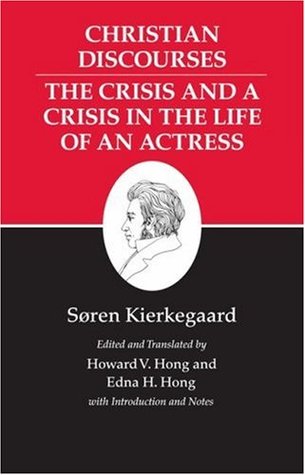
Christian Discourses: The Crisis and a Crisis in the Life of an Actress
First published in 1848, Christian Discourses is a quartet of pieces written and arranged in contrasting styles. Parts One and Three, "The Cares of the Pagans" and "Thoughts That Wound from Behind--for Upbuilding," serve as a polemical overture to Kierkegaard's collision with the established order of Christendom. Yet Parts Two and Four, "Joyful Notes in the Strife of Suffering" and "Discourses at the Communion on Fridays," are reassuring affirmations of the joy and blessedness of Christian life in a world of adversity and suffering. Written in ordinary language, the work combines simplicity and inwardness with reflection and presents crucial Christian concepts and presuppositions with unusual clarity.
First published in 1848, Christian DiscoursesChristian Discourses is a quartet of pieces written and arranged in contrasting styles. Parts One and Three, "The Cares of the Pagans" and "Thoughts That Wound from Behind--for Upbuilding," serve as a polemical overture to Kierkegaard's collision with the established order of Christendom. Yet Parts Two and Four, "Joyful Notes in the Strife of Suffering" and "Discourses at the Communion on Fridays," are reassuring affirmations of the joy and blessedness of Christian life in a world of adversity and suffering. Written in ordinary language, the work combines simplicity and inwardness with reflection and presents crucial Christian concepts and presuppositions with unusual clarity.Kierkegaard continued in the pattern that he began with his first pseudonymous esthetic work, Either/Or, by pairing Christian Discourses with The Crisis, an unsigned esthetic essay on contemporary Danish actress Joanne Luise Heiberg.
Kierkegaard continued in the pattern that he began with his first pseudonymous esthetic work, Either/OrEither/Or, by pairing Christian DiscoursesChristian Discourses with The CrisisThe Crisis, an unsigned esthetic essay on contemporary Danish actress Joanne Luise Heiberg.BUY NOW
Published August 29th 1997 by Princeton University Press (first published April 26th 1848)
Get Bible verse every day in your inbox
Read on Mobile


Group of Brands


Kierkegaard left the task of discovering the meaning of his works to the reader, because "the task must be made difficult, for only the difficult inspires the noble-hearted". Scholars have interpreted Kierkegaard variously as an existentialist, neo-orthodoxist, postmodernist, humanist, and individualist.
Crossing the boundaries of philosophy, theology, psychology, and literature, he is an influential figure in contemporary thought.... Show more