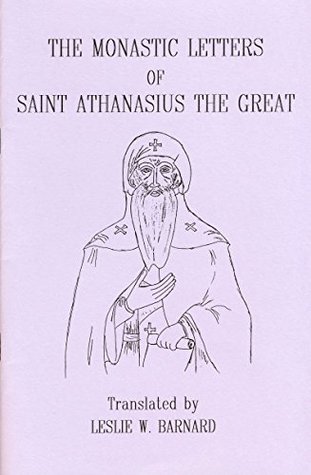
Scholars have often concentrated on the theological writings of St Athanasius (c. 296-373 AD) and on his influence as a religious leader, so that his contribution to the monastic life has not received due recognition. In these six letters addressed to monks, Athanasius is revealed as a wise spiritual guide and loving pastor, determined that the monks should receive sound teaching, so as to avoid the pitfalls of heresies current at that time. As Leslie Barnard notes in his Introduction, ‘The permanent significance of these letters lies in their wisdom, moderation and balance.’
Saint Athanasius (c. 295 - 373), Bishop and Doctor of the Church, was born in Alexandria of Christian parents. After successful studies, he spent time in the desert in retreat with Saint Antony the Great. In 325, he attended as a deacon the Council of Nicea, where his influence began to be felt. He was elected Archbishop of Alexandria in 328, but seventeen of the forty-six years of his episcopate were spent in exile, due to his active and ruthless stand against the heretical teachings of Arius. His extant writings include a ‘Life’ of Saint Antony and treatises on Christian dogma.
Leslie William Barnard, born in 1924, was ordained priest in 1952 and now lives in retirement. He was Senior Lecturer in Theology at the University of Leeds 1968-86, his chief area of study being fourth-century patristic writings.



St. Cyril of Alexandria (376 - 444)
Was the Patriarch of Alexandria from 412 to 444. He was enthroned when the city was at the height of its influence and power within the Roman Empire. Cyril wrote extensively and was a leading protagonist in the Christological controversies of the late-4th and 5th centuries. He was a central figure in the Council of Ephesus in 431, which led to the deposition of Nestorius as Patriarch of Constantinople.Cyril is counted among the Church Fathers and the Doctors of the Church, and his reputation within the Christian world has resulted in his titles Pillar of Faith and Seal of all the Fathers. Cyril regarded the embodiment of God in the person of Jesus Christ to be so mystically powerful that it spread out from the body of the God-man into the rest of the race, to reconstitute human nature into a graced and deified condition of the saints, one that promised immortality and transfiguration to believers. Nestorius, on the other hand, saw the incarnation as primarily a moral and ethical example to the faithful, to follow in the footsteps of Jesus. Cyril's constant stress was on the simple idea that it was God who walked the streets of Nazareth (hence Mary was Theotokos, meaning "God bearer", which became in Latin "Mater Dei or Dei Genetrix", or Mother of God), and God who had appeared in a transfigured humanity. Nestorius spoke of the distinct "Jesus the man" and "the divine Logos" in ways that Cyril thought were too dichotomous, widening the ontological gap between man and God in a way that some of his contemporaries believed would annihilate the person of Christ.
... Show more