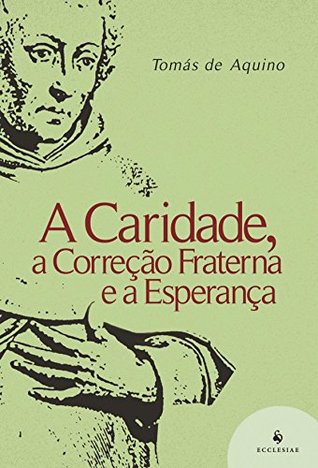
Esse livro completa às Quaestiones Disputatae De Virtutibus, quaestio 2, 3 e 4.Na questão 2, Tomás analisa a profundidade, e ao longo de 13 artigos, a natureza, a definição, a origem e as características específicas da caridade na questão 3, investiga a correção fraterna e a sua relação com o preceito e na questão 4, Tomás analisa as características da virtude teologal da esperança. Essas três questões possuem certa unidade, enquanto relativas à revelação do cristianismo. Mas, visto que em Tomás a graça supõe a natureza, o intento do autor é distinguir também o que é próprio do humano, bem como até que ponto uma virtude infusa depende da colaboração humana e quando começa a ação divina.



Thomas Aquinas was an immensely influential philosopher and theologian in the tradition of scholasticism, known as Doctor Angelicus and Doctor Communis.
He was the foremost classical proponent of natural theology, and the father of the Thomistic school of philosophy and theology. His influence on Western thought is considerable, and much of modern philosophy was conceived as a reaction against, or as an agreement with, his ideas, particularly in the areas of ethics, natural law and political theory.
The philosophy of Aquinas has exerted enormous influence on subsequent Christian theology, especially that of the Roman Catholic Church, extending to Western philosophy in general, where he stands as a vehicle and modifier of Aristotelianism, which he fused with the thought of Augustine.
... Show more